(President Putin immerses himself in the icy waters at Lake Seliger during Orthodox Epiphany celebrations in January,
See here. ALEXEI DRUZHININ/KREMLIN VIAREUTERS)
(President Putin immerses himself in the icy waters at Lake Seliger during Orthodox Epiphany celebrations in January,
See here. ALEXEI DRUZHININ/KREMLIN VIAREUTERS)
I read multiple books at a time. This partly explains why I suffer in other areas (e.g., home repair; exercise; TV trivia; etc.).
Two books I am now reading are...
Fleming Rutledge, The Crucifixion: Understanding the Death of Jesus Christ. O... M... G. I'm only fifty pages into the book, and see why Christianity Today gave it a "Book of the Year" award.
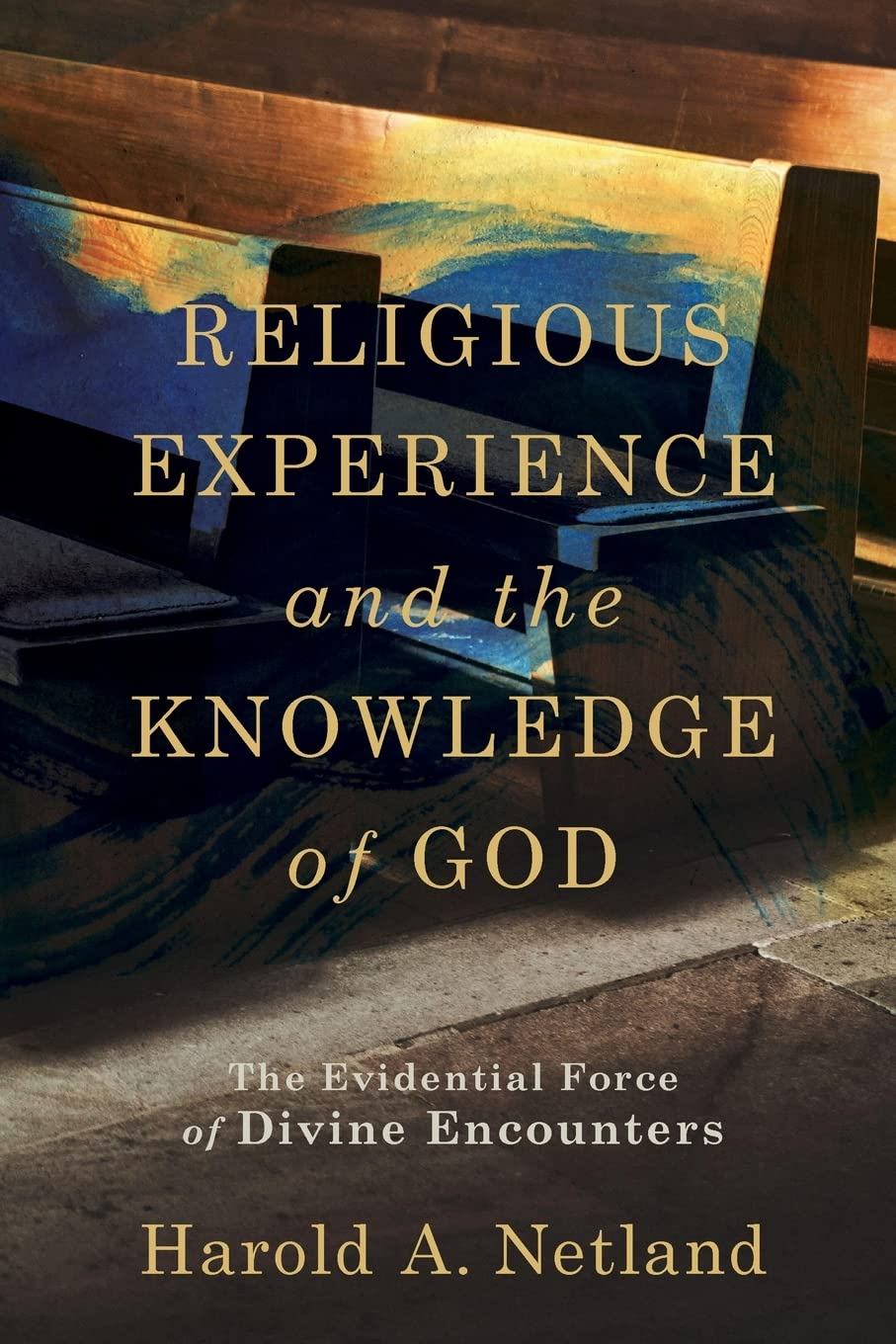
Harold Netland. Religious Experience and the Knowledge of God: The Evidential Force of Divine Encounters. While I value logic and critical thinking (having taught logic for eighteen years at Monroe County Community College), I believe experience, not theory, breeds conviction. This book is deepening that thought in me. See CT's interview with Netland here.
Some progressive Christians argue that humanity has never been separated from God. If that were true, then our sin has not separated us from God. The implication of this is universalism; viz., the idea that all persons are saved. (See my book Deconstructing Progressive Christianity, ch. 8.)
This reasoning eliminates the idea that Christ died an atoning death to forgive the sin that has separated us from God.
The problem with this "progressive" thinking is that it's not what the Bible teaches.
For example, Romans 4:25 states that Christ “was put to death for our trespasses and raised for our justification.” By Jesus' atoning, sacrificial death, we can be reconciled to God. William Lane Craig writes,
"Reconciliation is the overarching theme of the NT, and other important NT motifs such as the Kingdom of God, salvation, justification, and redemption are subservient to it. Atonement in this sense thus lies at the heart of the Christian faith." (Craig, The Atonement, p. 4)
(Sterling State Park - Monroe)
We see the word 'atonement' in Romans 3:25-26.
25 God presented Christ as a sacrifice of atonement, through the shedding of his blood—to be received by faith. He did this to demonstrate his righteousness, because in his forbearance he had left the sins committed beforehand unpunished— 26 he did it to demonstrate his righteousness at the present time, so as to be just and the one who justifies those who have faith in Jesus.
William Lane Craig writes:
"The word “atonement” is unique among theological terms, being a derivation, not from Greek or Latin, but from Middle English, namely, the phrase “at-onement,” designating a state of harmony. The closest New Testament (NT) word for atonement in this sense is katallagÄ“ or reconciliation, specifically reconciliation between God and man. Reconciliation is the overarching theme of the NT, and other important NT motifs such as the Kingdom of God, salvation, justification, and redemption are subservient to it. Atonement in this sense thus lies at the heart of the Christian faith."
- Craig, William Lane. The Atonement, p. 4.
Greg Boyd writes:
Through the incarnation, life, death and resurrection of Jesus Christ the infinitely wise God solved a number of problems. Among other things,
From Beilby and Eddy, The Nature of the Atonement: Four Views, p. 23
***
I'll be making posts on the Atonement through Good Friday.
If you want to dig deeper, see the Beilby and Eddy book.
See William Lane Craig, The Atonement.
![]() |
| (Plaque, in a store in Cleveland) |
Progressives refer to atonement theory as “cosmic child abuse.” Former Christian musician Michael Gungor says “that God needed to be appeased with blood is not beautiful. It’s horrific.” (In Alisa Childers, Another Gospel?, p. 201)
This is progressive Christianity, re-interpreting the cross
to be palatable to our secular culture.
Alisa Childers writes: Despite the abundance of biblical
testimony, "the one thing that virtually all progressive Christian thought
leaders agree on is that Jesus didn’t die to pay the penalty for our sin. He
was crucified by an angry mob for speaking truth to power, and his love and
forgiveness toward those who killed him is the example we all should follow.
According to progressive Christians, Jesus didn’t need to die, but he submitted
himself to the will of the people. According to their wisdom, the historic view
makes God nothing more than an abusive father.” (Childers, p.
206)
If Christ did not die to atone for our sins, which have separated us from God, then...
... What could Isaiah have been thinking when he wrote, “Your iniquities have made a separation between you and your God, and your sins have hidden his face from you” (Isa. 59:2).
... When Romans 3:23 tells us that “all have sinned and fallen
short of the glory of God,” how does “fallen short” not imply separation from
the glory of God?
... How does the biblical idea of “repentance” [TURN!] make any
sense if unrepentance (holding on to sin) is not widening the separation between us and a
holy God?
... What meaning can “reconciliation” have if it doesn’t imply
two separated, at-odds-with-each-other, beings?
... What sense will Romans 5:10 have if, we have never been
separated from God? For if, while we were God’s enemies, we
were reconciled to him through the death of his Son, how much more, having
been reconciled, shall we be saved through his life!
Doesn’t the idea of gaining access to peace with God
(shalom, like two separated hands coming together in a handshake) imply a
condition of not being at peace with God? Like, enemies of God?
Are there not “sheep” and “goats?” (To Jesus, G-O-A-T doesn’t
mean “greatest of all time.”)
Will not there be, at the final judgment, a great
separation of humanity from God or, as C.S. Lewis called it, a “great divorce?”
Is not some kind of atonement required, as it says in
Romans 3:25-26?
25 God presented Christ
as a sacrifice of atonement, through the shedding of his blood—to be
received by faith. He did this to demonstrate his righteousness, because in his
forbearance he had left the sins committed beforehand unpunished— 26 he
did it to demonstrate his righteousness at the present time, so as to be just
and the one who justifies those who have faith in Jesus.
And then there is the parable of the prodigal son, whose
sinful choices separated him from his loving father.
And the
joyful response of his father when the son returns home.
A denial of the atoning work of Christ, to pay the penalty we deserved because of our sin, is heterodoxy.
HERE IS WHAT I BELIEVE…
I believe all have sinned, and fall short of the glory of God.
I believe sin makes a separation between us and God, and us
and others. (The wages of sin is death.)
I believe God hates sin.
I believe God’s holiness cannot be grasped without
comprehending the nature of sin.
I believe the fundamental reason for the OT sacrifices is
atonement, so that sinners could be forgiven by the holy One.
I believe the suffering of the Messiah was clearly
prophesied. (See Isaiah 53. See The Gospel According to Isaiah.)
I believe Christ died for our sins.
I believe it was the will of God to die in the place of
sinners.
I believe that the Cross was God’s idea.
I believe it was God who died in our place.
(From Piippo, Deconstructing Progressive Christianity, p. 111). Kindle Edition.
To dig deeper, read chapter 8 in Deconstructing Progressive Christianity.
And...
The Atonement, by William Lane Craig
Atonement and the Death of Christ, by William Lane Craig
The Nature of the Atonement: Four Views, ed. by James Beilby and Paul Eddy
Five Views on the Extent of the Atonement, ed. Andrew Louth
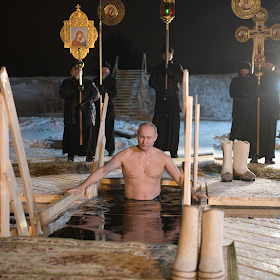
(River walk, in Monroe)
I hear and understand my wife Linda's voice because I spend time with her talking and listening. The more familiar I am with her, the more I dwell with her, the more I am able to discern her voice from other voices.
The same goes for my relationship with God.
To hear the voice of God don't focus on hearing God, focus on your connection with God. Dwell in his presence. Abide in Christ. Out of the dwelling, abiding relationship we learn to recognize and understand the voice of God.
Hearing God is in proportion to intimacy with God.
Conversely, when intimacy is low discernment is low.
The growing ability to discern what God is saying in the prayer relationship comes from much conversational time with God. As Henri Nouwen writes: "Once we have committed ourselves to spending time in solitude, we develop an attentiveness to God's voice in us." (From Making All Things New, cited in Nouwen, Seeds of Hope, 64)
This past weekend Linda and I were privileged to be with fifty American Baptist pastors and leaders. The two-day retreat was in Indiana. Linda and I led worship (what a great worshiping group!). I taught two sessions on the Presence-Driven Church.
One point I emphasized was that experience, not theory, breeds conviction. The presence of God is accompanied by experiencing God.
I have for decades, studied presence-of-God literature, and the nature of religious experience. (See here.)
I am now reading Harold Netland's Religious Experience and the Knowledge of God. The Christianity Today interview with Netland is here - "Religious Experiences are Common. Which Ones Should We Trust?" Excellent material!
Note: I also value logic. I taught logic for eighteen years at Monroe County Community College.