Monday, November 16, 2020

54 Thoughts About Prayer


                                       (Crossing Lake Michigan on The Badger)

These are from my book Praying: Reflections on 40 Years of Solitary Conversations with God.

1.  You will learn more about prayer by actually praying than you can get from a book.
2.  Prayer is talking with God about what God and I are thinking and doing together.
3.  Praying is revolutionary activity whereby I revolt against the kingdom of this world as I meet with the true Lord of heaven and earth.
4.  If you believe God is all-powerful and all-knowing, then you believe God is powerful enough, and knows enough, to address your struggles.
5.  If you believe that God is all-loving, then you believe that God desires to address your struggles.
6.  What we think about God affects how we worship and pray.
7.  Prayer is not a religious duty, something I “have” to do, but a relationship with God.
8.  In praying I must let go of control and trust God.
9.  The focus of praying is not prayer itself, but God.
10.             I can meet God at a conference. I can also meet the same God wherever I am.
11.             Assume God is doing something in you, now.
12.             Praying is the act of interfacing this world with the kingdom of God.
13.             I can hear the voice of God, speaking to me.
14.             Hearing God’s voice is a function of intimacy with God.
15.             Humility is needed to hear the voice of God.
16.             Discernment is the capacity to recognize and respond to the presence and activity of God, both in the ordinary moments of life and in the larger decisions of life.
17.             As intimacy with God increases, discernment increases.
18.             Discerning should always come before deciding.
19.             In praying, God changes me.
20.             I pray to be able to see God’s Bigger Picture of my life and reality.
21.             I pray for my heart to be shaped into a heart of God’s love.
22.             Praying for people is a God-given, holy burden.
23.             In praying, I bear one another’s burdens and so fulfill the law of Christ.
24.             I pray for others because I believe that where prayer focuses, power falls.
25.             Blessed are the mono-taskers, for they shall see God.
26.             Praying is a slow-cooker, not a microwave.
27.             Teaching people to pray in solitude is one of the greatest needs and challenges of the church today.
28.             Solitary times with God prepare us for fellowship with people.
29.             If you commit to praying, God will lead you deeper into community.
30.             One’s personal prayer life can never be understood if it is separated from community life.
31.             In praying, we cry for the in-breaking of the kingdom into the brokenness of the present.
32.             In praying, God aligns our heart with his kingdom heart.
33.             To pray is to explore and venture into the vast, limitless regions of God’s beautiful kingdom.
34.             Authentic praying is an act of self-denial.
35.             To pray is to let go of control.
36.             When God reveals personal faults it is never to condemn us, but only to rescue us.
37.             There is a “spiritual Alzheimer’s disease,” which results in forgetting the many times God has rescued and delivered us.
38.             A main antidote to fear is remembering.
39.             In praying, I enumerate things I am thankful for and give thanks to God.
40.             I pray because Jesus prayed.
41.             I pray for protection and guidance.
42.             In praying, I am detoxified, and released from burdens.
43.             Renewal can begin with one follower of Jesus, praying.
44.             The more Westernized a person is, the less they pray.
45.             Prayvailing – Travailing prayer brings prevailing in a person’s life.
46.             I need to set aside some time every day for active talking and listening to God. Just ten minutes a day can bring about a radical change in my life.
47.             Nothing can stop me from praying today.
48.             If I humble myself and pray, turning from any wicked ways, God will hear from heaven and heal the land.
49.             The antidote to spiritual burnout is time alone with God, praying.
50.             Pray even when, especially when, it seems or feels like God is absent.
51.             God isn’t in a panic room when you or I have doubts.
52.             Life is best lived when death is acknowledged.
53.             Kick the “bucket list” and live for a greater purpose.
54.             How a life begins and ends is important. Don’t forget the ending part. 

Study THE PRESENCE-DRIVEN CHURCH with Me this Winter!


Saturday, November 14, 2020

The Be-attitude of Happiness


I make lists of my blessings. Most of my blessings are non-monetary, such as: Linda, my salvation (the life-changer!), my sons, their wives, my baby grandson, my family, my church family, the opportunity to work as a pastor, and as a teacher, the wonder of God's creation, a roof over my head, food on the table, living until 71 (and hopefully more)...   things like these.

I write my blessings, and things I am thankful for, on 3X5 cards and carry them with me.

I have written them on an email, which I periodically mail to myself, as a reminder.

This keeps me focused. And "happy," in the Be-attitude-sense of 

μακάριος,a  \{mak-ar'-ee-os}  From Matthew 5

1) blessed, happy 

I am makarios. Happy.

I know the source of my happiness. Today I am reminded of this, as I read the entry from Through the Year with Thomas Merton.


Wednesday, November 11, 2020

How We Help Troubled Marriages - Resources


(Linda and I have been married 47 years!)

We all are troubled people.
Jesus comes to heal our turmoil.


Here are some of the resources Linda and I draw on to help struggling marriages.

One of the best books on relationships is Real Relationships: From Bad to Better, From Good to Great, by Les and Leslie Parrott.

After I complete my book How God Changes the Human Heart Linda and I will write our book on Relationships

The best book on how to communicate when in conflict is Caring Enough to Confront: How to Understand and Express Your Deepest Feelings Towards Others, by David Augsburger. 

See also Les and Leslie Parrott, The Good Fight: How Conflict Can Bring You Closer. 

Two of the best books to read on managing anger are:

David Powlison, Good and Angry: Redeeming Anger, Irritation, Complaining, and Bitterness.

Gary Chapman, Anger: Taming a Powerful Emotion.

If there has been adultery in a marriage, the most helpful book we have seen is by David Carder, Torn Asunder; Recovering From an Extramarital Affair


One of the best books on the place of forgiveness in restoring relationships is The Art of Forgiving: When You Need to Forgive and Don't Know How, by Lewis Smedes.

See also:

Robert Enright, Forgiveness Is a Choice: A Step-by-Step Process for Resolving Anger and Restoring Hope.

David Augsburger, Caring Enough to Forgive.

The Boundaries books by Henry Cloud and John Townsend are necessary reading!

Begin with Boundaries: When to Say Yes, How to Say No to Take Control of Your Life

Then, we have...

Boundaries in Marriage

Boundaries in Dating

Boundaries with Kids

Boundaries with Teens

For some instant help with boundaries, see these teaching videos by Henry Cloud:

https://www.youtube.com/watch?v=93BU_ZbLXR4


https://www.youtube.com/watch?v=i_CjPSAE_Ms


Gary Chapman's book One More Time: What to Do When Your Marriage is Falling Apart is excellent. 

And...  Loving Your Spouse When You Feel Like Walking Away; Real Help for Desperate Hearts in Difficult Marriages, by Gary Chapman.

The Forgiving Life: A Pathway to Overcoming Resentment and Creating a Legacy of Love, by Robert Enright
For Linda and I the key to a healthy marriage is: confession and forgiveness. In this book University of Wisconsin psychologist Enright shows us the relational power of forgiveness, in stories and empirical research.

The Mystery of Marriage, by Mike Mason
The most beautiful exaltation of marriage ever written?

I Married You, and I Loved a Girl, by Walter Trobisch
These two beautiful books were recommended to Linda and I before we got married.


This book has helped us much in our counseling: Hope-Focused Marriage Counseling: A Guide to Brief Therapy, by Everett Worthington.  It's more academic, and for marital counselors. Very good!


Here are some blog posts on relationships.

Your Marriage Can Be Saved (Especially for Husbands)

A Wedding Is a Welding

How to Save Your Failing Marriage

28 Danger Signs for the Not Yet Married

Dealing With Anger In Relationships

Using Logic to Manage Anger in Relationships

Your Marriage Represents Christ and the Church

Want to Be Married? Prepare for Conflict!


FINALLY...  You can watch the One-Hour Seminary Linda and I did on this. 

***
johnpiippo@msn.com

Praying: Reflections on 40 Years of Solitary Conversations with God

Leading the Presence-Driven Church 

Helping Toxic Marriages - 4 Steps

Image result for johnpiippo augsburger caring
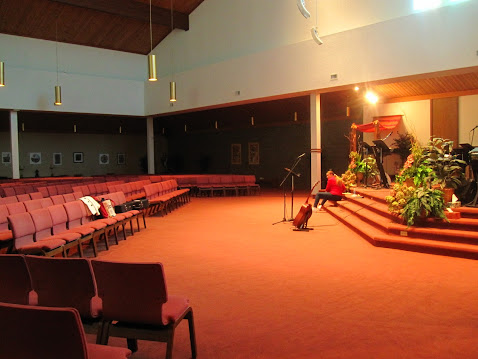
(Linda, in our church's sanctuary)

Over our forty-seven years of marriage Linda and I have had the privilege of helping many marriages. A number of these have been toxic, on the brink of divorce. God has instructed us to restore these marriages. We look at how a marriage can be saved, not on how it can dissolve.

Most cannot envision how a toxic marriage can be helped. Many think a toxic marriage should not be helped. We disagree on both counts. 

At times this puts us at odds with friends and family members who are advising their loved ones to give up and check out of the marriage. This is one reason why, when counseling a toxic couple (or any couple), we are not going to involve friends and family members in the process. Often, friends and family members are contributing to the marriage's demise.

We use a four-step process in marriage saving.

Step 1 - Confess and forgive.

We ask the couple to identify things they have done or said that should never be done or said to anyone, but were aimed at their marital partner.

We ask the couple to be specific in their confessions. This is not about apologizing, but confessing and requesting forgiveness. It looks like this:

"I was wrong in saying/doing what I said/did to you. Will you forgive me?"

The response to this is: "Yes, I forgive you." (Never add the word "but" to your forgiveness, such as: "Yes, I forgive you, but what you did/said to me was wrong, you always do this, etc. etc.")

To which it is appropriate to respond, "Thank you."

We want the couple to practice ongoing confession and forgiveness, as needed. Without this, the marriage won't be rescued.

An excellent resource in learning how to do this is Robert Enright's book, 8 Keys to Forgiveness.

Step 2 - learn how to communicate when in conflict.

The couple needs to learn new ways of speaking the truth in love to one another. No demeaning words are allowed.


We help the couple do this, by assisting them in our counseling meetings, and assigning to practice communicating this way: 

  1. Speak truthfully
  2. Speak lovingly

Both are needed. If we only speak truthfully we could blow people away. I could tell you the truth in unloving ways. Speaking truth without love injures others.


If we only speak lovingly we may never address the truth. This leaves issues undealt with. It feels warm and fuzzy for a while, but the bleeding has not been stopped.


Instead, says Paul, we are to speak the truth in love. The formula is: Truth + Love. That sounds like Jesus, right? Jesus always asserted the truth, and he always did so in love.


We'd like the marital couple to print out and carry this template with them (from Augsburger):
Step 3 - heal the pain and walk step-by-step towards hope.

As the couple engages in ongoing, as-needed, confession and forgiveness, and as they begin to learn new ways of speaking the truth in love to each other, they will be ready to address their pain. They will be able to walk through their pain, with God's help. 

The steps to take are given in Gary Chapman's excellent One More Try: What to Do When Your Marriage is Falling Apart

We expect the couple to invest in their marriage. A good marriage requires work. This involves time and commitment. This is where some couples get stalled. They were hoping for a quick fix; we are hoping for an ongoing relationship.

Linda and I have deeply invested in our marriage. Through the years we have read many books on marital health, attended various conferences on keeping the fire burning in marriage, and watched videos on how to have a healthy, Jesus-centered marriage.

Step 4 - Pray for one another.

We have seen God do great things in a marriage that no human counselor can do. We ask the couple to pray for their partner's well-being in Christ. And, to pray together as a couple.

Here is where the beautiful core values of the Christian belief system begin to kick in and become, not mere religious theories, but experiential realities. Linda and I have seen this happen many times. Few things are as beautiful to us as witnessing God restore and transform a marriage and, as a result, a family. 

***

My two books are:


I am now writing How God Changes the Human Heart, plus editing a book on the Holy Spirit which should be out in late Spring 2019.
I'm getting my act together to write Technology and Spiritual formation.
Then, the Lord willing, Linda and I will write our book on Relationships.

Friday, November 06, 2020

The Biblical Gift of Prophecy


During the pandemic there is a lot of false prophesying going on... 

Plantinga's Modal Version Of the Ontological Argument (From Graham Oppy)


(Warren Dunes State Park, Michigan)

Graham Oppy presents Alvin Plantinga's modal version of the ontological argument as follows.

An entity is "maximally great" iff (if and only if) it necessarily exists and possesses "maximal excellence" (i.e., is omnipotent, omniscient, and morally perfect).

Keeping this in mind, note that a maximally great entity cannot be a contingent thing. As regards contingent things, it is possible that a certain contingent thing exists. E.g., it is possible that a unicorn exists (logically possible).

Therefore, regarding a maximally great thing:

1) Either it is not possible that a maximally great entity exists or it is necessary that a maximally great entity exists.

2) It is (logically) possible that a maximally great entity exists.

3) Therefore a maximally great entity exists. (That is, an entity that is omniscient, omnipotent, morally perfect, and possesses these attributes (i.e. is "maximally excellent") in every possible world.)

Oppy frames it this way.

1. There is a possible world in which there is an entity which possesses maximal greatness.

2. (Hence) There is an entity which possesses maximal greatness.

Oppy writes: "Under suitable assumptions about the nature of accessibility relations between possible worlds, this argument is valid: from it is possible that it is necessary that p, one can infer that it is necessary that p."

Note:

1) it is possible that it is necessary that p.

2) Either p cannot possibly exist or p necessarily exists.

3) Therefore (from P1 & P2, using disjunctive syllogism) p necessarily exists.

Oppy's essay on the Ontological Argument in Stanford Encyclopedia of Philosophy is a good one. He goes on to offer criticisms of Plantinga's version. And gives Plantinga's further reflections on the status of the argument.

Thursday, November 05, 2020

Explaining the Double-Slit Experiment (wave/particle duality of electrons)


I'm reading God, Stephen Hawking and the Multiverse: What Hawking said and why it matters, by David Hutchings.

I just read Hutchings's explanation of the famous "double slit" experiment, where electrons behave both like particles and like waves. I'm thinking, this may be the best explanation of this famous physics experiment that I have ever read.


Tuesday, November 03, 2020

RENEWAL SCHOOL OF MINISTRY CLASSES - SIGN-UP


RENEWAL SCHOOL OF MINISTRY
Strengthen Yourself in the Lord!
You are invited to participate in this life-impacting opportunity to grow in the Lord and to become better equipped for the ministry God is calling you to. Take classes for credit toward a Certificate of Completion or for audit. Participation in Term 1 is not a prerequisite to enrolling in Term 2 classes.

TERM 2 CLASSES: 11/1 - 12/10/2020

Soul Health Pamela Wantz
Sundays, 8pm ET (Nov 1- Dec 6).   

Christian Worldview Peter Conlin Mondays, 8pm ET (Nov 2-Dec 7)

Introduction to Theology #2 Ed Owens Tuesdays, 8pm ET (Nov 3-Dec. 8)

Foundations of Biblical Worship:
Norelle Lutke & Guest Worship Leaders Thursdays, 8pm ET (Nov 5-Dec 10)
SPECIAL RSOM SEMINAR

The Tribulation, the Rapture, & the Second Coming

Seminar Times/Date:  3-hour Zoom meeting on Saturday, November 14
10:00am-1:00pm EDT/ 7am-10am PDT. The seminar will be live.

Seminar Content : This seminar will focus on what the Bible explicitly teaches about the time of the Rapture in relation to the Tribulation period and the Second Coming of Christ. Examining all relevant passages of the Bible as our resource, seminar instructor Dr. Clayton Ford will present numerous compelling reasons why he believes the church will be raptured  after  the tribulation at the Second Coming of Christ, and not before. In light of all that is happening in our world today, it’s imperative that Christians be preparing to  endure,  rather than preparing to  escape See seminar description

Monday, November 02, 2020

Discovering Jesus This Christmas! (31 short videos)


Good Morning!

I am making 31 videos on Jesus - his life, his ministry, his identity, his mission.

These videos are 5-7 minutes long. 

I will send a Jesus video every 3-4 days, during the months of November and December.

If you would like to receive these videos please email me - johnpiippo@msn.com.

Will you join me these two months as we focus on Jesus, so that we might know him more!

Love,

PJ