Monday, September 09, 2019

The Healing Waters of Worship


On Sunday morning,
some enter the sanctuary 
with heavy hearts.
They are burdened.
Dry.
Barrenness is about them.

They are like the flowers on our front steps. 

When they lack hydration, 
when they thirst,
they cry to God for rain,
they hang their heads,
they wither,
they lament.


Then, 
the people begin to sing.
And the rain comes.
Upon the souls of the people.

Praises ascend to heaven.
Mercies pour down.

The river rises.

Heads lift up.

The glassy sea.

Angels sing on the banks of the river
that flows from the throne of God.

I see it in the faces.

Like the flowers on our front steps,
an hour after we water them.

Dry souls respond quickly 
to the healing waters of worship.


Sunday, September 08, 2019

God Will Show Up This Morning

(Redeemer sanctuary)

It's Sunday morning. 7 AM. 

I'm about to take my sermon notes out for a test drive. I am filled with expectation about how God will take these thoughts he has given me, this message I have prayed over, and fill them with his omnibenevolence, omniscience, and omnipotence.

God is going to display his attributes among us, this morning, at Redeemer.

When I shared this with someone they responded, "I sure hope so!"

"It can't," I thought, "be otherwise."

I reason this way.

1. God has promised to be with us and move among us and in us when we gather in his name.
2. This means that when God is among us, all of him is with us. God cannot be in our midst minus his essential omni-attributes any more than the keyboard I am typing on can be less than a keyboard.
3. God will tabernacle with us this morning as Helper, Sustainer, Empowerer, Shepherd, Counselor, Transformer, Reconciler, Forgiver, Provider, Healer, and more.

When he walks into the room, everything changes...

But of course.

Things will be changing in our place this morning. There will be greater conversion into Christlikeness. We will be moved and touched and inspired and broken and in awe and restored and healed.

God is going to hit several walk-off home runs, setting off fireworks in the hearts of the people.

As this is happening, we will be worshiping. We will give great glory to the only Wise and Powerful God who is able to fashion all our ashes into his glory.

God will display his love, knowledge, and power this morning.

I'll share with my church family this great revival prayer from Habakkuk 3:2.

LORD, I have heard of your fame;

I stand in awe of your deeds, LORD.

 Repeat them in our day, 

in our time make them known; 

in wrath remember mercy.

Saturday, September 07, 2019

Judgmentalism Grows In the Soil of Forgetfulness

South Haven, Michigan

Today I am seeing how much I need to be preached to. Because I do not love like Christ loved. He had a pure heart of love; my heart is still being formed in love (Gal. 4:19).

I tend to react in judgment, rather than respond with compassion. I feel more for myself, rather than for others. I am asking God to rip this evil out of me.

Greg Boyd writes:  “Most Christians tend to walk more in judgment than they do in unconditional love… In so doing, we are forsaking the most fundamental job description God gave us: to love others as he has loved us.” (Greg Boyd, Repenting of Religion, 98) 

It is sobering to remember that He has loved us not because we were so ridiculously cute and lovable, but while we were against Him, while we were his enemies. Romans 5:10 says, "For if, while we were God’s enemies, we were reconciled to him through the death of his Son, how much more, having been reconciled, shall we be saved through his life!"

How important is this? Paul wrote, "The whole law is summed up in a single commandment: “Love your neighbor as yourself.” If you bite and devour each other, watch out or you will be destroyed by each other." (Gal. 5:14-15)

I think we are all "hard to love" people, from our subhuman point of view. We think we're not like those "other people." Our tendency to judge flourishes in the soil of forgetfulness. We have forgotten:

1) Who we were when Christ rescued us; and

2) that we are now on Jesus' rescue team, with love as our job description.

***
FOR MORE ON JUDGMENTALISM SEE...


Judgmentalism Shuts the Door to Wisdom


Friday, September 06, 2019

Judgmentalism Shuts the Door to Wisdom


(Pair of Old Testament Prophets, Gabriel Joly, 1530
Detroit Institute of Arts)

"I vividly remember encountering a man who never judged anyone," writes Henri Nouwen in The Road to Peace. (p. 35) 

Are you kidding me? Nouwen met a person who never judged anyone? Amazing!


Then I remembered an older man, a friend, who never judged anyone. As I read Nouwen's amazing claim I thought of this friend. I never, in countless hours of dialogue, over many years, remember him judging anyone. Yet many came to him for wisdom and counsel. Amazing! Super-natural ("beyond nature")!


When Nouwen met the nonjudgmental man he was stunned, and didn't know how to act. He was so used to being around people who are full of opinions of others that he felt lost. "What do you talk about," asked Nouwen, "when you have nobody to discuss or judge?" (Ib.) 


Ask yourself that question. If you have nothing left to talk about, then you are in spiritual trouble.

Slowly, Nouwen discovered that this man did not judge him. Nouwen experienced a freedom in this friendship. He writes: "I realized that I had nothing to defend, nothing to hide, and could be myself in his presence without fear." (Ib.) 


A new kind of conversation opened up that wasn't based on competing or comparing, but on celebrating what any two Jesus-followers have in common; viz., Christ is us, the hope of glory.

Judgmentalism is a form of violence. It causes damage, and destroys the unity Christ achieved on the cross when he brought down the dividing walls of hostility. (Ephesians 3) Nouwen writes: 


"Judging others implies that somehow we stand outside of the place where weak, broken, sinful human beings dwell. It is an arrogant and pretentious act that shows blindness not only toward others but also toward ourselves." (Ib., 34)  As Paul writes in Romans 2:1-4:

You, therefore, have no excuse, 
you who pass judgment on someone else, 
for at whatever point you judge another, 
you are condemning yourself, 
because you who pass judgment do the same things.
2 Now we know that God’s judgment against those who do such things is based on truth. 
3 So when you, a mere human being, 
pass judgment on them and yet do the same things, 
do you think you will escape God’s judgment? 
4 Or do you show contempt for the 
riches of his kindness, 
forbearance and patience, 
not realizing that God’s kindness 
is intended to lead you to repentance?


Judgmentalism shuts the door to wisdom. As Christ is formed in us (Galatians 4:19) we are freed from the heavy burden of judging other people. As understanding prevails over judgment we may find people seeking us out for guidance.


***


Image result for john piippo books

My two books are:

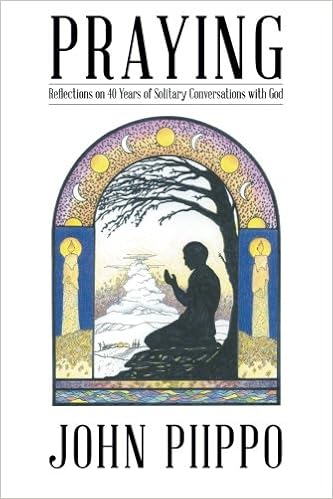
Praying: Reflections on 40 Years of Solitary Conversations with God (May 2016)

Leading the Presence-Driven Church (January 2018)

I co-edited, with Janice Trigg, Encounters with the Holy Spirit.

I am now writing:

How God Changes the Human Heart

Technology and Spiritual Formation

Linda and I plan to co-write our book on Relationships

Image result for john piippo books

The Difference Between Making Judgments and Judgmentalism

(Downtown Monroe)

Jesus tells us to stop judging other people. (Matthew 7:1) Here are some thoughts I have about this.
§  We can, and will, make “judgments” in life. This is unavoidable, and is not the thing Jesus warns us against doing. Consider this judgment: Killing people for fun is wrong. I judge that to be “true.”
Every day we make hundreds of judgments, ranging from moral judgments such as "Sex trafficking is wrong," to “This cup of coffee is too weak,” or "That color looks better on you." When Jesus says “Judge not” he is not referring to making moral judgments or aesthetic judgments or legal judgments or scientific judgments, but is referring to judgmentalism. Judgmentalism is different from making judgments.

§  A “judgmental” person weighs in on the hearts of other people and pronounces, like a trial judge, a verdict. (See James 4.) Like: “guilty.” Or: ”That person is bad.” Or: "You deserve punishment." A judgmental person sees themselves as both judge and jury over others. Judgmental people feast off making moral and spiritual judgments about the motives of other people. Judgmental people see the worst in others irregardless of evidence to the contrary. Judgmental people make pronouncements without evidence, without understanding and compassion, even in the face of counter-evidence, and even on the basis of manifestly false evidence. Judgmentalism is the bedfellow of gossip and slander.

§  Behaviors can and should be judged, but the human heart is difficult to assess. If someone steals from you it is not wrong to say, “They stole from me; stealing is wrong; therefore what this person has done is wrong.” But why did they steal from you? Here’s where caution is advised. Because you and I do not have access to the human heart. Judge the behavior; refrain from judging the person’s heart. How many times I have been either positively or negatively surprised when a person’s true heart becomes evident. Which leads me to say…

§  I have, at times, assessed the hearts of people incorrectly. When my assessment has been negative I’ve built a case against that person. That’s neither good nor helpful. It breeds bitterness. I have made mountains, not out of mole-hills, but out of no-hills. 
Consider Proverbs 20:5, which says that “the purposes of a man’s heart are deep waters.” You and I lack epistemic access to the deep waters of another person’s heart. I can’t at times figure my own heart out! How then can I expect to accurately read the hearts of other people? If you wonder why someone did something that affects you negatively, why not ask them rather than put them on trial in your own mind and before others?

§  If God reveals to you some negative aspect of another person’s heart it is only so that you can pray for them or, with permission, help them. God doesn’t entrust such privileged information to judgmental people.

§  In John 7, in one of his confrontations with the Jewish religious leaders, Jesus asks them to “Stop judging by mere appearances, and make a right judgment.” They have, again, misjudged Jesus. This is because what is seen with the eyes is not equivalent to what lies in the heart. It may “appear” to me that a person has just given me a nasty look. I should not conclude from this that they have a nasty heart. Maybe, maybe not.
Many years ago, when Linda and I were dating, one of her friends told Linda that it appeared I did not like this friend because of the look on my face. Linda assured the friend that I did like her, and by the way that’s how my face normally looks. You can’t judge a book by the cover.

§  Judgmental people are fearful people. Judgmentalism works as a barrier erected to ward off self-scrutiny. If I deflect attention away from my own sin and failure and get people to look at the surface-appearance of sin and failure in someone else, I can breathe easier. Instead of crying out “Search me O God, and know my heart,” the cry becomes “Judge them, O God, for I know their hearts.” Probably not.

§  It’s hard work being the judge of the world. I have spent too many hours trying to figure out what is going on in the brains of other people. Now I am more and more giving this responsibility to God. What a relief! He calls me to love others, not judge them. God is able to speak into the hearts of all the people I find myself wondering about. In the meantime I will do well to allow him to speak to my own heart, and leave the judging of others to him.

I am asking God for freedom from judging the hearts of others. I can make judgments about things without being judgmental towards people. But note this: one cannot make a reasonable judgment without first understanding. It is foolish to judge without understanding.

#1 – Understand.

#2 – Evaluate if needed.

This is wisdom. 

***

***
My books are:

Praying: Reflections on 40 Years of Solitary Conversations with God.


I'm currently working on How God Changes the Human Heart.

Then, Linda and I plan on writing our book on Relationships.

Wednesday, September 04, 2019

3 Bad Reasons to Help Someone Who Has the Entitlement Disease

Detroit
The entitlement disease blinds people to the impact they have on others. When you share with an entitlement person how their choices and behaviors negatively affect you, they freak out, because in their minds it's all about them, not you. 

Entitlement people go nuclear when they don't get their way. 

Entitlement people are supremely inconsiderate.

What causes this? 


"Entitlement creates the illusion that My life and how I impact others are not problems. This illusion creates an atmosphere within which the behavior can continue. If the individual were, instead, to think, "My life and how I impact others are indeed problems, and they are my problems," he’d be much more likely to do the hard work required to change."

- John Townsend, The Entitlement Cure: Finding Success in Doing Hard Things the Right Way (p. 84)

If you want to help someone move from entitlement blindness to responsibility-seeing you must keep two things in mind:


First, deal with your own entitlement issues.


Second, check out your "Why?" Why do you want to help someone who has the entitlement disease?


Townsend gives three bad answers to this question. None of these should be reasons to help someone.


1. To reduce the stress in your life that this person's bad behavior or bad choices cause. 


This "reduces the individual to the role of being a bother to you, a project, something to fix like a leaky faucet, it’s not very loving." (74)


2. To vent your anger on them.


"If this is a project to “set them straight” or to feel a bit of release because you could finally tell them off and show your irritation, the project will fail. Deal with your anger in other ways (prayer, venting to others, working out). Venting is not an effective motive for working with difficult people." (pp. 74-75)


3. To get them to see how they have affected you.


"This motive is about you more than it is about the other person...  Often, the entitled person will at some point have the awareness to see her harmful impact on others. But that awareness should serve her growth, not your satisfaction." (75)


The best answer to this "why?" question is: 
I help because I want them to live well, relate well, and work well. 

In other words, you choose to help because you know that entitlement damages a person’s life, relationships, and ability to successfully complete important tasks. Even at its least destructive, entitlement prevents the person from reaching her full potential. At worst, she could suffer devastating failures, and even an early death. 

The best summary word for this “why” is love. You feel motivated to help because you want better for that person; that is what moves you to engage with him or her. This is the deepest motive of God himself, who acts for our betterment: “But God demonstrates his own love for us in this: While we were still sinners, Christ died for us” (Romans 5: 8). 


Townsend writes, "This kind of motivation will convey the grace and care you really feel toward your entitled individual." (75) 


*****
SEE ALSO:


The Cure for the Entitlement Disease: The Hard Way Principles


Monday, September 02, 2019

If There Is No God, then Right and Wrong Don't Exist (Moral Nihilism)

My back yard

If I was an atheist I would be forced to conclude that morality does not exist. It could not exist, because my atheism would be committed to metaphysical naturalism.

On naturalism (aka physicalism), reality is physical. There are no non-physical facts; hence, no moral facts.

I believe I would find fellow atheists, who express moral outrage, to be odd in the sense of self-contradictory. If morality did not exist, what is the sense of moral outrage?

Attempts to extract morality out of naturalism are akin to pulling rabbits out of hats. University of Virginia professors James Davison Hunter and Paul Nedelisky agree. In Science and the Good: The Tragic Quest for the Foundations of Morality (October 2018), Hunter and Nedelisky argue for the following.


  • Efforts to derive morality from naturalism have repeatedly failed.
  • In the end, science cannot tell us how we should live or why we should be good and not evil, and this is for both philosophical and scientific reasons.
  • In the face of this failure, naturalists (the "new moral scientists") have concluded that right and wrong, because they are not amenable to scientific study, don't actually exist.
  • This is moral nihilism.
  • Moral nihilism turns the science of morality into a social engineering problem.
  • If there is nothing moral for science to discover, the science of morality becomes, at best, a program to achieve arbitrary societal goals.

How Great Is Our God?

(Monroe, Michigan)

I meditate on the greatness of God. As best I can (because an infinite mind can only be understood by itself).

How great is our God? 

As a description of the greatness of God, the essentia Dei (essence of God), Dallas Willard often uses Adam Clark’s portrayal of God. 

Clark states God can be conceived as,


"The eternal, independent and self-existent Being; 
the Being whose purposes and actions spring from himself, without foreign motive or influence; 
he who is absolute in dominion; 
the most pure, 
the most simple, 
the most spiritual of all essences; 
infinitely perfect; 
and eternally self-sufficient, 
needing nothing that he has made; 
illimitable* in his immensity, 
inconceivable in his mode of existence, 
and indescribable in his essence; 
known fully only to himself, 
because an infinite mind 
can only be fully comprehended by itself. 
In a word, a being who from his infinite wisdom, 
cannot err or be deceived 
and who from his infinite goodness can do nothing 
but what is eternally just and right and kind."

From Clark’s description, Willard suggests the key characteristic—perhaps the only vital characteristic—of God’s character is the eternally manifesting presence and effluence** of agape.

(See Gary Black Jr., The Theology of Dallas Willard: Discovering Protoevangelical Faith, pp. 88-89)

* unbounded; unlimited

** a substance (in this case, agape love) that flows out of something (in this case, out of the being of God)

Sunday, September 01, 2019

Only Love Can Drive Out Hate

Redeemer Sanctuary

"How, John, can I pray for you?"

Thank you to those who ask me this. 

My response is: Pray that I would love my enemies from the heart.

This, for me, is the big one. Because I don't - not yet. All the other moral commands follow from this. (Yes, the enemy is my "neighbor.")

How revolutionary Jesus is, to tell us to love our enemies. Why did Jesus extend the cone of love to include enemies? Because retaliating back only deepens hatred. Because doing nothing accomplishes just that, nothing, and where nothing is done relationships further erode. Because, as Martin Luther King Jr.  wrote:


Hate multiplies hate, violence multiplies violence, 
and toughness multiplies toughness 
in a descending spiral of destruction. 
So when Jesus says “Love your enemies,” 
he is setting forth 
a profound and ultimately inescapable admonition. 
Have we not come to such an impasse in the modern world that we must love our enemies—or else? 
The chain reaction of evil—
hate begetting hate, wars producing wars—
must be broken, 
or we shall be plunged 
into the dark abyss of annihilation.

MLK Jr., Strength to Love

Only love can drive out hate.