Tuesday, April 02, 2019
Intercessory Praying
 |
| (I'm praying here today - Lake Erie, Monroe) |
I'm caring with me pages of prayer requests, sent to me this morning. I will spend 3-4 hours praying over these requests (could be longer).
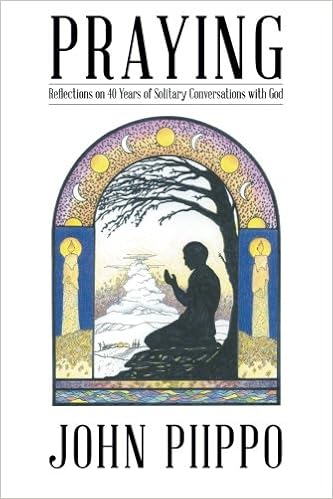
Here are some things I have written on intercessory praying, from my book Praying.
***
Praying with a God-Burdened Heart
The word “intercession” means “to come between.” To pray, in the sense of interceding for someone, means to come between that person and God, on that person’s behalf. In intercessory praying I stand in for someone else.
Lloyd Ogilvie defined intercessory praying this way: Intercession is not so much placing our burdens on God’s heart, but God putting his burdens on our hearts. How does this happen? The God-burdened heart arises from a God-presenced heart. As I consistently and deeply abide in the presence of the Almighty, I encounter people-burdens that lie on the heart of God.
There are many people to be praying for today. As God places his concerns for people on my heart this will be my praying life.
Intercessors Pray Like This
Intercessory praying brings changes in the lives of other persons. Intercession can alter the spiritual situation of those for whom we pray. Do I believe this? Of course. I would not pray for others if I did not believe this.
Paul assumed his prayers for people had causal efficacy. Praying strengthens the people you pray for. Where praying focuses, power falls. In Paul we have a model of how to pray for others. For example:
I pray that, according to the riches of his glory,
he may grant that you may be strengthened
in your inner being with power through his Spirit,
and that Christ may dwell in your hearts through faith,
as you are being rooted and grounded in love.
I pray that you may have the power to comprehend,
with all the saints,
what is the breadth and length and height and depth,
and to know the love of Christ that surpasses knowledge,
so that you may be filled with all the fullness of God.
Ephesians 3:16-19
God, I pray that _______________ would be strengthened in their inner being through Your Spirit.
I pray that You, Jesus, might make ______’s heart Your home.
I pray that _______ might have the power to understand and know Your great love that transcends mere human knowledge.
I pray that _______ would be filled with all Your fullness. In another place Paul prayed for others this way:
Now may our Lord Jesus Christ himself and God our Father, who loved us and through grace gave us eternal comfort and good hope, comfort their hearts and strengthen them in every good work and word.
Intercessors, therefore, can pray like this:
God, I pray that You bring Your comfort and hope to ___________’s heart and strengthen _______ in every good thing they do and say.
- From John Piippo, Praying: Reflections on 40 Years of Solitary Conversations with God


Redeemer - Who We Are
 |
| (Photo by Tim Curry) |
Linda and I were privileged to be on the Robin Sullivan Show yesterday. Robin is featuring Redeemer as their "Church of the Week" (thank you!). (ProclaimFM 102.3 Toledo)
Robin asked for a brief church bio. I gave her this.
***
REDEEMER FELLOWSHIP CHURCH
5305 Evergreen
Monroe, MI
734-242-5277
Redeemer is a Presence-Driven Church. We believe the
presence of God is the church’s great distinctive. (See
Exodus 33:15-16.)
Redeemer values: 1) biblical and theological scholarship so
as to rightly handle God’s Word; and 2) experiencing and
as to rightly handle God’s Word; and 2) experiencing and
encountering God. Redeemer
is academic and experiential.
At Redeemer we view all the people as leaders and
ministers of the Gospel.
At Redeemer we focus on church as a culture of
discernment.
Everyone is involved in this.
At Redeemer we teach people how to abide in Christ,
believing
that, as people abide in Him, our lives will bear
much fruit. Thus, the focus
is not on striving to make things
happen.
For the past year Redeemer’s focus has been preparing
ourselves for revival and awakening. By “revival” we mean:

Pastor John and Linda Piippo are in their 27th
year at
Redeemer.
For more on presence-driven leadership see John’s recent
You may contact John at: johnpiippo@msn.com.
John’s blog is: johnpiippo.com.
Monday, April 01, 2019
Demons in America
 |
| (Redeemer sanctuary, 3/30/19) |
I talked about the need to discern spirits.
Demons.
I preached on demons, identifying them, and battling against them.
I shared my discernment about demons who are behind America's culture battles.
I shared that this message was the outcome of years of discerning, as best I can. And that God told me, "Today is the day to present this." (If you have trouble with idea that God speaks to us, we have a worldview problem. See, e.g., Dallas Willard, Hearing God: Developing a Conversational Relationship with God.)
If you identify as a follower of Jesus, how do you feel about that? Imagine you, in your church, meeting with leadership about some problem, and suggesting that perhaps a demon was involved. How would that be received?
A few years ago, in one of my MCCC Logic classes, we were talking about the existence of God. The students know I am a theist. Which means, I believe that God exists, meaning an omnipotent, omniscient, omnibenevolent, necessarily existent (without beginning and end), creator of all that exists, sustainer of all that exists, immaterial (non-physical) causal agent.
In the middle of the discussion one student asked, "Do you believe demons exist?" A hush came over the room. Students forgot, for a moment, social media. Thirty sets of eyes were lasered on me.
"Yes."
"Why?"
"Because...
- I am not a metaphysical materialist (I find its problems intractable).
- I am a Christian.
- Thus, I believe Jesus is God Incarnate.
- Jesus believed in demons.
- I have come to share Jesus's worldview (on Jesus having a worldview, see anthropologist Charles Kraft, Christianity with Power: Your Worldview and Your Experience of the Supernatural, ch. 9).
- The early church believed in demons. The real battle is not against people ("flesh and blood"), but against satan and demons. (See here.)
- I have been assaulted by a demon, experiencing it physically. (I reasoned this by inference to the best explanation.)
If you self-confess as a Christian, and disbelieve in demons, you do one of two things: Either 1) you eliminate the story of Jesus, the Jesus of the Gospels, since he believed in demons and drove them out of people, as well as instructing his disciples to do the same; was tempted by satan; told his disciples to pray for protection from "the evil one"; defeated satan and death via his death on a cross and resurrection from the dead; or 2) you are forced to demythologize the Jesus story with its demon-infested worldview, declare that demons don't exist, and that (perhaps) Jesus was speaking figuratively about demons, or not at all.
I cannot, intellectually and experientially, do either. For example, New Testament scholar Richard Bauckham writes:
"Jesus’ exorcisms had the special value of dramatizing his power to overcome the forces of evil and to rescue those who were enslaved to them. He said: If it is by the finger of God that I cast out demons, then the kingdom of God has come to you. (Luke 11:20) Though Jesus was by no means the only Jewish exorcist, so far as we know he was the only one to link his exorcisms with the new thing that God was doing: the coming of the kingdom. For this to have been at all plausible, he must have been an exceptionally successful exorcist, something which is also suggested by the fact that other exorcists apparently took to using Jesus’ name as the word of power with which they drove out demons. Jesus’ success as an exorcist provoked his enemies to find an alternative explanation for it. They said that Jesus was in league with the powers of evil and was himself possessed by the prince of the demons." (Bauckham, Jesus: A Very Short Introduction, p. 40)
So, on Sunday morning, I again confessed my belief that demons exist, that our real battle was against them, and I shared my discernment about the demonic activity at the root of our current cultural malaise.
I shared that today, in America, we are dealing with a different kind of demon. To illustrate this, I used Mark 6, where Jesus gave his disciples authority (exousia; from or out of one's being) to "drive out" demons. I then said that soon, after the disciples drove out "many evil spirits," they faced a different kind of demon, which they could not drive out. That's in Mark 9, where Jesus says, "You failed, because this kind can only be driven out by prayer."
I quoted Martyn Lloyd-Jones here, who writes:
"Jesus was telling his disciples this - ‘You have failed in this particular case because the power that you had and which was sufficient and adequate for the other cases, is inadequate and of no value here.
It just leaves you utterly helpless and hopeless and it leaves the boy in his diseased and powerless condition.’…
What our Lord said to the disciples is this: you will never deal with this sort of problem until you have been praying, concentrating in prayer, waiting upon God, until he has filled you with the power. When you know you have got it, then you go out with authority…
As we look at the expression, ‘this kind’, I wonder whether as Christian people we are aware of the real depth of the problem which confronts us, in a spiritual sense, at this present time.
I ask that question because it seems to me to be so clear, from the activities of many, that they have not even begun to understand it.
They are carrying on with certain methods which were once successful, and they pin their faith to them, and they do not realize that they are not only not successful, but that they cannot be, because of the nature of the problem that is confronting them.”
Nothing short of a mighty outpouring of the Spirit of God is adequate to deal with our situation in America today.”
Lloyd-Jones, Revival
I see two reasons why a self-confessing Christian would disbelieve in the reality of demons (there may be more). The first has to do with worldview. The second is textual, about interpretation. After my encounter with a demon I began to consider their actual existence. Now, many years later, I reason this way.
1. Textually, I find the stories of Jesus's demonic encounters historical and explanatory of his mission.
2. I see reality as not fully reducible to material conditions. I am not under the Enlightenment spell of metaphysical naturalism. I am not an anti-super-naturalist who denies the existence of non-physical realities.
In the Gospels, Jesus encountered and cast out demons. Why would we not do the same? Indeed, why would not this be focal in the Church, much-talked about and taught?
Dear friends, do not believe every spirit,
but test the spirits to see whether they are from God,
because many false prophets
have gone out into the world.
This is how you can recognize the Spirit of God:
Every spirit that acknowledges
that Jesus Christ has come in the flesh is from God,
but every spirit that does not acknowledge Jesus
is not from God.
This is the spirit of the antichrist,
which you have heard is coming
and even now is already in the world.
You, dear children,
are from God and have overcome them,
because the one who is in you
is greater than the one who is in the world.
1 John 4:1-4
Do not believe every spirit. Including the spirit that says, "I don't exist."
And, BTW, God is a spiritual, immaterial, non-physical being himself.
And, BTW, God is a spiritual, immaterial, non-physical being himself.
***
My two books are:
Praying: Reflections on 40 Years of Solitary Conversations with God (May 2016)
Leading the Presence-Driven Church (January 2018)
I am in the last stages of editing Encounters with the Holy Spirit.
I am now writing:
How God Changes the Human Heart
Technology and Spiritual Formation
Then, God willing, Linda and I will write our book on Relationships.
***
FOR FURTHER READING ON DEMONS
Greg Boyd, God at War: The Bible and Spiritual Conflict; and Satan & the Problem of Evil: Constructing a Trinitarian Warfare Theodicy.
Charles Kraft, Defeating Dark Angels: Breaking Demonic Oppressions in the Believer's Life. Note: See Kraft's Christianity with Power: Your Worldview and Experience of the Supernatural. Kraft is an anthropologist (formerly at Michigan State University) and missiologist at Fuller Theological Seminary. When I read Clark Pinnock's introduction to this book I knew I needed to read it. See esp. the chapter "Jesus Had a Worldview." It's scholarly and readable.
Richard Beck, Reviving Old Scratch: Demons and the Devil for Doubters and the Disenchanted
M. Scott Peck, People of the Lie. For me it was chilling to read this book, written by Peck the psychiatrist as he tells clinical stories of demon possession.
Does Satan Exist? Greg Boyd's "S.I.N. Hypothesis"
John Calvin on Demons
M. Scott Peck, People of the Lie. For me it was chilling to read this book, written by Peck the psychiatrist as he tells clinical stories of demon possession.
Does Satan Exist? Greg Boyd's "S.I.N. Hypothesis"
John Calvin on Demons
Redeemer Featured on the Robin Sullivan Show This Week

Today at 4:30 I will be interviewed by radio host Robin Sullivan.
4:30 PM, PROCLAIM FM 102.3.
Redeemer will be the featured church on her show all next week.
Saturday, March 30, 2019
Church Life in America as Funny
 |
| (Monroe) |
Linda and I are reading together Francis Chan's Letters to the Church. We really like this book. Several times I have said to Linda, "That's enough reading for me - I can't take any more!" Because it is so spot on.
A main way - arguably the way - to evaluate how your church is going is to read it in light of the Book of Acts. When you look at some churches, you can get this kind of feeling Karl Barth had when he looked at the church in Germany, and then read his Bible only to find "the strange world of the New Testament."
Chan tells a story of when he was in China, visiting underground churches. Young people were sharing stories of being persecuted. They were "praying so passionately, begging God to send them to the most dangerous places... I had never seen anything like it. I still can't get over the fearless passion for Jesus this church embodied." (154)
Then Chan writes:
"As they shared stories of persecution, I sat in amazement and asked for more stories. After a while, they asked why I was so intrigued. I told them the church in America was nothing like this. I can’t tell you how embarrassing it was to try to explain to them that people attend ninety-minute services once a week in buildings and that’s what we call “church.” I told them about how people switch churches if they find better teaching, more exciting music, or more robust programs for their kids. As I described church life in America, they began to laugh. Not just small chuckles; they were laughing hysterically. I felt like a stand-up comedian, but I was simply describing the American church as I’ve experienced it. They found it laughable that we could read the same Scriptures they were reading and then create something so incongruent." (154-155)
Journey to the Center of the Self (The Inner "Mysterium Tremendum")
 |
| (Sterling State Park'Lake Erie, through the rain on my car windshield) |
It's Saturday morning. I'm going out to Sterling State Park to pray. I'll be there 1-2 hours. When I do this I often ask God to search my heart, and see if there are any ungodly things he wants to free me of. My prayer time is a journey inward, whcich leads to the outward journey.
Henri Nouwen writes:
"Spiritual formation requires taking an inward journey to the heart. Although this journey takes place in community and leads to service, the first task in to look within, reflect on our daily life, and seek God and God’s activity right there. People who dare to look inward are faced with a new and often dramatic challenge: they must come to terms with the inner mysterium tremendum—the overwhelming nature of the inner life." (Nouwen, Henri, Spiritual Formation: Following the Movements of the Spirit, K 195)
"Mysterium tremendum."
I first encountered this term in Rudolf Otto's classic The Idea of the Holy. "Mysterium tremendum" (MT) refers to an experience of awe, even fearfulness, in the encounter with God.
MT is, for Otto, a non-rational (= non-discursive) experience. "Non-rational" does not mean "irrational," but rather an experience that cannot be captured in the steel nets of logical language. It cannot be discoursed about; hence, it is a non-discursive experience. Put more simply, there's way more in the experience than can be captured by intellectual reason. Surely the real encounter with the Living God has this quality.
Otto coins the term "numinous" to refer to the non-discursive experience of God. "Numen," for Otto, refers to God. A "numinous" experience is a way of speaking of a God-encounter that cannot be fully captured by human reason. Such experience is what Paul Ricoeur and others call a "limit-experience," containing a "surplus of meaning." (On Ricoeur and limit-experiences see, e.g., here, p. 66)
Picking up on Otto's language, C.S. Lewis writes:
"Suppose you were told that there was a tiger in the next room: you would know that you were in danger and would probably feel fear. But if you were told "There is a ghost in the next room," and believed it, you would feel, indeed, what is often called fear, but of a different kind. It would not be based on the knowledge of danger, for no one is primarily afraid of what a ghost may do to him, but of the mere fact that it is a ghost. It is "uncanny" rather than dangerous, and the special kind of fear it excites may be called Dread. With the Uncanny one has reached the fringes of the Numinous. Now suppose that you were told simply "There is a might spirit in the room" and believed it. Your feelings would then be even less like the mere fear of danger: but the disturbance would be profound. You would feel wonder and a certain shrinking–described as awe, and the object which excites it is the Numinous. " (C.S. Lewis, The Problem of Pain)
Nouwen uses "mysterium tremendum" metaphorically to refer to the encounter with the depths of one's own being, "the overwhelming nature of the inner life," and God and God's activity happening there. Referring to another book I read a long time ago, this is what Morton Kelsey called the "adventure inward." Call this the Journey to the Center of the Self. Entrance into the inner sanctuary, the temple within ("You are a temple of the Holy Spirit"; "Christ in you, the hope of glory").
Here is where spiritual formation takes place. "Spiritual formation requires taking an inward journey to the heart." (Nouwen) The inward journey is dangerous and exhilarating, as much so as interstellar space travel would be. This is how those who have made the journey and lived to write about it describe it.
Dare to travel inward. Adventure deep, led by God's Spirit.
- Look within.
- Reflect.
- Seek God and God's activity there.
***
My two books are:
Praying: Reflections on 40 Years of Solitary Conversations with God (May 2016)
Leading the Presence-Driven Church (January 2018)
I am now writing:
Encounters with the Holy Spirit (I'm editing this collection of writings from my HSRM colleagues. Should be out in June!)
I've begun writing...
Transformation: How God Changes the Human Heart
Then...
Technology and Spiritual Formation
Then... Linda and I plan to co-write our book on Relationships
Thursday, March 28, 2019
My Two Books (and Four More to Come)

My two books are:
Praying: Reflections on 40 Years of Solitary Conversations with God (May 2016)
Leading the Presence-Driven Church (January 2018)
I am now writing:
Encounters with the Holy Spirit (I'm editing this collection of writings from my HSRM colleagues. Should be out in June!)
I've begun writing...
Transformation: How God Changes the Human Heart
Then...
Technology and Spiritual Formation
Then... Linda and I plan to co-write our book on Relationships
Wednesday, March 27, 2019
Easter Was Not Borrowed From a Pagan Holiday
 |
| (Downy woodpecker in my backyard.) |
Someone asked me a question about Easter - was "Easter" originally a pagan holiday? The answer is: "No."
See "Was Easter Borrowed From a Pagan Holiday?" (The historical evidence contradicts this popular notion.)
The Irrelevancy of the Non-Praying Church
 |
| (Redeemer sanctuary. 3 PM. 3/21/19) |
For decades I have taught pastors and Christian leaders how to have a praying life. I develop this in my book Praying: Reflections on 40 Years of Solitary Conversations with God.
Pastors and Christian leaders are irrelevant and inauthentic if they do not have a Jesus-type praying life (found, e.g., here). This is because praying is talking with God about what you and God are doing together. To not pray is to be out of touch with what God is thinking and doing.
I'm re-reading Francis Chan's Letters to the Church. Chan says the same thing here.
"Is prayer something you do only before you eat or something your church does only when it needs to transition out of the sermon while the band walks onto the stage? Would you say that prayer plays any meaningful role in the life of your church? If prayer isn’t vital for your church, then your church isn’t vital. This statement may be bold, but I believe it’s true. If you can accomplish your church’s mission without daily, passionate prayer, then your mission is insufficient and your church is irrelevant." (Chan, p. 62)
Subscribe to:
Posts (Atom)