Friday, March 11, 2022

Atonement - Jesus Died In Our Place


(Jerusalem)

ATONEMENT IDEAS from Fleming Rutledge's The Crucifixion. (See here.)

  • “As a result of the original sin of Adam, the entire human race has been mired in sin and incurred the wrath of God.

  • God cannot overlook sin as though it had not occurred. Sin must be punished.

  • Jesus, the only-begotten Son of God, entered into the place of sinners and took the punishment on himself.

  • On the cross, particularly as shown in the cry of dereliction, Jesus submitted to the curse upon sin and underwent God’s judgment.

  • By deflecting the wrath of God onto himself, Jesus took it away from humanity.”

Rutledge writes:

The plain sense of the New Testament taken as a whole gives the strong impression that Jesus gave himself up to shame, spitting, scouring, and a degrading public death beyond the eyes of the whole world, not only for our sake but also in our place. (p. 529).


There is something deep in the human psyche that responds to the idea of substitution – someone who dies in my place so that I may live – and the loss of it from the preaching and teaching of the church  [AKA progressive Christianity] would be grievous. (466)


Thursday, March 10, 2022

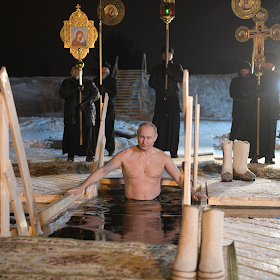
Putin's Religious Roots, and His War Against Ukraine


(President Putin immerses himself in the icy waters at Lake Seliger during Orthodox Epiphany celebrations in January,

See here. ALEXEI DRUZHININ/KREMLIN VIAREUTERS)

A case is being made that, at the root of Putin's hatred towards Ukrainians, lie his religious roots. 

There are MANY articles and studies on Putin and Christianity.
For beginners, I suggest reading these in the order they are in.


For a counter-article, see this. https://www.theglobeandmail.com/opinion/article-putins-invasion-of-ukraine-has-nothing-to-do-with-religion/ 

Wednesday, March 09, 2022

Now Reading...


I read multiple books at a time. This partly explains why I suffer in other areas (e.g., home repair; exercise; TV trivia; etc.).


Two books I am now reading are...

Fleming Rutledge, The Crucifixion: Understanding the Death of Jesus Christ. O... M...  G. I'm only fifty pages into the book, and see why Christianity Today gave it a "Book of the Year" award.

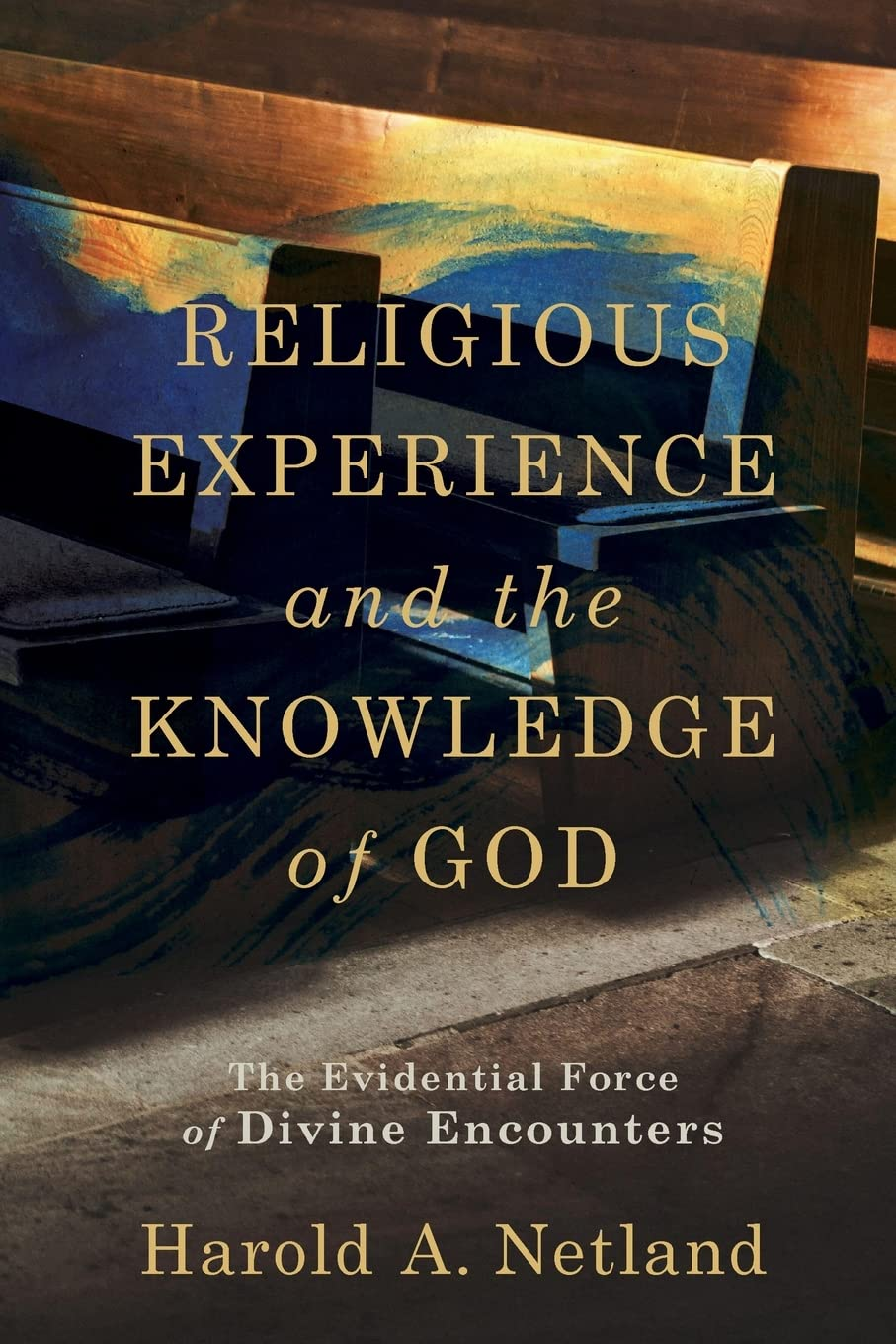
Harold Netland. Religious Experience and the Knowledge of God: The Evidential Force of Divine Encounters. While I value logic and critical thinking (having taught logic for eighteen years at Monroe County Community College), I believe experience, not theory, breeds conviction. This book is deepening that thought in me. See CT's interview with Netland here.


Atonement Lies at the Heart of the Christian Faith


                                                                    (Door, in Jerusalem)

Some progressive Christians argue that humanity has never been separated from God. If that were true, then our sin has not separated us from God. The implication of this is universalism; viz., the idea that all persons are saved. (See my book Deconstructing Progressive Christianity, ch. 8.)

This reasoning eliminates the idea that Christ died an atoning death to forgive the sin that has separated us from God.

The problem with this "progressive" thinking is that it's not what the Bible teaches. 

For example, Romans 4:25 states that Christ “was put to death for our trespasses and raised for our justification.” By Jesus' atoning, sacrificial death, we can be reconciled to God. William Lane Craig writes, 

"Reconciliation is the overarching theme of the NT, and other important NT motifs such as the Kingdom of God, salvation, justification, and redemption are subservient to it. Atonement in this sense thus lies at the heart of the Christian faith." (Craig, The Atonement, p. 4)

Tuesday, March 08, 2022

Atonement as At-One-Ment


                                                       (Sterling State Park - Monroe)

We see the word 'atonement' in Romans 3:25-26.

25 God presented Christ as a sacrifice of atonement, through the shedding of his blood—to be received by faith. He did this to demonstrate his righteousness, because in his forbearance he had left the sins committed beforehand unpunished— 26 he did it to demonstrate his righteousness at the present time, so as to be just and the one who justifies those who have faith in Jesus.

William Lane Craig writes:

"The word “atonement” is unique among theological terms, being a derivation, not from Greek or Latin, but from Middle English, namely, the phrase “at-onement,” designating a state of harmony. The closest New Testament (NT) word for atonement in this sense is katallagÄ“ or reconciliation, specifically reconciliation between God and man. Reconciliation is the overarching theme of the NT, and other important NT motifs such as the Kingdom of God, salvation, justification, and redemption are subservient to it. Atonement in this sense thus lies at the heart of the Christian faith."

- Craig, William Lane. The Atonementp. 4. 

Monday, March 07, 2022

Craig Keener on the darkness of violent evil and the war in Ukraine

 https://www.christianitytoday.com/ct/2022/february-web-only/russia-ukraine-war-demons-angels-present-global-darkness.html


The Atonement - What Did God Accomplish?


                                              (I took this photo of Maracas Bay in Trinidad)

Greg Boyd writes:

Through the incarnation, life, death and resurrection of Jesus Christ the infinitely wise God solved a number of problems. Among other things, 

  • through Christ God defeated the devil and his cohorts (Heb 2: 14; 1 Jn 3: 8);
  • revealed the definitive truth about himself (Rom 5: 8, cf. Jn 14: 7-10); 
  • reconciled all things, including humans, to himself (2 Cor 5: 18-19; Col 1: 20-22);
  •  forgave us our sins (Acts 13: 38; Eph 1: 7); 
  • healed us from our sin-diseased nature (1 Pet 2: 24); 
  • poured his Spirit on us and empowered us to live in relation to himself (Rom 8: 2-16); 
  • and gave us an example to follow (Eph 5: 1-2; 1 Pet 2: 21). 

    • Greg concludes that "God’s wisdom is displayed in a “rich variety” indeed!"


From Beilby and Eddy, The Nature of the Atonement: Four Views, p. 23


***

I'll be making posts on the Atonement through Good Friday.

If you want to dig deeper, see the Beilby and Eddy book.

See William Lane Craig, The Atonement.

Sunday, March 06, 2022

Facebook "Likes" and Adulation Addiction

(Plaque, in a store in Cleveland)

It’s our generation’s crack cocaine. 
People are addicted. 
We experience withdrawals. 
We are so driven by this drug, 
getting just one hit elicits truly peculiar reactions. 
I’m talking about Likes. 
They’ve inconspicuously emerged as the first digital drug to dominate our culture.


Facebook, and social media, allow me to communicate ideas (when my blog posts appear on FB), communicate with my Redeemer family, show and receive photos to and from people I care about, and other good things. Social media has a significant upside. It's also creating a world of adulation addicts. I feel the pull myself.

Mike Bickle, in Growing In the Prophetic, writes of a time when he was traveling with John Wimber, speaking regularly before crowds of thousands of people. Mike found that "I enjoyed the attention and honor more than I realized." (143) For followers of Jesus, this is not good. 

Bickle says, "We didn't have enough spiritual maturity to discern some basic warning signals about pride." (144) This is a dangerous spiritual condition to be in! ("O come, let us adore (like) me.") Pride is the oppositional emotion. (See James 4:6.)
We all need affirmation. We don't need to be worshiped. We do need to feel appreciated. We don't need adoration and adulation. 

There is a fine line between affirmation and adulation. The healthy glow of affirming words can morph into self-worship addiction. When we become attached to the affirmation we live for it, rather than living selflessly for God and others. As Jesus hung on the cross, how many "likes" would he have received?


Affirmation-as-adulation can become a drug, and off we go fishing for the next fix. One way to fish for praise is to perform before others. When the presence of God ends, the performance before others begins. At this point all of life's a stage, and we await the reviews.

How can we get off the crack cocaine Facebook offers us? 
Solitude with God can break us of this. By "solitude" I include "Internet solitude," meaning not getting alone with your laptop, but retreating from it. Go apart from persons and media and laptops and texting and tweeting so God can love you even when you are not performing. It is in that quiet place with God that I hear His "well done," and "John, I love you." 

He likes me. When I am discovered by God, and find my life's worth in being His beloved child, I am released to love and serve others apart from any performance review.


***
Here are Dr. Kimberly Young's Five Signs of Facebook Addiction. (I'm quoting in full.)

In my practice, I have found five key signs of Social Media Addiction that hold true and to illustrate, I am using Facebook Addiction to describe the signs demonstrate obsessive or compulsive behavior:
1. You spend a lot of time thinking about Facebook or planning how to use it. You feel a preoccupation to using Facebook or the immediate need to share. This may result in over-sharing. In an age of privacy, over-sharing stems from saying too much and then regretting what we said. Those who suffer from an addiction do not always judge what is appropriate or inappropriate to post due to their preoccupation with checking and responding, which leads to a constant engagement in the activity.
2. You feel an urge to use Facebook more and more. This means checking out for any updates to your newsfeed or responses to your posts every time you do not know what to do. In other words, the default choice for your free time activity is to be on Facebook. You may leave your Facebook open in the background, switch between work or class assignments to the page every few minutes. Even when you are outside enjoying a drink with a friend, you log in to the Facebook app on your smartphone every now and then during brief moments of non-interactions.
3. You use Facebook in order to forget about personal problems. One aspect of addiction is the ability to use the behavior as a psychological escape from problems. A person may had job or relationship problems and the addiction becomes a convenient way to temporarily soothe the underlying stress created by the problem. When using Facebook as an addiction, the user is distracted in whatever it is he or she is doing and finds it hard to be fully present at the moment. For addicts, they may take a significantly longer amount of time to complete simple tasks or maybe some of their friends may complain that they don’t pay enough attention to what they say. The use of Facebook then becomes a distraction from problems because one’s attention is always diverted with its use.
4. You become restless or troubled if you are prohibited from using Facebook. With addiction, there is an element of withdrawal. We associated with withdrawal from drugs and alcohol and not necessarily behaviors but studies show that people can also go through withdrawal from additive behaviors like Pathological Gambling. When we talk about Facebook addiction, you may start to feel anxious if you can’t access your network. Perhaps you are someplace without cell service, people who feel addicted start to become restless or feel depressed when they are forced to go without access to Facebook.

5. You use Facebook so much that it has had a negative impact on your relationships. As you get used to communicating on Facebook via messaging, sharing photos and posts, commenting and ‘liking’ others, it may come to a point when you get more comfortable socializing online than offline. You become over-reliant on Facebook to fulfill your social needs and may start sacrificing the time spent on real-life meet-ups for coffee with your friends. The behavior becomes unhealthy such that you become uncomfortable or fearful with face-to-face communication, which is a far richer experience than communicating online where one cannot actually see non-verbal communication as in the body language, gestures, and voice tones.

Atonement - The Death of Jesus on a Cross Heals the Separation Between Us and God


                                                      (I took this off the coast of Boston.)

Progressives refer to atonement theory as “cosmic child abuse.” Former Christian musician Michael Gungor says “that God needed to be appeased with blood is not beautiful. It’s horrific.” (In Alisa Childers, Another Gospel?, p. 201)

This is progressive Christianity, re-interpreting the cross to be palatable to our secular culture.

Alisa Childers writes: Despite the abundance of biblical testimony, "the one thing that virtually all progressive Christian thought leaders agree on is that Jesus didn’t die to pay the penalty for our sin. He was crucified by an angry mob for speaking truth to power, and his love and forgiveness toward those who killed him is the example we all should follow. According to progressive Christians, Jesus didn’t need to die, but he submitted himself to the will of the people. According to their wisdom, the historic view makes God nothing more than an abusive father.” (Childers, p. 206)

If Christ did not die to atone for our sins, which have separated us from God, then... 

... What could Isaiah have been thinking when he wrote, “Your iniquities have made a separation between you and your God, and your sins have hidden his face from you” (Isa. 59:2).

... When Romans 3:23 tells us that “all have sinned and fallen short of the glory of God,” how does “fallen short” not imply separation from the glory of God?

... How does the biblical idea of “repentance” [TURN!] make any sense if unrepentance (holding on to sin) is not widening the separation between us and a holy God?

... What meaning can “reconciliation” have if it doesn’t imply two separated, at-odds-with-each-other, beings?

... What sense will Romans 5:10 have if, we have never been separated from God? For if, while we were God’s enemies, we were reconciled to him through the death of his Son, how much more, having been reconciled, shall we be saved through his life!

Doesn’t the idea of gaining access to peace with God (shalom, like two separated hands coming together in a handshake) imply a condition of not being at peace with God? Like, enemies of God?

Are there not “sheep” and “goats?” (To Jesus, G-O-A-T doesn’t mean “greatest of all time.”)

Will not there be, at the final judgment, a great separation of humanity from God or, as C.S. Lewis called it, a “great divorce?”

Is not some kind of atonement required, as it says in Romans 3:25-26?

25 God presented Christ as a sacrifice of atonement, through the shedding of his blood—to be received by faith. He did this to demonstrate his righteousness, because in his forbearance he had left the sins committed beforehand unpunished— 26 he did it to demonstrate his righteousness at the present time, so as to be just and the one who justifies those who have faith in Jesus.

And then there is the parable of the prodigal son, whose sinful choices separated him from his loving father.

          And the joyful response of his father when the son returns home.

A denial of the atoning work of Christ, to pay the penalty we deserved because of our sin, is heterodoxy.


HERE IS WHAT I BELIEVE…

I believe all have sinned, and fall short of the glory of God.

I believe sin makes a separation between us and God, and us and others. (The wages of sin is death.)

I believe God hates sin.

I believe God’s holiness cannot be grasped without comprehending the nature of sin.

I believe the fundamental reason for the OT sacrifices is atonement, so that sinners could be forgiven by the holy One.

I believe the suffering of the Messiah was clearly prophesied. (See Isaiah 53. See The Gospel According to Isaiah.)

I believe Christ died for our sins.

I believe it was the will of God to die in the place of sinners.

I believe that the Cross was God’s idea.

I believe it was God who died in our place.

(From Piippo, Deconstructing Progressive Christianity, p. 111). Kindle Edition.


To dig deeper, read chapter 8 in Deconstructing Progressive Christianity.

And... 

The Atonement, by William Lane Craig

Atonement and the Death of Christ, by William Lane Craig

The Nature of the Atonement: Four Views, ed. by James Beilby and Paul Eddy

Five Views on the Extent of the Atonement, ed. Andrew Louth


Saturday, March 05, 2022

Hearing God Is in Proportion to Intimacy with God


                                                              (River walk, in Monroe)

I hear and understand my wife Linda's voice because I spend time with her talking and listening. The more familiar I am with her, the more I dwell with her, the more I am able to discern her voice from other voices.

The same goes for my relationship with God. 

To hear the voice of God don't focus on hearing God, focus on your connection with God. Dwell in his presence. Abide in Christ. Out of the dwelling, abiding relationship we learn to recognize and understand the voice of God.

Hearing God is in proportion to intimacy with God.

Conversely, when intimacy is low discernment is low. 

The growing ability to discern what God is saying in the prayer relationship comes from much conversational time with God. As Henri Nouwen writes: "Once we have committed ourselves to spending time in solitude, we develop an attentiveness to God's voice in us." (From Making All Things New, cited in Nouwen, Seeds of Hope, 64)