Wednesday, April 10, 2019

Three Truths to Remember

Image result for john piippo being
(Seeds, in my back yard)


Henri Nouwen, in Spiritual Direction, writes of three things that were deepened in his heart as a result of his move to L'Arche and caring for handicapped people.

1. Being is more important than doing.

Nouwen writes: "God wants me to be with him and not do all sorts of things to prove I'm valuable." (44) 

God loves you, not for what you do, but for who you are; viz., his beloved son or daughter. Human loves are often performance-based. God's love is not. The distinction between the two is important. 

Internalize this truth. Pray, Nouwen-like, "God, bring this truth that is in my mind into my heart."

2. The heart is more important than the mind.

Nouwen writes: "When you've come from an academic culture, that's hard to learn." (44) 

Nouwen was an academic who taught for two years at Notre Dame, ten years at Yale, and three years at Harvard. In his work with the mentally handicapped that he "saw that what makes a human being human is the heart with which one can give and received love... People with physical and mental disabilitiies easily can let their hearts speak and this reveal a mystical life unreachable by many intellectually astute people." (45)

Yes, we are to love God with our mind. But when Paul wrote this it was out of a culture that had not yet been Cartesianized. Hebrew culture does not make a absolute metaphysical distinction between "heart" and "mind." 

Jesus is after the human heart. Human minds vary greatly in ability. While God wants us to use whatever mental capacities we have for his glory, God can work through the heart of a mentally handicapped person. Mental assent to Jesus is not enough. But when the heart is captured, one's mental abilities are neither some special asset nor debilitating detriment to God.

3. Doing things together is more important than doing things alone.

At L'Arche Daybreak Nouwen befriended a severely handicapped man named Adam until Adam died. Nouwen writes: "Adam's story is my story of weakness, vulnerability, and dependency, but also of strength, authenticity, and giftedness." (46) 

Our non-tribal Western culture is individuated, valuing  autonomy more than community. Many have been trained by our culture to want to do life by ourselves, giving us the idea that we will do a better job if we do it alone. 

But when we work together, more people get to own the results. The more corporate ownership there is, the better "church" will be. Plus, as Nouwen says, there is much to be gained from others as we learn to collaborate. God uses collaborative, tribal activity to teach us things about ourselves and others.

Nouwen's three truths really came together when I worked at United Cerebral Palsy of Will County, Illinois, for one year and three summers. I was beginning my PhD studies. The hyper-academic environment of Northwestern University's philosophy department was met by a year of helping the physically and mentally handicapped. 

While, on the one hand, I was studying Heidegger's Being and Time and Sartre's Being and Nothingness, on the other hand I was being-with and learning from the disabled and culturally marginalized. At first it seemed like a clash of civilizations. Eventually, slowly, my heart was captured and began to inform my mind. I loved these students and learned much from them, not for what they could do, not for their cognitive abilities, but for who they were, revealed as we spent many hours together.

***
My two books are:

Praying: Reflections on 40 Years of Solitary Conversations with God


Leading the Presence-Driven Church 

I am currently writing:


Encounters with the Holy Spirit (editing, should be out in June)

How God Changes the Human Heart

Technology and Spiritual Formation


After that, God willing, Linda and I will write our book on Relationships.

Tuesday, April 09, 2019

Study the Presence-Driven Church with Me in New York City

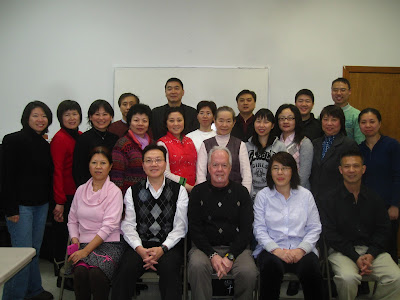
Image result for john piippo faith bible church
(With Dr John Hao and Faith Bible Seminary students)
I will be teaching Leading the Presence-Driven Church at Faith Bible Seminary in New York City this June.

If you want to study with me here is the information.

M-Th, June 3-6, 2019.

To audit - $190.

For credit - $380.

$50 registration fee for new students.

I'll be teaching my text Leading the Presence-Driven Church (required).

My teaching will be in English, translated in-class into Mandarin (this is a Chinese theological seminary). 

More information + the syllabus TBA.

Contact: 

Faith Bible Church

(718) 961-9355

Contact me:

johnpiippo@msn.com


Pastors Do Not Minister to Human Changing Desires


Chicago

My fellow pastors...

We are not the ministers of peoples' changing desires,

or time-conditioned understanding of our needs, 

or secularized hopes for something thing better. 

We are lashed tight to the mast of word and sacrament so we will be unable to respond to the siren voices of relevance. 

We deal with foundational realities - God, kingdom, gospel. 

If we give in to the ever-shifting sands of populism we'll end up living futile, fantasy lives. 

Our task is to keep telling the basic story, representing the presence of the Spirit, insisting on the priority of God, speaking the biblical words of command and promise and invitation.

- Adapted from Eugene H. Peterson. Working the Angles: The Shape of Pastoral Integrity (Kindle Locations 244-249).

Monday, April 08, 2019

The Church Should Be Distinctive, Not Relevant

(Michigan flowers)

I'm slow-cooking in Yale University theologian Miroslav Volf's Public Faith. I'm reading what he says about "the relevant church." The culturally blended, relevant church accommodates. Accommodationism is rooted in the fear of irrelevance. Volf writes:

"The accommodation is necessary because otherwise the faith would remain tied to the relics from the past—implausible interpretations of reality and outdated moral convictions—and cease to be compelling to people today. From this perspective, the choice is between accommodation and irrelevance. (Volf, Miroslav. A Public Faith, p. 84).  


Volf argues that liberal Christianity's accommodationist strategy has failed. For two reasons.


1. Contemporary culture is changing at too fast a pace. What is relevant today is irrelevant tomorrow. The popular church names of today lose relevance as the signs are being made. Perhaps we could change the name of our church daily. We could have a changeable street sign, which would be a sign of what God was doing in us at the present moment.  


Volf quotes G.K. Chesterton, who said: “those who marry the spirit of the age will find themselves widows in the next.” (Quoted in Ib.) Pay attention, all ye relevant churches.


2. Christian communities who accommodate to culture to be relevant "are in effect giving up on promoting change," since they "are accommodating to what they have not shaped and are only able to shape in a limited way."


Volf writes:


"Reconstructions of the Christian faith guided by the strategy of accommodation carry in themselves the seeds of possible Christian self-destruction. After they have accommodated, for the most part what remains for Christian communities to do is to appear after a non-Christian show and repeat the performance in their own way for an audience with Christian scruples. The voice of the Christian communities has become a mere echo of a voice that is not their own." (Ib., 85)


Volf cites Stanley Hauerwas and Will Willimon, who say: “Alas, in leaning over to speak to the modern world, we had fallen in. We had lost the theological resources to resist, lost the resources even to see that there was something worth resisting.” (In Ib.) 


So what shall we do?


3. We should nurture our distinctives. "Christian communities will be able to survive and thrive in contemporary societies only if they attend to their “difference” from surrounding cultures and subcultures. The following principle stands: whoever wants the Christian communities to exist must want their difference from the surrounding culture, not their blending into it. As a consequence, Christian communities must “manage” their identity by actively engaging in “boundary maintenance.” Without boundaries, communities dissolve." (Volf, Miroslav. A Public Faith, p. 81)


The Jesus-community is different from the surrounding culture. Shore up that which is distinctive to Christian culture and strengthen that which is central.

Declarations for Biblical Sexuality


At Redeemer our staff has been reading and discussing Mark Yarhouse's Understanding Sexual Identity: A Resource for Youth Ministry. It's excellent.

I just picked up Yarhouse's new book Sexual Identity & Faith: Helping Clients Find Congruence. It gets great reviews. 

I also recommend Yarhouse's Understanding Gender Dysphoria: Navigating Transgender Issues in a Changing Culture. 

Here are two slides from Understanding Sexual Identity, on unhelpful and helpful declarations (thoughts) re. sexuality.


Sunday, April 07, 2019

Be a Thermostat, Not a Thermometer

Boat, on Lake Michigan

Be a thermostat, not a thermometer.

A thermometer reacts to the environment, going up and down as a response to external conditions.

A thermostat sets the temperature and influences the environment. The environment responds, going up and down as a response to internal conditions.

Thomas Merton saw many persons as thermometers, living as automatons, "no longer moved from within, but only from outside themselves. They no longer make decisions for themselves, but let them be made for them." (Through the Year with Thomas Merton, p. 108)

Merton continues,

"Such a man no longer acts upon the outside world, but lets it act on him. He is propelled through life by a series of collisions with outside forces. His is no longer the life of a human being, but the existence of a sentient billiard ball, a being without purpose and without any deeply valid response to reality." (Ib., p. 109)

Such a person is shaped into the form of this world (Romans 12:1-2), rather than being inwardly transformed and influencing culture.


***
My two books are:

Praying: Reflections on 40 Years of Solitary Conversations with God

Leading the Presence-Driven Church 

I am currently writing:


Encounters with the Holy Spirit (editing, should be out in June)

How God Changes the Human Heart

Technology and Spiritual Formation


After that, God willing, Linda and I will write our book on Relationships.

Humility (Jack Deere on...)

(Sculpture in the courtyard of The Israel Museum, Jerusalem)


Jack Deere has written about "humility" in his excellent little book The Beginner's Guide to the Gift of Prophecy.  Here are some highlights.

God values humility. "This is the one I esteem: he who is humble and contrite in spirit, and trembles at my word." (Isaiah 66:2)

1 Peter 5:5-6 says: "All of you, clothe yourselves with humility toward one another, because, "God opposes the proud but gives grace to the humble." Humble yourselves, therefore, under God's mighty hand, that he may lift you up in due time."

The humble hear and understand the voice of God. God deals with the proud from a distance, but with the humble "it's up close and personal." (72)

Deere writes (astonishingly!):  "I've never heard a sermon or a theological lecture on humility. I've heard lots of sermons on faithfulness, service, purity, giving, judgment, grace, mercy, obedience, prayer, meditation and spiritual gifts, but I can't remember ever hearing humility talked about." (72)

"Humility is the virtue to which our flesh is most opposed, because it is the soil from which so many other virtues grow." (72)

"Humble people are small in their own eyes." (72) See what the prophet Samuel said to Saul in 1 Sam. 15:17.

"Humility is not the denial of our attributes; it is believing in our hearts that our best qualities are not good enough to cause us to deserve God's attention, or even to gain us the lowest position of service to Him." (73)

"Humble people know it is not their physical strength, nor their intelligence, nor their luck, but the Lord who determines the outcome (see Prov. 21:31; 16:9, 23)." (73)

"Humble people put their confidence in the mercy of God rather than in their abilities or character (see Rom. 9:15-16)." (73)

"Humble people put their confidence in the Holy Spirit's ability to speak, not in their ability to hear. Humble people put their confidence in Jesus' ability to lead, not in their ability to follow." (74)

"Humble people are willing to associate with and serve people of lower position, just as Jesus and our Father do." (74

"Humble people have learned to embrace their weaknesses." (74)

We can't get humility by reading about it.

"No one becomes humble without pain doing its work. Often that pain takes the form of desert experiences. Humility is almost always acquired in the desert." (75)

"The desert is necessary because no human being has the character to bear perpetual success." (75)

Acquire humility by hanging around humble people.

"Humility is produced by pain, being with Jesus, being with humble people and is a life-long process (see Phil. 3:12-14)." (78)

Francis Frangipane, in The Three Battlegrounds, called pride "the armor of darkness." C.S. Lewis, in Mere Christianity, called pride "the complete anti-God state of mind." So, if our hearts are proud, we won't hear from God, which will make it unlikely that we will truly prophesy (in the sense of 1 Cor. 14:1-4).

How important is humility when it comes to the desire to prophesy? Mike Bickle, in Growing In the Prophetic, says: "This is not a good time for a "know-it-all," but rather it's the proper time for the virtue of humility expressed in a teachable spirit as we go to greater depths in the prophetic." (x)

Saturday, April 06, 2019

Power Failure: The #1 Reason for Religious Doubt

Detroit Institute of Arts

In elementary school, a long, long time ago, we had something called "show and tell." A student would tell of something they had (like a pet) or had done (like a vacation), and then show the class the object of their speech (produce the pet; show photos of their vacation). They would proclaim and demonstrate. The demonstration was more exciting than the proclamation; the proclamation provided context to understand the demonstration.

The German philosopher Immanuel Kant wrote, famously: "Perception without conception is blind; conception without perception is empty." Which means: perceiving something by the senses is not cognizable (not recognizable) if there is no understanding; understanding something not accompanied by perceiving that something has no content (leaving us with empty ideas).

A sermon without a demonstration of God's love and power is just empty words.

Proclaim and demonstrate. We need both, in our church communities and outside the walls of the church building. This was the method of Jesus, and the early church. They spoke of the power and love of God, then watched as God demonstrated his power and love. This is what is most needed in churches today. There is too much proclamation and too little demonstration. 

When I was in Billings, Montana, I spoke on healing. My colleagues from Holy Spirit Renewal Ministries were there. One of them, Pastor Ross Lieuallen, hosted the event at his church.

After I preached, I prayed for a woman who had multiple physical problems. She was healed in many physical, emotional, and spiritual ways. I shared her story at Redeemer, and the effect her healing had on others that night. One of her friends stays in touch and tells me of the effects that evening had on her.

Experiences like this are faith-building. Stories like this will be important for the Church in the days ahead. I share why, in my book Leading the Presence-Driven Church (December 2017). 

Proclamation (sermons) without demonstration (miracles) fuel unbelief. The lack of such experiences in churches is the number one reason people doubt the truth of Christianity. J. P. Moreland writes:

"If you had to guess, what would you identify as the most prominent source of doubt in America today? Is it certain discoveries of science, incredulity about some stories in the Bible, the intolerance of Jesus’ claims to be the only way? These are not even close. In his study of doubt and defection from Christianity, sociologist Christian Smith claims that far and away the chief source of doubt comes from God’s apparent inactivity, indifference, or impotence in the face of tragedy and suffering in their life and in other’s lives, and the apparent lack of God’s interventions and help in the toil and fatigue of daily troubles." (J. P. Moreland, in Loving God with Your Mind: Essays in Honor of J. P. Moreland, p. 225)

The apparent lack of God's interventions and help... How sad, when many of us are witnessing the kind of things I saw in Montana.

Smith, the University of Notre Dame scholar, "claims that a major source of faith development and strengthening are spiritual experiences: “Very many modern people have encountered and do encounter what are to them very real spiritual experiences, frequently vivid and powerful ones. And these often serve as epistemological anchors sustaining their religious faith in even the most pluralistic and secular of situations.” (Ib.  Emphasis mine.) 

We have them at Redeemer. Your church community, as well, I pray. I expect more this coming Sunday. They are powerful convincers and faith-builders, signs that the rule and reign of God is real.

***

I am now writing...

How God Changes the Human Heart

Technology and Spiritual Formation

Thursday, April 04, 2019

Join Linda and I As We Invest In Our Marriages

Image result for john piippo marriage
(Graham and Hillary's wedding - Linda's nephew)

VERTICAL MARRIAGE: 

Linda and I have done many things over the years to invest in our marriage. One way we do this is by reading books on marriage, and talking about them. 

We are currently reading Vertical Marriage, by Dave and Ann Wilson. 

We feel led to invite marital couples to join us in reading it. 

1) Purchase the book. 
2) Read it together as a couple. 
3) Discuss it together as a couple. 
4) Talk about what God is saying to you, about your marriage. 

Then, sometime this summer (date and place TBA), Linda and I would like to host all of you for an evening of sharing about our marriages, and what God spoke to us through this book. 

If you have couples from your church who want to join us perhaps we could set up a Skype evening to talk about the book, and our marriages. Let me know!   johnpiippo@msn.com

***
After I complete (the Lord willing) other writing projects, Linda and I plan to co-author our book on Relationships.

Character Comes Before Ability

On the west side of Michigan, Lake Michigan shoreline

Character is more important than ability. If I have to choose, I'll take someone with high character and low ability before someone with high ability and low character. Through the years abilities decrease, but character can keep increasing. As Paul wrote, Though my abilities are wasting away, my character is being transformed day by day. (2 Cor. 4:16, Piippo translation)

In After You Believe: Why Christian Character Matters., N. T. Wright says, "The central thing that is supposed to happen "after you believe" is the transformation of character." This is the Galatians 4:19 thing - that Christ be formed in you. Or, as Paul says in 2 Thessalonians 1:12 - "We pray this so that the name of our Lord Jesus may be glorified in you, and you in him, according to the grace of our God and the Lord Jesus Christ." 

This formation, the development of Christ-character in you, is our calling. It happens as we indwell Christ.

The goal of our own character formation into Jesus-likeness is love. Love is "the greatest of the" core virtues. We may disagree with others, but we must never cease loving them. Jesus loved those he disagreed with so much that he died for them. We are to even love our enemies, in spite of our opposing views. Anything less than this and you have left Jesus.


What will character formation look like? Because it comes from attachment to Christ, it will look like Christ. Christ gives you, forms you, meta-morphs you into one who loves and lives as Christ is.

Wright's example is Sully Sullenberger, the US Airways pilot who landed a disabled passenger jet in the Hudson River and saved 155 lives. The character of a pilot had been formed in him. He no longer needed to wear a wristband that asked, "What Would a Pilot Do?" (WWPD) Rather, "the skills and ability ran right through him, top to toe." 


Wright says "The key to it all is that the Christian vision of character that has become second nature is precisely all about discovering what it means to be human - human in a way that most of us never imagine."

Regarding Sullenberger, "virtue is what happens when wise and courageous choices have become "second nature." Not "first nature," as though they happened naturally. Like an acquired taste, such choices and actions, which started off being practiced with difficulty, ended up being "second nature." (James K. A. Smith and Dallas Willard say the same.)


For Wright, our "first nature" is our subhumanity. The "second nature" Christ wants to form in us is his nature, which is true humanity. God wants to rescue us out of our subhumanity and transform us into true humanity. Some, when they fail, say "I'm only human." They should say, "I'm subhuman." 

Wright's book shows how God metamorphs us from subhumanity into true humanity, how God forms our character into Christlikeness.

What can I do about this? I look at my own self, and focus on my own change. I pray to be transformed into someone who is more like Jesus, and loves their enemies so much they would even die for them. I learn to live an abiding life, which is the place where the character of Jesus flows into me, like a vine resources its branches.

***
My two books are:

Praying: Reflections on 40 Years of Solitary Conversations with God (May 2016)

Leading the Presence-Driven Church (January 2018)

I am in the last stages of editing Encounters with the Holy Spirit.


I am now writing:

How God Changes the Human Heart

Technology and Spiritual Formation


Then, God willing, Linda and I will write our book on Relationships.