Monday, March 11, 2024

Confess and Forgive

(Store, in Ann Arbor)

When Linda and I are asked "What makes for a good marriage?" we respond: confession and forgiveness. C&F.

C&F is more important than clear communication. When X says to Y, "You are stupid" and Y responds with "I hate you" (with a four-letter word added), they are communicating clearly. But this kind of clear communication does not make for a good marriage. 


Here's how I confess to Linda (and she to me). I say the words, "I was wrong to (do or say this specific thing)."


Then I request, "Would you forgive me for doing/saying this?"


She responds with, "I forgive you."


C&F is more powerful than apologizing. Apologizing can be a one-way street; C&F moves two ways. Every confessor needs a forgiver. A certain kind of loving response is needed.


To confess requires humility. In confessing I take responsibility for my hurtful actions, and do not blame the other for "pushing my buttons." After all, those buttons are mine, and if I didn't have them I wouldn't have reacted the way I did. 


It's also destructive to look for hot buttons on others, and use words or actions to set them off. 

A confessor admits their own culpability in wrongdoing. This requires humility, accompanied by regret ("I am sorry I did that to you. Would you forgive me? I never want to treat someone I love that way.") Don't let pride keep you from doing this.

To forgive means: to cancel a debt. When Linda and I forgive one another (which we have done many times over 45 1/2 years), we release the other from any indebtedness. Forgiveness cancels indebtedness. If the Federal Government forgave your student loan you would not have to make any more payments. When X forgives Y, X will not in the future "make Y pay" for whatever Y did. Again, don't let pride keep you from doing this.


To forgive is not to forget. But our experience is that, when this is practiced as needed (and it is needed in every marriage and friendship), a lot of forgetting happens. This is because C&F cuts loose the heavy anchor that had us stuck in that bad place, and now we're moving free from it. We no longer spend our hearts and minds brooding over the details of the struggle, because the matter has been settled and healed.


Why practice C&F? Linda and I do this because we are like the sinful woman who kissed and poured perfume on  Jesus' feet. She had been forgiven much. Therefore she loved much.


(Note: If you repeatedly keep hurting your loved ones, then get help for yourself. If a loved one keeps hurting you with their words or actions then: 1) forgive them; and 2) assist them in getting help for their repetitive harmful behavior. If you live in our Southeast Michigan area make an appointment to get help here.)


For scholarly, empirical data on C&F see University of Wisconsin scholar Robert Enright's The Forgiving Life: A Pathway to Overcoming Resentment and Creating a Legacy of Love; and check out Enright's International Forgiveness Institute.


The best practical guide to C&F is David Augsburger's Caring Enough to Forgive. 

Sunday, March 10, 2024

Is God in the Old Testament a Moral Monster?


                                                                    (Monroe, MI)

In 1 Samuel 15:3 we read: “Now go, attack the Amalekites and totally destroy all that belongs to them. Do not spare them; put to death men and women, children and infants, cattle and sheep, camels and donkeys.”

In Deuteronomy 20:16 ff. we read: "in the cities of the nations the Lord your God is giving you as an inheritance, do not leave alive anything that breathes. 17 Completely destroy[a] them—the Hittites, Amorites, Canaanites, Perizzites, Hivites and Jebusites—as the Lord your God has commanded you. 18 Otherwise, they will teach you to follow all the detestable things they do in worshiping their gods, and you will sin against the Lord your God."

Joshua 6:21 says: They devoted the city to the Lord and destroyed with the sword every living thing in it—men and women, young and old, cattle, sheep and donkeys.

These verses, and several others, talk about "herem," a Hebrew word that can be translated as "devote to destruction.

The idea of herem has led some to say the God of the Bible is a "moral monster."

Here are some resources from Paul Copan that have helped me understand these troubling verses.


BOOKS

Paul Copan, Is God a Moral Monster: Making Sense of the Old Testament God

Copan, Did God Really Command Genocide: Coming to Terms With the Justice of God

Copan, Is God a Vindictive Bully?: Reconciling Portrayals of God In the Old and New Testaments

Copan (ed.), War, Peace, and Violence: Four Christian Views


VIDEOS

Copan (Interview with Preston Sprinkle),  Is God a Moral Monster? Dr. Paul Copan (youtube.com)

Copan (Interview with Sean McDowell), Is God a Moral Monster? Dr. Paul Copan (youtube.com)


PIIPPO BLOG POSTS

John Piippo: Is God a Moral Monster?: #5

John Piippo: Is God a Moral Monster?: #4a

Friday, March 08, 2024

The Cure for the Entitlement Disease: The Hard Way Principles


(Bald eagle in a tree near our house)

Psychologist John Townsend's The Entitlement Cure is a helpful read. It's guiding me to look closely at areas of "pocket entitlement" that I have. It's giving insights to help others who have pocket entitlement, and even global entitlement.

Here are some things about the entitlement disease.

"Entitlement directs us to judge God for how the world works, for the bad things that happen to us that we don’t understand, and for things that didn’t happen that we desired. Entitlement says, “My way of looking at life is beyond his,” because entitlement creates a deep sense of being special and above it all." (50)

"Entitlement goes deeper than a person thinking, It’s okay if I want to be lazy because someone else will bear my burdens, or I’m so special that the rules don’t apply to me. In fact, entitlement goes so deep that it rejects the very foundations on which God constructed the universe. At its heart, entitlement is a rejection of reality itself." (51)

"Ever since Eden, we humans want to be like God, with all his privileges and power, and — the very definition of entitlement — we feel it is our right. Entitlement infects our brains with the notion, I have a right to more and better; in fact, I am owed that." (52)

All this is unreality. Townsend says that God's principles lie at the core of reality. The more you experience and follow them, the better life becomes for you and those in your life. Townsend calls this "the hard way."

The "Hard Way" Principles are:

1. Humility and Dependence - We Are Completely Dependent on God.

"Humility is simply accepting the reality of who God is and who you are. When you see the reality of his power, his love, and his care, you more easily see yourself as who you are: a loved creature, a special creature, an important creature, but a creature nonetheless. 

Dependence means you look to him for your sustenance, for every breath you take." (54)

Entitlement, however "tells you to be your own boss and determine your own destiny. Entitlement teaches you to say, "You're not the boss of me!" It implies that you can be and do anything you want, demand of the others around you anything you want, and that it’s lame to depend on anyone." (55) 

2. Connectedness - We Are Designed to Live in Connectedness with Each Other.

"We live in a relational world and a relational culture, summarized by Jesus’ teaching: “My command is this: Love each other as I have loved you” (John 15: 12). Love comes from him, and we are to love not only him but each other." (56)

The entitlement mentality subverts healthy relationships and community in two ways. 

First, entitlement objectifies. "When one person treats another as a need-meeting object or as a dispenser of some desired commodity, that is objectification. People objectify each other sexually. A good listener may be sought out for her ability, but who remembers to ask how she’s doing?" (56)

"The self-absorbed attitude of entitlement makes it difficult to see people as having needs, feelings, and lives of their own. Forget “walk a mile in my shoes” — entitled individuals can only envision the lives of others as an extension of their own. They can’t enter fully into the experience of the other individual." (58) 

Second, entitlement creates unhealthy self-sufficiency. This is the idea that I don't need others to sustain and support me. "Entitlement is anti-need; it will cut you off from the supplies that your life requires to carry on." (59)

"If connectedness is the fuel of life, then entitlement results in an empty tank for the entitled person. And that causes breakdowns in relationships, love, career, self-care, and spirituality." (59)

3. Ownership - We Have to Take Responsibility for Our Own Choices.

Entitlement builds a huge obstacle to healthy ownership, in two ways: low ownership and externalization.

"Low ownership: Individuals who don’t take ownership of their lives sometimes live as if their actions have no consequences. They tend not to see beyond the present; their concern is for what they need and desire right now. They’re surprised when they lose jobs or relationships. Most of us are aware of the basic principle that “If you sow X, then X is what you will reap,” but not the entitled person." (60)

"Externalization: People with an attitude of entitlement often project the responsibility of their choices on the outside, not the inside. The fault lies with other people, circumstances, or events. They blame others for every problem. Their entitlement prohibits them from taking the beam out of their eye and asking the all-important question: How did I contribute to this latest problem? Instead, they default to answers outside their skin. The result? They tend to be powerless and unhappy. They tend to see life through the eyes of a victim. And their suffering is unproductive — it doesn’t get them anywhere." (61) 

"Blame," writes Townsend, "is a first cousin to entitlement." Blame is a life-killer.

4. Accepting the Negative - Your Flaws Can't Be Forgiven and Healed Until You Admit Them.

"God made a way through Christ so that we could live with the negative as it truly is, without denying it or minimizing it. In a relationship with Christ, we feel permission to be who we truly are, warts and all. We don’t have to hide, pretend, or put our best face forward. We are known and loved just as we are by the one who matters most. This enables us to love others the same way. 

The result of acknowledging and accepting the negative is that the negative then can be transformed. When you are okay knowing your failings, you can face them, bring them to God and to the people with whom you feel safe being vulnerable, and heal whatever is driving those feelings. This is the key to great growth. It’s a paradox, but the ones who run from the negative will suffer from it, while the ones who accept the negative will find the power to change it." (63)

Entitlement drives you away from admitting your flaws. The entitled attitude has three directions that destroy the "It Is Well With My Soul" life. They are:


  • Denial. "The person in denial simply turns her back on reality. She refuses to admit her flaws to herself or anyone else, which eliminates any possibility of deep and satisfying relationships."
  • Perfectionism. "The person caught in perfectionism beats himself up for failures, minor or major. His standard for performance is perfection, and he offers himself little grace when he stumbles. He constantly scrutinizes and condemns himself, and never makes it to a point of self-acceptance."
  • Narcissism. "The narcissistic person adopts a grandiose view of himself that hides his flaws, which usually lie buried under deep shame and envy. He is so afraid to see himself as he really is that he reacts in the opposite direction, toward the “I’m special” stance, in which he becomes arrogant and selfish and has difficulty feeling empathy for others."
5. Finding Our Role - To Live Long and Contentedly Find Your Purpose in Life and Fulfill It. 


"Finding your role means that you are giving back to the world over time in a sustained and steady way, and this attitude actually contributes to your living longer. Research indicates that the number one factor in longevity is not social relationships or happiness, but conscientiousness, described as persistence, dependability, and organization." (66)

Entitlement block this in two ways.

  • Entitlement limits the person's goals. "One of the most limiting ideas of entitlement thinking is that the end goal of life is happiness: “I just want to be happy, that’s all.” Entitlement says that the highest good is to be a happy person — but in fact, that is one of the worst endgame goals we can have. People who have happiness as their goal get locked into the pain/ pleasure motivation cycle. They never do what causes them pain, but always do what brings them pleasure. This puts us on the same thinking level as a child..." (66)
  • Entitlement limits the individual's growth. Entitlement freezes development. "It keeps us from growing, learning, challenging ourselves, or trying new things. It whispers to us, “That sounds really hard and it doesn’t look like it’s worth it.” When we listen to this voice, something inside us goes to sleep. We might become couch potatoes, video addicts, chronic partiers, or simply get in a rut and routine that becomes boring and deadening." 

Thursday, March 07, 2024

Living Faithfully In the Discomfort Zone


Image result for john piippo comfort
(Downtown Detroit)

On occasion I hear someone speak about their "comfort zone." Like: "Sorry, but what God wants me to do is out of my comfort zone."

The comfort zone is the environment where they feel safe. This is the place of little discomfort. This is a utilitarian approach to life; viz., do what gives me the most comfort most of the time, and the least pain most of the time.

This is the American H-god. It's "Happiness." As one song says, "Clap along if you think that happiness is the truth, Because I'm happy." (See The Happiness Industry: How the Government and Big Business Sold Us Well-Being. See also: "If Everything Is So Amazing, Why's Nobody Happy?") 

I don't even know what "happiness is the truth" means.

The idea of a "comfort zone" is a recent European and North American invention. It has nothing to do with God's plans and purposes. (See Happiness Industry - the "comfort zone" is rooted in the utilitarianism of Jeremy Bentham.) Yes, we find great promises of peace and rest throughout the Scriptures. No, you will not find comfort zone maintenance there.


In Scripture we see that what really pleases God is "faith." We are told that without faith it is impossible to please God. "Faith" and "comfort zone" do not overlap. We do not read the book of Hebrews saying, By faith Abraham stayed in his comfort zone.


If we stay in our comfort zones, it will be impossible to please God. Faith entails going into places and situations and human lives where, to be honest, we would rather not go. (See here, e.g.) Faith moves from comfort to discomfort. That is its nature. Jesus may tie a belt around you and take you where you don't want to go. (See here.)


"Faith" is RISK. Obedience by faith escorts us into the Discomfort Zone for the Cause of Christ. Think of missionaries. Then, think of yourself as a missionary, planted where you are. 

As Jesus died on the cross he was bleeding in the Zone of Universal Discomfort, for you and I. He was not there to furnish our man-caves with decorative crosses. He calls us to a life of faith that is accomplished by cross-bearing, within the enemy territory of this world's present darkness. We move out of the comfort zone and into the fire.

In Revelation 14:4 we read about the martyrs who refused to worship the beast: They follow the Lamb wherever he goes. It was uncomfortable. Their suffering was redemptive. 


If we give our lives to Jesus as Lord he will own us, tie a belt around our waist, and lead us into places we would rather not go. He will increase the borders of our comfort zone to those of his kingdom.

Wednesday, March 06, 2024

Ministry Demands More Than Our Best


Image result for john piippo abide
Next to Payne Theological Seminary, Wilberforce, Ohio

Jesus tells me that, if I connect with him, if I live the connected life, I will do the things he did. 


Very truly I tell you, whoever believes in me 
will do the works I have been doing...
John 14:12

Now that...   would greatly help me as a pastor. God would work through me to heal the sick, deliver the oppressed, raise the dead, and speak with an authority that is not from me.

My meager abilities, even when working with excellence, fall short of what Jesus did. If ministry was a game of horseshoes, Jesus is throwing nothing but "ringers," while my tosses are landing a foot in front of me.

More than me is needed.

Stephen Seamands writes:

"Of course, ministry deserves our best-all that we have to offer. But it also demands more than our best, more than anything we have to offer. To participate in the ongoing ministry of Jesus, to do what the Father is doing, we must be filled with the Holy Spirit. Only through the Holy Spirit's directing and empowering us can we fulfill our calling."
- Stephen Seamands, Ministry in the Image of God: The Trinitarian Shape of Christian Service, Kindle Locations 248-250

Monday, March 04, 2024

The Historical Case for the Resurrection of Jesus


THE HISTORICAL CASE FOR THE RESURRECTION OF JESUS 

PRESENTED BY DR. JOHN PIIPPO WITH A Q & A

 TO 
LA-Z-BOY CENTER ATRIUM

MCCC Christ-Centered Community

Is Easter the celebration of a myth or legend of a man rising from the dead? Or is it a bold historical claim that welcomes intellectual scrutiny?

We believe that the historical claim that Jesus of Nazareth rose to life from the dead has strong evidence that any open-minded intellectual should take seriously.

Whether you are a Christian or not, thinking deeply about the eyewitness accounts of the resurrection will help you understand why billions of people throughout the world of every age, race, gender-identity, and economic class think this is good news.

Skeptics, non-believers, pagans, and people of all faiths will be loved, honored, and welcome to hear our case, and ask hard questions!

John Piippo has a PhD in Philosophical Theology from Northwestern University. John taught Philosophy at MCCC for eighteen years. John is the author of six books and serves as a pastor at Redeemer Fellowship Church in Monroe.

Sunday, March 03, 2024

Richard Dawkins on Wokery, Sex, and Gender


If you don't like this, take it up with evolutionary biologist and atheist Richard Dawkins. He can handle it. 

He likes to discuss. And, he knows more about genetics than you do. ( For Dawkins and theistic geneticist Francis Collins in dialogue, go here.)

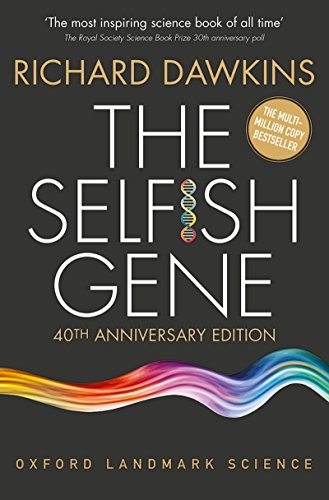
Dawkins is still the world's most famous intellectual atheist. And, his book The Selfish Gene has been used in university biology classes.

Dawkins was interviewed by Piers Morgan. The full interview is here. I find it interesting.

Here's a snippet, on sex and gender.

Piers: They (woke-ists) want to de-gender and neutralise language, but they're doing it from a completely false pretext that you can somehow pretend biology doesn't exist, particularly when it comes to someone's sex. A small group of people have been successful in reshaping swathes of the way society talks and is allowed to talk.

Richard: It's bullying. We've seen the way JK Rowling has been bullied, Kathleen stock has been bullied. They've stood up to it, but it's very upsetting the way this tiny minority of people has managed to capture the discourse to talk errant nonsense.

Piers: What's the answer?

Richard: Science. There are two sexes. You could talk about gender, if you wish and that's a subjective.

Piers: But when people say there are 100 genders?

Richard: I'm not interested in that. As as a biologist, there are two sexes and that's all there is to it.

Piers: Why have we lost that ability to actually have an open and frank debate?

Richard: There are people for whom the word discuss doesn't mean discuss, it means you've taken a position.

Again, If you don't like what Richard Dawkins is saying here, I recommend you take it up with him. I simply report this to you. 

🙂 

A heads-up. To dialogue with Dawkins you must understand what he means by 'science' and its limits.

Remember also that Dawkins, as a scientist, despises postmodern thinking.

Saturday, March 02, 2024

Renewal School of Ministry - SPRING CLASSES


Study with great Christian leaders. Only $10/class!

Renewal School of Ministry

Spring Term Starts March 18, 2024

For more information or to register please go to our web page at www.hsrm.org/rsom.


1. Christian Leadership - Pastor John Grove

Starting Monday March 18,2024 @ 8 PM ET for 6 weeks

2. Church History and Polity - Pastor Ed Owens

Starting Thursday March 21,2024 @ 8 PM ET for 6 weeks

3. Ambassadorship 101 Seminar - Dr Clayton Ford

Saturday, March 23, 2024 10:30 am to 1:30 pm ET, 9:30 am to 12:30 pm CT, 8:30 am to 11:30 am MT, 7:30 am to 10:30 am PT

4. Ready or Not -Tribulation, Rapture & the Second Coming of Christ Seminar-

Dr. Clayton Ford

Saturday April 13, 2024 10:30 am to 1:30 pm ET, 9:30 am to 12:30 pm CT, 8:30 am to 11:30 am MT, 7:30 am to 10:30 am PT

5. Hearing God’s Voice’ ---- Streams Ministry teachers, Doug & Pam Wantz

Sunday, April 21, 2024 - 5:00 pm - 8:00 pm ET, 4:00 pm – 7:00 pm CT,

3:00 pm – 6:00 pm MT, 2:00 pm – 5:00 pm PT


6. Biblical Answers to Cultural Values Seminar

Panel of Clay Ford, John Piippo, & Holly Collins

Saturday April 6, 2024

8am to 10am (PT), 9am to 11am (MT), 10am to noon (CT), 11am to 1pm (ET)


Friday, March 01, 2024

Orthodoxy and Progressivism: The Two Rooms


                                   (I took this when Linda and I were teaching AME pastors in Trinidad.)


(This is from the Introduction to my book Deconstructing Progressive Christianity.)


This is a book about beliefs.

Progressive Christians are introducing people in our churches to a heterodox kind of Christianity.  

I have officiated at many weddings over the past five decades. That’s a lot of great eating at the wedding receptions! Several of these have been memorable. Here’s one I will never forget. 

Jessica and Jason’s wedding ceremony was beautiful, especially because of the spiritual beauty of this couple. Linda and I love being part of weddings where the bride and groom are passionate Jesus-followers. That was us, too, at our wedding on August 11, 1973! Jason and Jessica had their reception in a banquet hall in Toledo. The hall had two large gathering rooms. These rooms were identical twins, mirror images, of each other. I did not know the other room that was set up exactly as the one we were in. This is important to understand. 

Connecting the two rooms was a long hallway, with rest rooms in the middle that were utilized by both rooms. So, we have two identical rooms, with shared bathrooms between the rooms. Do you understand?

During the reception I needed to use the rest room. I walked out of the banquet hall, down the hallway, and turned right into the rest room. Upon leaving, I turned right and walked down the hallway, through the door, and back into the banquet hall. Can you see where this story is going? 

While I knew many of the people at Jason and Jessica’s wedding, they had several guests and family members I had not yet met. As I walked around the banquet hall there were people I did not recognize. OK. That’s to be expected. Then I saw the table Linda and I were seated at. She was not there. OK. I’ll look for her. What was weird was that strangers were seated where we had been sitting. I admit to feeling upset about this.  

As my eyes scanned the room, there was no one that I recognized. The wedding dance for Jessica and Jason was beginning. I strained my eyes and looked closely at the bride. It wasn’t Jessica! And Jason wasn’t holding her in his arms! I thought I heard the four notes from “The Twilight Zone” in my head. Here I stood, in a room identical to the one for Jessica and Jason. But something was not right. I exited that wedding reception, walked back down the hall, past the rest rooms (where Ishould have turned left), and into the correct room. There, Linda was seated at our table. My friends were there. Jessica and Jason were finishing their wedding dinner at the main table. What a relief! 

This is how it is, for me, with “progressive Christianity.” Some of the furniture seems identical to what I believe. Indeed, some things are good, such as the desire for greater community, and working to bring God’s justice upon the earth. And there’s more than that. But, as I have met with progressive Christians, and read their literature, some things don’t feel right to me. Indeed, some things seem downright wrong, dangerous, and, if I may use the word, heretical. Heterodox. It feels like another religion to me, an offshoot of Christianity. I see Progressive Christianity as being in a different room, with a different story, with different beliefs.