Wednesday, November 11, 2020

Helping Toxic Marriages - 4 Steps

Image result for johnpiippo augsburger caring
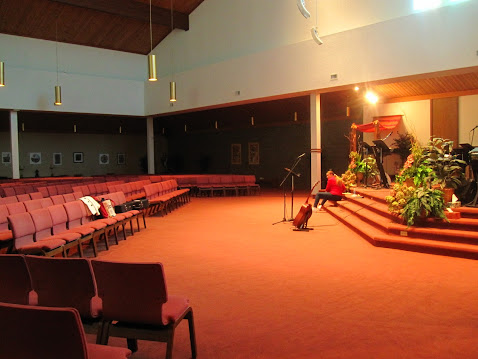
(Linda, in our church's sanctuary)

Over our forty-seven years of marriage Linda and I have had the privilege of helping many marriages. A number of these have been toxic, on the brink of divorce. God has instructed us to restore these marriages. We look at how a marriage can be saved, not on how it can dissolve.

Most cannot envision how a toxic marriage can be helped. Many think a toxic marriage should not be helped. We disagree on both counts. 

At times this puts us at odds with friends and family members who are advising their loved ones to give up and check out of the marriage. This is one reason why, when counseling a toxic couple (or any couple), we are not going to involve friends and family members in the process. Often, friends and family members are contributing to the marriage's demise.

We use a four-step process in marriage saving.

Step 1 - Confess and forgive.

We ask the couple to identify things they have done or said that should never be done or said to anyone, but were aimed at their marital partner.

We ask the couple to be specific in their confessions. This is not about apologizing, but confessing and requesting forgiveness. It looks like this:

"I was wrong in saying/doing what I said/did to you. Will you forgive me?"

The response to this is: "Yes, I forgive you." (Never add the word "but" to your forgiveness, such as: "Yes, I forgive you, but what you did/said to me was wrong, you always do this, etc. etc.")

To which it is appropriate to respond, "Thank you."

We want the couple to practice ongoing confession and forgiveness, as needed. Without this, the marriage won't be rescued.

An excellent resource in learning how to do this is Robert Enright's book, 8 Keys to Forgiveness.

Step 2 - learn how to communicate when in conflict.

The couple needs to learn new ways of speaking the truth in love to one another. No demeaning words are allowed.


We help the couple do this, by assisting them in our counseling meetings, and assigning to practice communicating this way: 

  1. Speak truthfully
  2. Speak lovingly

Both are needed. If we only speak truthfully we could blow people away. I could tell you the truth in unloving ways. Speaking truth without love injures others.


If we only speak lovingly we may never address the truth. This leaves issues undealt with. It feels warm and fuzzy for a while, but the bleeding has not been stopped.


Instead, says Paul, we are to speak the truth in love. The formula is: Truth + Love. That sounds like Jesus, right? Jesus always asserted the truth, and he always did so in love.


We'd like the marital couple to print out and carry this template with them (from Augsburger):
Step 3 - heal the pain and walk step-by-step towards hope.

As the couple engages in ongoing, as-needed, confession and forgiveness, and as they begin to learn new ways of speaking the truth in love to each other, they will be ready to address their pain. They will be able to walk through their pain, with God's help. 

The steps to take are given in Gary Chapman's excellent One More Try: What to Do When Your Marriage is Falling Apart

We expect the couple to invest in their marriage. A good marriage requires work. This involves time and commitment. This is where some couples get stalled. They were hoping for a quick fix; we are hoping for an ongoing relationship.

Linda and I have deeply invested in our marriage. Through the years we have read many books on marital health, attended various conferences on keeping the fire burning in marriage, and watched videos on how to have a healthy, Jesus-centered marriage.

Step 4 - Pray for one another.

We have seen God do great things in a marriage that no human counselor can do. We ask the couple to pray for their partner's well-being in Christ. And, to pray together as a couple.

Here is where the beautiful core values of the Christian belief system begin to kick in and become, not mere religious theories, but experiential realities. Linda and I have seen this happen many times. Few things are as beautiful to us as witnessing God restore and transform a marriage and, as a result, a family. 

***

My two books are:


I am now writing How God Changes the Human Heart, plus editing a book on the Holy Spirit which should be out in late Spring 2019.
I'm getting my act together to write Technology and Spiritual formation.
Then, the Lord willing, Linda and I will write our book on Relationships.

Friday, November 06, 2020

The Biblical Gift of Prophecy


During the pandemic there is a lot of false prophesying going on... 

Plantinga's Modal Version Of the Ontological Argument (From Graham Oppy)


(Warren Dunes State Park, Michigan)

Graham Oppy presents Alvin Plantinga's modal version of the ontological argument as follows.

An entity is "maximally great" iff (if and only if) it necessarily exists and possesses "maximal excellence" (i.e., is omnipotent, omniscient, and morally perfect).

Keeping this in mind, note that a maximally great entity cannot be a contingent thing. As regards contingent things, it is possible that a certain contingent thing exists. E.g., it is possible that a unicorn exists (logically possible).

Therefore, regarding a maximally great thing:

1) Either it is not possible that a maximally great entity exists or it is necessary that a maximally great entity exists.

2) It is (logically) possible that a maximally great entity exists.

3) Therefore a maximally great entity exists. (That is, an entity that is omniscient, omnipotent, morally perfect, and possesses these attributes (i.e. is "maximally excellent") in every possible world.)

Oppy frames it this way.

1. There is a possible world in which there is an entity which possesses maximal greatness.

2. (Hence) There is an entity which possesses maximal greatness.

Oppy writes: "Under suitable assumptions about the nature of accessibility relations between possible worlds, this argument is valid: from it is possible that it is necessary that p, one can infer that it is necessary that p."

Note:

1) it is possible that it is necessary that p.

2) Either p cannot possibly exist or p necessarily exists.

3) Therefore (from P1 & P2, using disjunctive syllogism) p necessarily exists.

Oppy's essay on the Ontological Argument in Stanford Encyclopedia of Philosophy is a good one. He goes on to offer criticisms of Plantinga's version. And gives Plantinga's further reflections on the status of the argument.

Thursday, November 05, 2020

Explaining the Double-Slit Experiment (wave/particle duality of electrons)


I'm reading God, Stephen Hawking and the Multiverse: What Hawking said and why it matters, by David Hutchings.

I just read Hutchings's explanation of the famous "double slit" experiment, where electrons behave both like particles and like waves. I'm thinking, this may be the best explanation of this famous physics experiment that I have ever read.


Tuesday, November 03, 2020

RENEWAL SCHOOL OF MINISTRY CLASSES - SIGN-UP


RENEWAL SCHOOL OF MINISTRY
Strengthen Yourself in the Lord!
You are invited to participate in this life-impacting opportunity to grow in the Lord and to become better equipped for the ministry God is calling you to. Take classes for credit toward a Certificate of Completion or for audit. Participation in Term 1 is not a prerequisite to enrolling in Term 2 classes.

TERM 2 CLASSES: 11/1 - 12/10/2020

Soul Health Pamela Wantz
Sundays, 8pm ET (Nov 1- Dec 6).   

Christian Worldview Peter Conlin Mondays, 8pm ET (Nov 2-Dec 7)

Introduction to Theology #2 Ed Owens Tuesdays, 8pm ET (Nov 3-Dec. 8)

Foundations of Biblical Worship:
Norelle Lutke & Guest Worship Leaders Thursdays, 8pm ET (Nov 5-Dec 10)
SPECIAL RSOM SEMINAR

The Tribulation, the Rapture, & the Second Coming

Seminar Times/Date:  3-hour Zoom meeting on Saturday, November 14
10:00am-1:00pm EDT/ 7am-10am PDT. The seminar will be live.

Seminar Content : This seminar will focus on what the Bible explicitly teaches about the time of the Rapture in relation to the Tribulation period and the Second Coming of Christ. Examining all relevant passages of the Bible as our resource, seminar instructor Dr. Clayton Ford will present numerous compelling reasons why he believes the church will be raptured  after  the tribulation at the Second Coming of Christ, and not before. In light of all that is happening in our world today, it’s imperative that Christians be preparing to  endure,  rather than preparing to  escape See seminar description

Monday, November 02, 2020

Discovering Jesus This Christmas! (31 short videos)


Good Morning!

I am making 31 videos on Jesus - his life, his ministry, his identity, his mission.

These videos are 5-7 minutes long. 

I will send a Jesus video every 3-4 days, during the months of November and December.

If you would like to receive these videos please email me - johnpiippo@msn.com.

Will you join me these two months as we focus on Jesus, so that we might know him more!

Love,

PJ

Thursday, October 29, 2020

David Bennett's A War of Loves


                                                         (Downtown Monroe)

Since the 1970s I have read, extensively, all sides of the gay marriage discussion within Christianity.

Yesterday I picked up yet another book on this issue. It's free, on Kindle, if you have prime.

A War of Loves: The Unexpected Story of a Gay Activist Discovering Jesus, by David Bennett

The Foreward is by N. T. Wright, who says, "This is a brave and wise book."

Editorial Reviews

Review

David Bennett’s page-turning writing gripped me from beginning to end, and I feel sure that his perspective on what it means to give our sexuality to God is something that every Christian of our generation needs to consider. -- Dr. Amy Orr-Ewing, director, Oxford Centre for Christian Apologetics, Dr. Amy Orr-Ewing, director, Oxford Centre for Christian Apologetics

This is an incredibly raw and authentic book! David paints a beautiful and compelling picture of what it looks like to desire Christ above all else. His affections for Jesus make me excited to be a Christian. -- Preston Sprinkle, president, Center for Faith, Sexuality, and Gender, Preston Sprinkle, president, Center for Faith, Sexuality, and Gender

A refreshing and powerful book. This is one of the top books I will recommend to Christians who want to know how to better love their LGBTQI friends and also to seekers---whether gay or not---who are open to considering Jesus’ invitation. -- Sean McDowell, professor, Biola University; speaker; author, Same-Sex Marriage, Sean McDowell, professor, Biola University; speaker; author, Same-Sex Marriage

A timely, thoughtful, and often moving story which will be hugely helpful to a lot of people. David’s honesty and humanity shine through these pages, even as he handles difficult questions through the lens of his experience. This is a gift to the contemporary church. -- Andrew Wilson, teaching pastor, King’s Church London, Andrew Wilson, teaching pastor, King’s Church London

Here is a voice as countercultural as it is compelling, capable of engaging the whole Christian community, whether gay or straight, in a vital debate. I have no doubt that David Bennett’s story is going to become an essential part in a complex jigsaw for many. -- Pete Greig, 24-7 Prayer International and Emmaus Rd, Guildford, Pete Greig, 24-7 Prayer International and Emmaus Rd, Guildford

Many lesbian, gay, and bisexual people feel they cannot be true to both their sexuality and the Christian faith. David demonstrates that integrity and authenticity are possible for gay Christians, sharing beautiful insights about love, friendship, and following Jesus too. -- Rev. Dr. Sean Doherty, Christian ethicist; author, The Only Way Is Ethics, Rev. Dr. Sean Doherty, Christian ethicist; author, The Only Way Is Ethics

This book is designed to make all of us think about our ultimate love and to work through how we should engage in a long debated area, whether inside of the church or outside of it. It is well worth the read. -- Darrell L. Bock, Senior Research Professor of New Testament Studies, Dallas Theological Seminary, Darrell L. Bock, Senior Research Professor of New Testament Studies, Dallas Theological Seminary

David Bennett’s book presents a particular lived Christian experience which deserves hearing. I am grateful to all who are contributing their learning, experience, study, and prayer to help us all to proclaim afresh the gospel of Jesus Christ. -- Sentamu Eboracensis, Archbishop of York, Sentamu Eboracensis, Archbishop of York

One of the most significant books on one of the church’s most pressing subjects by one of today’s most inspiring young thought leaders. David Bennett is a prophetic witness, a truth teller, a tender pastor, and a faithful follower of Jesus. This generation needs to hear this man. -- Rev. Simon Ponsonby, author; pastor of theology, St. Aldates Church, Oxford, Rev. Simon Ponsonby, author; pastor of theology, St. Aldates Church, Oxford

This is the searingly honest story of one romanced by God against all expectations. Bennett’s example of giving his whole self, including his sexual self, to the Christ who died for him is an act of Christian witness for our time. -- Rev. Dr. Michael P. Jensen, rector, St. Mark’s Darling Point, Sydney; author, Martyrdom and Identity, Rev. Dr. Michael P. Jensen, rector, St. Mark’s Darling Point, Sydney; author, Martyrdom and Identity

About the Author

David Bennett is from Sydney, Australia, and is reading for a DPhil (PhD) in theology at the University of Oxford. He is a fellow at the Oxford Centre for Christian Apologetics and holds an Oxford postgraduate degree in theology, as well as a master’s degree in analytic theology from the University of St. Andrews, Scotland.

Tuesday, October 27, 2020

There's No Such Thing as "True for You, but False for Me"

Image result for johnpiippo monroe county community
(Monroe County Community College)

I taught Logic for seventeen years at Monroe County Community College. I used Hurley's Logic for ten years. Then, I switched to Lewis Vaughn's The Power of Critical Thinking: Effective Reasoning About Ordinary and Extraordinary Claims

In the first class session I presented a claim that is logical, but seems extraordinary to many students, because, unbeknownst to them, they are subjective relativists. They think that truth is relative to persons. That some things are "true for you, but not for me." 

That is absurd. I explain it like this, and, as I do, I have the sense I am stepping on some of our relativistic culture's most cherished beliefs.

Here we go!

Logic is about evaluating and formulating arguments.

An argument is a series of sentences that are statements.

A statement (also called a "proposition") is a sentence that describes a certain (as Vaughn puts it) "state of affairs." A statement makes a claim that a certain state of affairs obtains. Another way to put it is like this: a statement is a sentence that is either true or false. 

For example, consider the statement The lights in this room are on. This statement describes a certain state of affairs; viz., the lights in this room now being on. Now here comes the subjective-relativist crusher. If this statement is true (that is, if the state of affairs of the lights now being on obtains), then it is true for everybody. And if it is false, then it is false for everybody.

Consider the statement God exists. If that statement is true, it is true for everybody, even for persons who think it is false. And if that statement is false, then it is false for everybody, even for people who "know" there is a God.

But what about these statements? 

It's true for me that Pepsi is better than Coke. But it's true for you that Coke is better than Pepsi? 

Here the words It's true for me are redundant, unnecessary. At most, they mean I believe, or I think. Such as: I think Pepsi is better than Coke

Now note this: If that statement is true, then it is true for everybody. And we have this state of affairs: John likes Pepsi better than Coke.

Consider this statement: God told John, and no one else, that he is to start a ministry to the homeless. Isn't that statement just for John and not for everyone? Yes. Of course. But watch this: the truth of that statement is for everyone. That is, it is true for everyone that God told John individually, and no one else, that he is to start a ministry to the homeless.

What a person believes is irrelevant to the truth of their belief. Otherwise we would have the idea that believing something makes that state of affairs true. And then,  we'd all be infallible, which is absurd. In that case, if I believe I can flap my arms and fly, then I can flap my arms and fly. But it is false that I can flap my arms, vigorously, and ascend into the heavens. Even if I believe I can do this! 

The point here is: Beliefs do not make a state of affairs true. If that were the case, then I'm going to try this: I believe I am the world's strongest, wealthiest, most interesting man. But that is false on three counts. 

Beliefs are statements that are either true or false and - watch closely now - if a belief is true, it is true for everyone, whether they know it or not, or whether they believe otherwise.

Take this statement: There are an even number of stars in the universe. That's either true or false. What we believe about it is irrelevant to its truth or falsity, since believing something does not make it true. 

Now the truth or falsity of this statement cannot be known. But even though we can't know if it's true or false, it is either true or false. And if it is true, then it is true for everyone (because believing it to be either true or false is irrelevant to the actual state of affairs).

Therefore, a statement cannot be "true for you, but false for me." I might believe that a certain statement is true, while you might think it to be false. But a statement in itself is either true or false, and if true, it's true for everyone, whether they realize it or not.

Thus, someone who says Truth depends on the individual's perspective utters something incoherent. Anyone who thinks that truth is relative to individuals lives in a world of logical absurdity. The antidote to such a misconception is to show them that their statement (Truth depends on the individual's perspectivecannot be true, because it makes a truth claim that is for everyone. That is, it is self-refuting, hence logically incoherent.

***
My two books are Praying: Reflections on 40 Years of Solitary Conversations with God;


Monday, October 26, 2020

Our Concept of God Makes a Praying Difference


                                                                        (Grand Haven, Michigan)

Does my concept of God affect how I pray? Yes.

Does a praying life affect my mental health? Yes. The more I pray before the God I understand reduces fear and anxiety. 

For some recent empirical research to back up this idea see "Sociologist: Concept of God impacts power of prayer, anxiety-related disorders." Prayer seems effective in combating psychological challenges, like relieving anxiety. The level of effectiveness is connected with the person's concept of God.

Baylor University sociologist Matt Bradshaw received a Templeton Grant and published his findings in the journal Sociology of Religion - "Prayer, Attachment to God, and Anxiety-Related Disorders Among U.S. Adults." 

"According to his study, people who prayed to a loving and supportive God whom they thought would be there to comfort and protect them in times of need were less likely to show symptoms of anxiety-related disorders — irrational worry, fear, self-consciousness, dread in social situations and obsessive-compulsive behavior — than those who prayed but did not expect God to comfort or protect them."

Perceived characteristics of God - such as loving, remote, or judgmental - affect the relationship between prayer and mental health.

For the praying person, what we think of God makes a difference.

I write more extensively in chapter 2 of my book Praying - "Praying and the Nature of God."

Churches - Experience the "Is-ness" of God

(Linda, walking at Sterling State Park on Lake Erie in Monroe)

(I develop these ideas further in my book Leading the Presence-Driven Church.) 

In Worship and the Reality of God: An Evangelical Theology of Presence, theologian John Jefferson Davis calls 
for a return, in worship and in the people of God ("church"), for ongoing encounters with God. It's not about the preaching, or the musicians. It's not about the stage lighting, or the coffee. It's not about you or me.

Davis talks about the transcendent "heaviness" of God, and the comparative "lightness" of all material and human things. He writes: "To say that the God of the Bible is "heavy" is to draw an intentional contrast with the weightlessness of God in much of contemporary culture and church life." (Davis, Kindle Locations 481-482)

Davis refers to Exodus 3:14, where, when asked by Moses for his name, God replies, "I am that I am." Davis writes:

"My colleague Gary Parrett has remarked that in Ex 3:14 God is saying to Moses, in effect, "I am not who you may think I am, or who you may wish that I am; I am who I am, and you need to adjust your thinking accordingly."" (Davis, Kindle Locations 2572-2573)

Davis cites John Durham's commentary on Exodus.

"Durham states that "I AM WHO I AM" also connotes the sovereignty and freedom of God in his self-disclosure: "By revealing himself as `I AM WHO I AM' the Lord had in effect said, `Yes, I have committed myself to you to be actively present with you, but I am not at your unfettered disposal. My active presence is mine and mine alone to exercise as when and under what conditions I choose" (p. 70)." (In Ib., Kindle Locations 2574-2576)

You and I can dispose of any idea that we have power to control God, or control our relationship with God.

God cannot, and will not, be manufactured, marketed, hyped, billboarded, bought, sold, or controlled. God IS. "This "is-ness" has the sense of "active presence"; this divine presence and reality is not "a bare `is' but a living force, vital and personal." (Ib., Kindle Locations 510-511)

This is what is missing in the Second Temple Judaism Jesus encountered. This is what is needed for influence to activate in the Church.


***
In my book Praying I have a chapter "Prayer and the Nature of God," emphasizing how our ontological conception of God shapes how we pray.