Saturday, June 10, 2023

Now Reading...


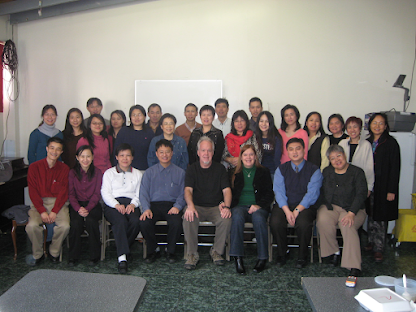
                                         (With students at Faith Bible Seminary, Flushing NYC)

In anticipation of teaching in the Chinese seminary in July, I am now reading Faithful Disobedience: Writings on Church and State from a Chinese House Church Movement. (Thank you D.W. for this recommendation.) Arguably, this is the book to read on nonregistered (underground) churches in China.

"For Wang Yi, the conflict between his church and the state ought to be understood primarily, and perhaps only, as a spiritual conflict within a real, eschatological dimension. For Wang Yi, the conflict between Early Rain and the CCP is a conflict between the city of God and the city of man regarding who has authority over humanity and creation."

Yi, Wang. Faithful Disobedience (p. 2). InterVarsity Press. Kindle Edition. 

Friday, June 09, 2023

Postmodern Metatwaddle


                                                                      (Monroe County)

"Is there a school of thought so empty, so vacuous, so pretentious, so wantonly obscurantist, 

so stupefyingly boring that even a full-frontal attack on it cannot be read without an exasperated yawn? 

Yes. It is called postmodernism."

- Richard Dawkins (blurb on Cynical Theories)


The atheist Richard Dawkins is no theological friend of mine. When he published The God Delusion I made over forty blog posts on it. God Delusion was a banquet of bad philosophical reasoning. 

Yet, Dawkins and I do join forces over the absurdities of postmodern philosophy. See Dawkins's article "Postmodernism Disrobed." (Nature, Vol. 394, 9 July 1998) Here Dawkins reviews physicists' Alan Sokol and Jean Bricmont's book Fashionable Nonsense: Postmodern Intellectuals' Abuse of Science

(The ethos of progressive Christianity, sadly, exudes postmodernism. See my book Deconstructing Progressive Christianity.)


Thursday, June 08, 2023

Now Reading...


                                                  (Sunset, Monroe, MI, June 7, 2023)

Near the end of July Linda and I will fly to New York City. I'll be speaking and teaching at Faith Bible Church of Flushing, and Faith Bible Seminary. My seminary class is "Marriage, Parenting, and Sexuality: A Pastoral Perspective." (See the course description below.) We are looking forward to seeing many of our dear friends at Faith Bible Church, to include John and Rosie Hao, Greg Woo, and Daniel Wang.

Linda will do some co-teaching with me. As we prepare, we are both reading Holy Sexuality and the Gospel: Sex, Desire, and Relationships Shaped by God's Grand Story, by Christopher Yuan. It's a beautiful, helpful book.

Here's the course description.


Flushing, New York City
July 24-27
9 AM - 3 PM EST

To register:

MARRIAGE, PARENTING AND SEX: A PASTORAL PERSPECTIVE

Christians in the Western world are under pressure to conform to the perspectives of a post-Christian worldview. In today's Western culture, liberal, progressive, postmodern, and secular views of "sex" are increasingly at odds with orthodox biblical theology. This course will focus on how to respond to issues related to "sex" in marriage, parenting, and the church. In the course we will:

  • Present the orthodox, biblical position on issues of human sexuality 
  • Explain the terms: 'liberal'; 'progressivist'; 'postmodern'; 'secular'
  • Present liberal/progressive/secular perspectives on human sexuality 
  • Equip students to understand and defend the orthodox position on human sexuality 
  • Equip students and pastoral leaders how to navigate these issues, in love, and in truth 
  • Equip parents on how to guide their children through the moral wilderness that is Western culture 
  • Equip students with resources that lovingly and truthfully present a biblical view of human sexuality
  • Share resources that can be used, in a church contret, for: Children's ministry, Youth ministry, Young Adult ministry, Adult ministry

Instructor: John Piippo, PhD 

Wednesday, June 07, 2023

The Differences Between American Christianity and Biblical Christianity


(Sea of Galilee, Israel)


(I'm re-posting this, to keep it in play.) 

***


From Joseph Mattera's "13 Contrasts Between American and Biblical Christianity." The differences are:


  1. American Christianity focuses on individual destiny. The Bible focuses on corporate vision and destiny. Correct. It's the tribe, the community, and less the individual. American churchianity is individuated. Note that the apostle Paul's use of the pronoun "you" is overwhelmingly plural.
  2. American Christianity focuses on individual prosperity. The Bible focuses on stewardship. "Much American preaching today focuses on "our rights in Christ" to be blessed. However, in Scripture the emphasis regarding finances has to do with being blessed by God in order to be a blessing by bringing God's covenant to the Earth (Read Deut. 8:18; 2 Cor. 9:10-11). Jesus promised material blessing only in the context of seeking first His Kingdom (Matt. 6:33)."
  3.  American Christianity focuses on self-fulfillment and happiness. The Bible focuses on glorifying God and serving humanity. In contrast to the Bible "much of the focus from the American pulpit has to do with individual fulfillment and satisfaction."
  4. American Christianity appeals to using faith to attain stability and comfort. The Bible encourages believers to risk life and limb to advance the Kingdom. Read Hebrews 11, THE premier biblical text on the meaning of "faith," the kind of faith that, without which, it is impossible to please God.
  5. American Christianity usually focuses on individual salvation. The Bible deals with individual and systemic redemption.
  6. The American apologetic focuses on human reason. The Bible's apologetic focuses on the power of God and experience. "If the foundation of your faith is human reason, then the first person that has more knowledge than you in science could talk you out of being a Christ-follower. Truly, the fear of the Lord is the beginning of wisdom, not human reason (Prov. 9:10; 1 Cor. 1:17-23)." BTW - anyone who reads apologists like Bill Craig and J.P. Moreland (and even myself), and thinks our interest in rationally defending our faith is about the primacy of human reason over the God-encounter, has misunderstood us.
  7. American believers have a consumerist mentality regarding a home church. The biblical emphasis is being equipped for the ministry. See here, and here. Mattera notes: "Americans shop for a church today based on what meets their personal and family needs the best. It is almost like a supermarket mentality of one-stop shopping." The Consumer Church, as Eugene Peterson has said, is an Antichrist Church.
  8. American Christianity promotes a culture of entertainment. The Bible promotes the pursuit of God. See here.    
  9. American Christianity depends upon services within a building. The biblical model promotes a lifestyle of worship, community and Christ following. Mattera writes: "Most of the miracles in the book of Acts and the gospels took place outside a building in the context of people's homes and in the marketplace. In Acts 2 and 4, the churches met house-to-house, not just in the temple. The man at the gate was healed before he went into the temple (Acts 3), which caused an even greater revival to take place."
  10. American Christianity is about efficiency. The biblical model is about effectiveness. "Often, the American church is modeled more after the secular corporate model rather than the biblical model. The church is not an organization, but an organism that should be organized!"
  11. In American Christianity the pastor is elected. In the biblical model God calls the pastor. 
  12. In American Christianity the individual interprets the Bible. In the New Testament the hermeneutical community interprets the Bible.
  13. American Christianity trains its leaders in Bible colleges. Biblical Christianity nurtures leaders through personal mentoring. "Biblically, leaders were not sent outside of the context of a local church to be trained for the ministry. They were nurtured personally in the context of congregational life by church leaders acting as mentors (as the Apostle Paul did with Timothy; as Aquila and Priscilla did with Apollos in Acts 19; and as Barnabas did with John Mark in Acts 15)."
This is going to be a tough one. Most people won't want the biblical model. They won't recognize it. 

Pastors - if you transition from the American Church to the Biblical Church you will lose some people, and gain some disciples.

The Bible Gives Guidance, Purpose, and Meaning

(Detroit Metro Airport)

Does the Bible have authority in my life? Yes. The Bible is my Text. It provides the Metanarrative I look to for guidance in life, for greater purpose, and for the meaning of my existence. 

I begin every day reading from the Bible. I study it. I meditate on it and absorb it. Today I'm reading - again - from Proverbs, and the Gospel of Matthew.

Guidance. Purpose. Meaning.

Don't be shocked by this. As a philosopher, I've spent a lifetime studying guidance, purpose, and meaning. Everyone, including atheists, has a Narrative that addresses these three subjects. If asked, most atheists would not have a clue about this. (Those philosophy professors I studied under, and who were atheists, would have a clue about this.)

Likewise, most Jesus-followers will be unable to answer the question, "Why is the Bible authoritative for you?"

N.T. Wright's book on biblical authority, Scripture and the Authority of God: How to Read the Bible Today, is helpful here. Wright also has an essay on biblical authority here, much of which is in the book.

Wright's work provides good reading for any Christian interested in the question, "Why should the Bible be considered authoritative as the Word of God?"
Wright, as well as that of scholars like Craig Keener and Ben Witherington, warns us how to avoid making "the Bible into something which basically it is not," and gives a perspective and a hermeneutic that is far more authentic to the Bible itself.


I like what Wright has to say about "story authority." Consider, e.g.:


"Story authority, as Jesus knew only too well, is the authority that really works. Throw a rule book at people’s head, or offer them a list of doctrines, and they can duck or avoid it, or simply disagree and go away. Tell them a story, though, and you invite them to come into a different world; you invite them to share a world-view or better still a ‘God-view’. That, actually, is what the parables are all about. They offer, as all genuine Christian story-telling the does, a world-view which, as someone comes into it and finds how compelling it is, quietly shatters the world-view that they were in already. Stories determine how people see themselves and how they see the world. Stories determine how they experience God, and the world, and themselves, and others. Great revolutionary movements have told stories about the past and present and future. They have invited people to see themselves in that light, and people’s lives have been changed. If that happens at a merely human level, how much more when it is God himself, the creator, breathing through his word."

The Koran, for example, is a set of commands. (Eide Alawan of the Islamic Center of America told me this. And, of course, you can see for yourself by reading the Koran.) While the Bible does contain commands, they are situated in what scholars call "salvation history." The commands are part of the story. The story is compelling, with the Jesus-event being the greatest story ever told.

How brilliant of God to give us a Story, and situate us within it. Within this Grand Metanarrative our lives find guidance, purpose, and meaning. "Meaning" is situatedness within a coherent context. In the Bible, I have found my place. This is the core of biblical authority.

***
My books are:

Leading the Presence-Driven Church

Praying: Reflections on 40 Years of Solitary Conversations with God


Encounters With the Holy Spirit  (Co-edited with Janice Trigg)


Saturday, June 03, 2023

Jesus Was a Minimalist

(Wildflowers in our yard)

Christianity. It's not complicated. It was never meant to be.

It is deep. But "deep" is not the same as "complicated."

Jesus spoke simply and spoke deep. He is going after the human heart. Change the human heart, and behavioral change will follow. Jesus reduced all moral commands to one moral command.

Jesus was a theological minimalist. 

So was the apostle Paul.

For Paul, there was only one thing to know: Christ crucified and the power of the resurrection. Minimalist Theology is "One-Thing Theology." (1 Corinthians 2:2) Resolve to know nothing but this.

Jesus' theological minimalism is seen in his simple (not simplistic) counsel for us to become like branches, connected to him who is like a Vine. Everything follows from this. 

Do I like complexity? My PhD (Northwestern University, 1986) is in Philosophical Theology. That should say it all. My studies have taught me many things, one of which is: If there is a God who created us and loves us as his children, and who desires to communicate to us, all of us, then it has to be simple.

I think Karl Barth understood this. In seminary I took a class on Barth's theology. We were assigned portions of Barth's Church Dogmatics to read. One of the assignments was to read a twenty-page footnote. The footnote was in a font half the size of the main text. I see Barth's footnotes like nodules on a vein of a leaf attached to a twig connected to a branch attached to a limb that abides in the trunk whose roots go deep into the earth. For Barth the whole point was really about the trunk and the roots, which were "Jesus loves me, this I know; for the Bible tells me so."

It all comes down to Jesus, and his death and resurrection, which are demonstrations of his love. 

This is not complicated. It is simple. It is not simplistic. It is deep. "Jesus loves us" is the abundant, lavish, fruit-bearing, fertile Minimum. It is the Trunk, in which we as branches are called to abide. From this, all blessings flow.


***
See also...


The Apostle Paul was a Minimalist

(World Trade Center 1, NYC)


This is from my book Leading the Presence-Driven Church.

***
The apostle Paul was a minimalist. As he traveled from church to church, across the first-century Roman Empire, he did not drag a production team with him. In 1 Corinthians 2:1-5, we see that Paul did not visit the Jesus-followers in Corinth with fog machines, black lights, powerful preaching, great intellectual arguments, stacks of Marshall amps, perfectly timed studio production quality music, a fair-trade coffee bar, tight jeans, stage lighting, creative videos, click tracks, and full color glossy programs. Instead, Paul came minimally, so that God might be worshiped maximally. He writes: 

When I came to you, 
I did not come with eloquence or human wisdom 
as I proclaimed to you the testimony about God. 
For I resolved to know nothing while I was with you 
except Jesus Christ and him crucified. 
I came to you in weakness with great fear and trembling. 
My message and my preaching were not with 
wise and persuasive words, 
but with a demonstration of the Spirit’s power, 
so that your faith might not rest on human wisdom, 
but on God’s power. 

Paul arrived with two things: 
1. Proclamation 
2. Demonstration 

Paul shared his testimony about God, and gave a demonstration of the Spirit’s power. Nothing else. No crowd-pleasing techniques would be allowed to compete with Christ, and him crucified. Because if it turned into a production, people might rest their faith on the coffee, the jeans, and the fog, rather than on God’s power.

Friday, June 02, 2023

Praying Peaces Me Together


(Green Lake Conference Center in Wisconsin - Linda and I will be here in three weeks!)

When I pray I am peaced (yes, 'peaced') back together. Since to pray is to live experientially in Christ, I am the recipient of His peace. I love the way Richard John Neuhaus describes the power of God's peace (shalom):


“This means the bringing together of what was separated, the picking up of the pieces, the healing of wounds, the fulfillment of the incomplete, the overcoming of the forces of fragmentation.” (Neuhaus, Freedom for Ministry, 72)

Praying takes inner chaos and transforms it into order. The Hebrew word shalom means "peace" in the sense of things, or events, or persons, once distanced and in conflict come together. In praying, God peaces the heart together. This is heaven’s peace, experienced now in an unpeaceful world.

***
See my book Praying: Reflections on 40 Years of Solitary Conversations with God.

Thursday, June 01, 2023

My Itinerary


Wednesday, April 05, 2023


                                                                       (Our kitchen)


ITINERARY

  • June 3, 10, 17 - Two-Step Leadership (Theological Minimalism) - Zoom Mini-Conference (With American Baptist pastors from Indiana and Kentucky)
  • June 25-29 - With Chris Overstreet and Derrick Snodgrass; HSRM Annual Conference, Green Lake, Wisconsin
  • June 25-29 - "Deconstructing Progressive Christianity," HSRM Annual Conference, Green Lake, Wisconsin
  • July 22, "Technology and Spiritual Formation," Faith Bible Church, Flushing, NYC
  • July 22, "Responding to LGBTQ+ Issues,"  Faith Bible Church, Flushing, NYC
  • July 23, Preaching two services at Faith Bible Church. Flushing, NYC (Mandarin and English)
  • July 24-27 - Teaching "Marriage, Parenting, and Sexuality" in New York City at Faith Bible Seminary  (In English and Mandarin)
  • September 2023, "Apologetics" class, six 1 1/2 hour zoom sessions, Renewal School of Ministry (Monday evenings, 8-9:30 PM EST; dates TBA)
  • April 12-13, 2024 - Boston, MA - Speaking on Spiritual Formation at annual retreat of Alliance of Asian American Baptist Churches

Praying as Performative Ontology

The world of my back yard

One author I keep reading is Pentecostal philosopher James K. A. Smith, who teaches at Calvin College. That's interesting in itself, right?

In Desiring the Kingdom, Smith writes the following about the practice of praying:

"The practice of prayer banks on God's exceeding our worship space, transcending the confines of space and time, and as the Creator of the universe, being interested and concerned about concrete realities that face us here in our finitude. Praying enacts an entire cosmology because implicit in the very act of prayer is an entire ontology and construal of the God-world relationship. This doesn't mean we need to pursue a doctorate in metaphysics in order to pray; on the contrary, the point is that by doing it, by praying, we are engaged in a sort of performative ontology that could be teased out in reflection and analysis." (p. 193. By "performative" Smith means in the sense of J.L. Austin, in the latter's How to Do Things With Words. Performative utterances do things, and establish things. In this case, prayer performatively establishes a worldview.)

The act of praying posits, prethematically, a worldview (following Charles Taylor, a "social imaginary"). By "performative ontology," Smith means a "doing" that prereflectively assumes the truthfulness of Christian theism. Such truthfulness could, if one wanted, reflectively "tease out" the propositions that make up the Christian social imaginary. 

This prereflective social imaginary is prior to the kind of reflection done in apologetics or theology. A praying person just "knows" such a world to be real. A praying person is, from the point of view of today's secular social imaginary, in another world; as N.T. Wright says, at the intersection of heaven and earth.