Monday, April 15, 2019

Freedom from Addictive Behaviors (Declarations)


(Frost on my car window)

Yesterday morning at Redeemer I preached on Palm Sunday as the day when the Rescuer, the Deliverer, the Savior, the Bondage Breaker, rode into Jerusalem, as the Passover-infused Jews were singing "Hoshiya-na" ("Rescue us!") out of the Great Hallel (Psalms113-118).

At the end of my message, and before our people ministered and prayed for may of our people (plus some words of knowledge I gave to individuals God pointed out to me), I led us in saying aloud these declarations. (From Steve and Wendy Backlund, who will be with us in September!)

Whatever is true... think on such things, right?

Think on your real identity, as a new creation.

Print these out, carry them, say them, over and over.

Blessings!


FREEDOM FROM ADDICTIVE BEHAVIORS

THE SCRIPTURE

“Therefore, if anyone is in Christ, he is a new creation; old things have passed away; behold, all things have become new” (2 Corinthians 5:17).
“Stand fast therefore in the liberty by which Christ has made us free, and do not be entangled again with a yoke of bondage” (Galatians 5:1).
THE DECLARATIONS

•              I am not who my past experience says I am; I am who God says I am.
•              I am not destined to struggle with the same addictions my parents or grandparents were bound by.
•              At the cross I was made a new creation; therefore, I do not have to be influenced by any baggage of the past.
•              I have been set free and released from all bondage through what Jesus has done for me.
•              Every day I make the choice to walk in the freedom Jesus paid for me.
•              I am free from condemnation, and during temptation I find God’s strength working mightily in me.
•              Today is the day of my breakthrough — I am free!
•              Every generational curse was broken at the cross; therefore, I am victorious and free from addiction.
•              I have powerful people in my life to help me walk in freedom.
•              I am healed from every root that would cause me to walk in addictive behaviors.


(BTW - This is not "name it and claim it." 

It is Pauline - Finally, brothers and sisters, whatever is true, whatever is noble, whatever is right, whatever is pure, whatever is lovely, whatever is admirable—if anything is excellent or praiseworthy—think about such things. (Phil. 4:8)

It is better than thinking on what is false, what is ignoble, what is wrong, what is impure, what is disgusting, what is shameful. Correct?

And, as I have written here ("The Pauline Thinking Cure and Cognitive Behavioral Therapy"), I see similarities between Pauline declarations and Cognitive Behavioral Therapy.)

Easter Week - Jesus Comes to Hosanna Us

(In Jerusalem)
SUNDAY, APRIL 1

SCRIPTURE READING: Mark 11:1-11; Matthew 21:4-5

1 As they approached Jerusalem and came to Bethphage and Bethany at the Mount of Olives, Jesus sent two of his disciples, 2 saying to them, "Go to the village ahead of you, and just as you enter it, you will find a colt tied there, which no one has ever ridden. Untie it and bring it here. 3 If anyone asks you, 'Why are you doing this?' tell him, 'The Lord needs it and will send it back here shortly.' "

[Matthew 21:4-5 adds these verses:

4 This took place to fulfill what was spoken through the prophet: 
 5 "Say to the Daughter of Zion, 
      'See, your king comes to you, 
   gentle and riding on a donkey, 
      on a colt, the foal of a donkey.' " ]


Back to Mark...

4 They went and found a colt outside in the street, tied at a doorway. As they untied it, 5 some people standing there asked, "What are you doing, untying that colt?" 6 They answered as Jesus had told them to, and the people let them go. 7 When they brought the colt to Jesus and threw their cloaks over it, he sat on it. 8 Many people spread their cloaks on the road, while others spread branches they had cut in the fields.

9 Those who went ahead and those who followed shouted, 
   "Hosanna!" 
   "Blessed is he who comes in the name of the Lord!" 
 10 "Blessed is the coming kingdom of our father David!" 
   "Hosanna in the highest!"


WHAT’S HAPPENING IN THESE VERSES

When the people saw Jesus and began shouting “Hosanna!,” they were calling out to Jesus “Save us!” “Rescue us!” The cry of Hosanna! is a Hebrew word (hoshi`ah-na) that had become a greeting or shout of praise but that actually meant "Save!" or "Help!" Not surprisingly, forms of this word were used to address the king with a need (cf. 2 Sam 14:4; 2 Kings 6:26). The palm branches the people carry are symbolic of a victorious ruler.  

“Hosanna” has the sense of immediacy, and so it would be correct to this word as  “Please save us, and do it now!”

When Jesus rode in his upside-down Kingdom-way on a donkey (not a stallion) into Jerusalem, there was desperation in the air. These Jewish citizens of Jerusalem were under the heavy yoke of the Roman Empire. They had heard about Jesus. The  rumor was that he claimed to be a king. Even the Messiah. So when word got out that Jesus was coming into Jerusalem  on a donkey, he was greeted as a king would be greeted.

As shouts of “Blessed is the King of Israel!” are heard, clearly the people see in Jesus the answer to their nationalistic, messianic hopes. Earlier a crowd had wanted to make Jesus king (6:15), and now this crowd is recognizing him as king in the city of the great King. Here is the great dream of a Davidic ruler who would come and liberate Israel, establishing peace and subduing the Gentiles

The way Jesus entered Jerusalem was a deliberate, prophetic “Zechariah 9:9 act” on his part.  Zech. 9:9 reads: Do not be afraid, O Daughter of Zion; see, your king is coming, seated on a donkey's colt. Jesus comes into Jerusalem in a kingly way, and the people respond in a kingly fashion. The imagery is regal and even messianic, though it is a humble Messiah who makes the ride. As the people spread their garments (NIV: their cloaks) on the road, a "red carpet" of sorts is produced. (The Passion Translation adads "their prayer shawls," which is plausible.)

He was there to rescue them. The people were about to get “hosanna-ed,” “rescued.” But it wasn’t going to look like they thought it should. Jesus is a different kind of King. He’s going to “Hosanna” the world by dying on a cross. N.T. Wright writes: “The meaning Jesus attaches to this “triumphal entry” is quite different from the meaning they are wanting to see in it. That, perhaps, is where we can learn most from this story today.”

People turn to God when there’s something they want very badly. That’s like deciding to use a telephone when you desperately need an ambulance to come and help you. Church attendance – generally – was up, briefly, after “9-1-1.” Suddenly everyone wanted to ask the big, hard questions.

Here, in the Palm Sunday story, everyone wants Jesus to ride into the city and be the kind of king they want him to be. “Help!” “Save the life of my sick child!” “Pay my bills!” “Give us peace, now!”

Jesus does intend to respond to the people’s cries. He has come to seek and save the lost. He has come for people who need help, people who are sick and need a doctor. Yet he’s not coming to be all things to all people. He’s not riding into Jerusalem to conform to the expectations of the crowds of people. He is going to answer in his own way.

The people wanted a prophet. This prophet, Jesus, is going to tell the people that they are under coming judgment. They wanted a Messiah. This one is going to be enthroned on a pagan cross. The crowds wanted to be rescued from evil and oppression. This person Jesus is going to do that, but in a far, far deeper way than they were thinking.

Jesus is going beneath surface evil and in to the depths of the human heart. N.T. Wright says: “Precisely because Jesus says ‘yes’ to their desires at the deepest level, he will have to say ‘no’ or ‘wait’ to the desires they are conscious of, and expressed.” (NTW, Matt, 68)

Once you really cry out “Hosanna,” Jesus is going to “hosanna” you more thoroughly than you imagine, maybe more deeply than you wanted. The Hosanna-ing Jesus brings is not just a band-aide. This story of Jesus entering Jerusalem  is “an object lesson in the mismatch between our expectations and God’s answer.” (NTW, Matt, 69)

The bad news is that the crowds are going to be disappointed. The good news is that their disappointment is on a surface, shallow level. “Deep down, Jesus’ arrival at the great city is indeed the moment when salvation is dawning… The “Hosannas” were justified… they were correct…. but not for the reasons they supposed. To learn this lesson is to take a large step towards wisdom and humility, and towards genuine Christian faith.” (NTW, Matt, 69)

REFLECTION

1.    If you are a Jesus-follower, then you have been Hosanna-ed. You called, He answered, and He came to your rescue. Think of how God, in Christ, has been your Rescuer. Make a list of some God-redemptive things in your life.

2.    Christ has not ceased to love us as Redeemer and Rescuer. If there is an area in your life you now need rescue and deliverance from, identify it, and cry out “Hosanna, Lord!”

***
My two books are:

Praying: Reflections on 40 Years of Solitary Conversations with God


Leading the Presence-Driven Church

I am currently writing:

Encounters with the Holy Spirit (editing, should be out in June)

How God Changes the Human Heart

Technology and Spiritual Formation

After that, God willing, Linda and I will write our book on Relationships.

Saturday, April 13, 2019

The Difference Between Virtue and the Law

(Conference Center outside of NYC)

I was meeting in the office of one of the Muslim leaders at the Islamic Center of America in Dearborn. He picked up his Koran. Opening it, he told me,

"John, I am thankful God gave us this book of rules. The Koran is a rule book. If I didn't have a rule to pray, I would not pray. If I didn't have a rule not to lust after women, I would lust after women."

My response was this.

"Christianity is different. God comes to transform the human heart. As this happens, I don't need rules to tell me to pray, or not to lust."

Spiritual transformation, Jesus-style, aims to transform our hearts into increasing Christlikeness. Moral virtues become us; hence, the unnecessariness of moral laws. 

James K. A. Smith writes:

"As Thomas Aquinas points out, there is an inversely proportionate relationship between virtue and the law: the more virtuous someone is— that is, the more they have an internal disposition to the good that bubbles up from their very character— the less they need the external force of the law to compel them to do the good. Conversely, the more “vicious” a person or group of people is, the more they need the “stick” of the law to compel them to do what they ought. (Smith, James K. A.. You Are What You Love: The Spiritual Power of Habit, Kindle Locations 322-326)

***
My first two books are...

Praying: Reflection on 40 Years of Solitary Conversations with God (May 2016)

Leading the Presence-Driven Church (January 2018)

I am now writing...


Encounters with the Holy Spirit (ed.)

Technology and Spiritual Formation

How God Changes the Human Heart: A Phenomenology of Spiritual Transformation)


Then, God willing, Linda and I intend to write our book onRelationships.

Wednesday, April 10, 2019

Fast Church Growth Can be a Cancer

Image result for john piippo authentic
(Cancun - a pelican being a pelican)
From Rick Warren, "Rick Warren warns pastors that fast church growth 'can be a cancer,' shares antidote to discouragement."

FOCUS ON OBEDIENCE
Pastor Rick Warren of Saddleback Church in California urged church leaders to focus on obedience to God’s mission rather than boosting congregation numbers, as “fast growth can be cancer.”
FOCUS ON THE LONG HAUL
“I’m not really impressed with ministries that grow fast. Fast growth can be a cancer,. What I am interested in is the long haul — people who consistently serve Jesus Christ year after year after year.
FOCUS ON FINISHING WELL
“I’m interested in finishing well, and I want you to finish well. Your ministry matters to God. It matters to the Kingdom. We need you to stay in the race. We need you to not get tired. We need you to not quit. We need you to not give up. We need you to finish your race."
FOCUS ON YOUR FIRST PURPOSE IN LIFE
“Everything in your ministry flows out of God’s love, God’s mercy, God’s grace. The problem is we can get so busy working for God, we forget how much God loves us. Your first purpose in life is not to love God. Your first purpose in life is to let God love you. The Bible says you were created as an object of God’s love.”
FOCUS ON BEING REAL
Avoid the temptation to “fake it,” adding: “If you’re going to be used by God, if you’re going to be effective for God, if you’re going to last in ministry, you’ve got to be authentic, you’ve got to be genuine, you’ve got to be yourself. You’ve got to keep it real.”
FOCUS ON PLEASING GOD, NOT PLEASING PEOPLE
God “did not create you to be somebody else” — and those who focus on pleasing everyone end up experiencing ministry burnout.
“When you get to Heaven, God isn’t going to say, ‘Why weren’t you more like Billy Graham?’ The reason we try to fake it is because we try to please everybody. Only a fool would try to do what even God can’t do. Even God can’t please everybody.”
FOCUS ON WHY YOU DO WHAT YOU DO
God is more interested in “why you do what you do than He is what you do.”
“A lot of people start off as servants and end up as celebrities. They forget why they do what they do, and all of a sudden it is all about them,” he said.

***
My two books are:

Praying: Reflections on 40 Years of Solitary Conversations with God


Leading the Presence-Driven Church 

I am currently writing:


Encounters with the Holy Spirit (editing, should be out in June)

How God Changes the Human Heart

Technology and Spiritual Formation


After that, God willing, Linda and I will write our book on Relationships.

Three Truths to Remember

Image result for john piippo being
(Seeds, in my back yard)


Henri Nouwen, in Spiritual Direction, writes of three things that were deepened in his heart as a result of his move to L'Arche and caring for handicapped people.

1. Being is more important than doing.

Nouwen writes: "God wants me to be with him and not do all sorts of things to prove I'm valuable." (44) 

God loves you, not for what you do, but for who you are; viz., his beloved son or daughter. Human loves are often performance-based. God's love is not. The distinction between the two is important. 

Internalize this truth. Pray, Nouwen-like, "God, bring this truth that is in my mind into my heart."

2. The heart is more important than the mind.

Nouwen writes: "When you've come from an academic culture, that's hard to learn." (44) 

Nouwen was an academic who taught for two years at Notre Dame, ten years at Yale, and three years at Harvard. In his work with the mentally handicapped that he "saw that what makes a human being human is the heart with which one can give and received love... People with physical and mental disabilitiies easily can let their hearts speak and this reveal a mystical life unreachable by many intellectually astute people." (45)

Yes, we are to love God with our mind. But when Paul wrote this it was out of a culture that had not yet been Cartesianized. Hebrew culture does not make a absolute metaphysical distinction between "heart" and "mind." 

Jesus is after the human heart. Human minds vary greatly in ability. While God wants us to use whatever mental capacities we have for his glory, God can work through the heart of a mentally handicapped person. Mental assent to Jesus is not enough. But when the heart is captured, one's mental abilities are neither some special asset nor debilitating detriment to God.

3. Doing things together is more important than doing things alone.

At L'Arche Daybreak Nouwen befriended a severely handicapped man named Adam until Adam died. Nouwen writes: "Adam's story is my story of weakness, vulnerability, and dependency, but also of strength, authenticity, and giftedness." (46) 

Our non-tribal Western culture is individuated, valuing  autonomy more than community. Many have been trained by our culture to want to do life by ourselves, giving us the idea that we will do a better job if we do it alone. 

But when we work together, more people get to own the results. The more corporate ownership there is, the better "church" will be. Plus, as Nouwen says, there is much to be gained from others as we learn to collaborate. God uses collaborative, tribal activity to teach us things about ourselves and others.

Nouwen's three truths really came together when I worked at United Cerebral Palsy of Will County, Illinois, for one year and three summers. I was beginning my PhD studies. The hyper-academic environment of Northwestern University's philosophy department was met by a year of helping the physically and mentally handicapped. 

While, on the one hand, I was studying Heidegger's Being and Time and Sartre's Being and Nothingness, on the other hand I was being-with and learning from the disabled and culturally marginalized. At first it seemed like a clash of civilizations. Eventually, slowly, my heart was captured and began to inform my mind. I loved these students and learned much from them, not for what they could do, not for their cognitive abilities, but for who they were, revealed as we spent many hours together.

***
My two books are:

Praying: Reflections on 40 Years of Solitary Conversations with God


Leading the Presence-Driven Church 

I am currently writing:


Encounters with the Holy Spirit (editing, should be out in June)

How God Changes the Human Heart

Technology and Spiritual Formation


After that, God willing, Linda and I will write our book on Relationships.

Tuesday, April 09, 2019

Study the Presence-Driven Church with Me in New York City

Image result for john piippo faith bible church
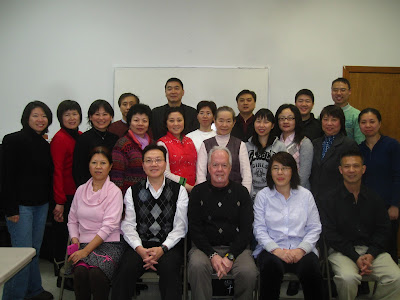
(With Dr John Hao and Faith Bible Seminary students)
I will be teaching Leading the Presence-Driven Church at Faith Bible Seminary in New York City this June.

If you want to study with me here is the information.

M-Th, June 3-6, 2019.

To audit - $190.

For credit - $380.

$50 registration fee for new students.

I'll be teaching my text Leading the Presence-Driven Church (required).

My teaching will be in English, translated in-class into Mandarin (this is a Chinese theological seminary). 

More information + the syllabus TBA.

Contact: 

Faith Bible Church

(718) 961-9355

Contact me:

johnpiippo@msn.com


Pastors Do Not Minister to Human Changing Desires


Chicago

My fellow pastors...

We are not the ministers of peoples' changing desires,

or time-conditioned understanding of our needs, 

or secularized hopes for something thing better. 

We are lashed tight to the mast of word and sacrament so we will be unable to respond to the siren voices of relevance. 

We deal with foundational realities - God, kingdom, gospel. 

If we give in to the ever-shifting sands of populism we'll end up living futile, fantasy lives. 

Our task is to keep telling the basic story, representing the presence of the Spirit, insisting on the priority of God, speaking the biblical words of command and promise and invitation.

- Adapted from Eugene H. Peterson. Working the Angles: The Shape of Pastoral Integrity (Kindle Locations 244-249).

Monday, April 08, 2019

The Church Should Be Distinctive, Not Relevant

(Michigan flowers)

I'm slow-cooking in Yale University theologian Miroslav Volf's Public Faith. I'm reading what he says about "the relevant church." The culturally blended, relevant church accommodates. Accommodationism is rooted in the fear of irrelevance. Volf writes:

"The accommodation is necessary because otherwise the faith would remain tied to the relics from the past—implausible interpretations of reality and outdated moral convictions—and cease to be compelling to people today. From this perspective, the choice is between accommodation and irrelevance. (Volf, Miroslav. A Public Faith, p. 84).  


Volf argues that liberal Christianity's accommodationist strategy has failed. For two reasons.


1. Contemporary culture is changing at too fast a pace. What is relevant today is irrelevant tomorrow. The popular church names of today lose relevance as the signs are being made. Perhaps we could change the name of our church daily. We could have a changeable street sign, which would be a sign of what God was doing in us at the present moment.  


Volf quotes G.K. Chesterton, who said: “those who marry the spirit of the age will find themselves widows in the next.” (Quoted in Ib.) Pay attention, all ye relevant churches.


2. Christian communities who accommodate to culture to be relevant "are in effect giving up on promoting change," since they "are accommodating to what they have not shaped and are only able to shape in a limited way."


Volf writes:


"Reconstructions of the Christian faith guided by the strategy of accommodation carry in themselves the seeds of possible Christian self-destruction. After they have accommodated, for the most part what remains for Christian communities to do is to appear after a non-Christian show and repeat the performance in their own way for an audience with Christian scruples. The voice of the Christian communities has become a mere echo of a voice that is not their own." (Ib., 85)


Volf cites Stanley Hauerwas and Will Willimon, who say: “Alas, in leaning over to speak to the modern world, we had fallen in. We had lost the theological resources to resist, lost the resources even to see that there was something worth resisting.” (In Ib.) 


So what shall we do?


3. We should nurture our distinctives. "Christian communities will be able to survive and thrive in contemporary societies only if they attend to their “difference” from surrounding cultures and subcultures. The following principle stands: whoever wants the Christian communities to exist must want their difference from the surrounding culture, not their blending into it. As a consequence, Christian communities must “manage” their identity by actively engaging in “boundary maintenance.” Without boundaries, communities dissolve." (Volf, Miroslav. A Public Faith, p. 81)


The Jesus-community is different from the surrounding culture. Shore up that which is distinctive to Christian culture and strengthen that which is central.

Declarations for Biblical Sexuality


At Redeemer our staff has been reading and discussing Mark Yarhouse's Understanding Sexual Identity: A Resource for Youth Ministry. It's excellent.

I just picked up Yarhouse's new book Sexual Identity & Faith: Helping Clients Find Congruence. It gets great reviews. 

I also recommend Yarhouse's Understanding Gender Dysphoria: Navigating Transgender Issues in a Changing Culture. 

Here are two slides from Understanding Sexual Identity, on unhelpful and helpful declarations (thoughts) re. sexuality.


Sunday, April 07, 2019

Be a Thermostat, Not a Thermometer

Boat, on Lake Michigan

Be a thermostat, not a thermometer.

A thermometer reacts to the environment, going up and down as a response to external conditions.

A thermostat sets the temperature and influences the environment. The environment responds, going up and down as a response to internal conditions.

Thomas Merton saw many persons as thermometers, living as automatons, "no longer moved from within, but only from outside themselves. They no longer make decisions for themselves, but let them be made for them." (Through the Year with Thomas Merton, p. 108)

Merton continues,

"Such a man no longer acts upon the outside world, but lets it act on him. He is propelled through life by a series of collisions with outside forces. His is no longer the life of a human being, but the existence of a sentient billiard ball, a being without purpose and without any deeply valid response to reality." (Ib., p. 109)

Such a person is shaped into the form of this world (Romans 12:1-2), rather than being inwardly transformed and influencing culture.


***
My two books are:

Praying: Reflections on 40 Years of Solitary Conversations with God

Leading the Presence-Driven Church 

I am currently writing:


Encounters with the Holy Spirit (editing, should be out in June)

How God Changes the Human Heart

Technology and Spiritual Formation


After that, God willing, Linda and I will write our book on Relationships.