Sunday, July 16, 2006

Gazzaniga's Ethical Brain and Free Will


Michael Gazzaniga, the director of the Center for Cognitive Neuroscience at Dartmouth College, has written a book called The Ethical Brain. Dr. Andrew Newburg of the University of Pennsylvania reviews the book here.

One things Gazzaniga makes clear is that if moral choices are ultimately reducible to neurophysiology of the brain, then persons are not ultimately responsible for such choices. That is, it seems nonsensical to condemn immoral behavior and praise moral actions.

Newburg writes that “the “insanity” plea hinges on the notion that the brain, not the individual, is responsible for certain types of deviant behavior… There is even some evidence suggesting that the brain does not have a full sense of free will, so it remains to be seen whether anyone can really be held responsible for anything at all.”

The reduction of “free will” to neurophysical constraints renders ethical theory impotent to making real moral decisions as to right and wrong. Only if persons have a free will that is not entirely a function of neurophysical constraints does it make sense to hold persons responsible for their actions.

Tuesday, June 20, 2006

Craig & Ehrman Debate Jesus' Resurrection

On March 28, 2006, William Lane Craig and Bart Ehrman debated at Holy Cross University on "Is There Historical Evidence for the Resurrection of Jesus." This is an excellent give-and-take between two great scholars. A thorough reading of the debate will give you entrance into the current "Jesus wars."

Tuesday, May 30, 2006

Now Reading...


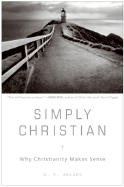
I'm currently on a bit of an N.T. Wright roll. Yesterday I began reading his new book Simply Christian : Why Christianity Makes Sense. N.T. Wright is one of best Christian scholars today. I read section one of the book. It's quite like C.S. Lewis's Mere Christianity in that it appeals to what Wright calls "echoes" of a Voice that seems to be giving us what Lewis called "clues to the meaning of the universe." Readers of Lewis's MC might remember famous quotes like this: "Human beings, all over the earth, have this curious idea that they ought to behave in a certain way, and can't really get rid of it." And this: "If I find in myself desires which nothing in this earth can satisfy, the only logical explanation is that I was made for another world." Wright's echoes of "justice," "spirituality," "relationships," and "beauty" are "Lewisian." It remains for me to see how Platonic (like Lewis) they are. Wright's book is getting some very good reviews. See, e.g., this one at The Wichita Eagle. And check out the blurbs on the back cover of the book.

Sunday, May 28, 2006

More on "the Prosperity 'Gospel'"

A significant number of Christian churches teach variations of “the prosperity Gospel.” This is the idea that God wants to make you and me economically and materially "prosperous" if we give "seed money" to the particular Christian preacher who is asking for it. I do not deny that God, supernaturally, can give a real, authentic follower of Jesus money that is needed to advance His Kingdom. But I never have bought into the idea that God is really interested in helping us advance our own little kingdoms.

This kind of "prosperity" teaching is false for one main reason, which is: In the actual Gospels (Matthew, Mark, Luke, and John) Jesus never teaches this. Jesus never promises that the result of following him leads to earthly riches and material prosperity. In fact, Jesus warns us about seeking such things. Do you doubt this? Read the 4 Gospels for yourself. Read the words of Jesus for yourself. Note carefully when Jesus talks about money and material things. Former prosperity teacher Jim Bakker found this out when he was in prison, as he read the actual Gospels and noted all the things Jesus really said about money and material things.

Consider just one paradigmatic example, Matthew 6:19-21. Here Jesus says: "Do not store up for yourselves treasures on earth, where moth and rust destroy, and where thieves break in and steal. But store up for yourselves treasures in heaven, where moth and rust do not destroy, and where thieves do not break in and steal. For where your treasure is, there your heart will be also.” Combine this with Jesus’ words to “the rich young ruler” that he should sell all he has and give to the poor, and we have the beginnings of Jesus’ core ideas about money and material possessions (Mark 10:21-22).

I think it is abominable that anyone who calls themselves a lover of Jesus in America should be praying for material prosperity because of the fact that we in America already have it. No people group in history has ever had so much. And this includes all of the American middle class. To want God to give us even “more” when no one in history has ever had so much while there is a two-thirds world crying for a crust of bread is, I think, idolatrous and evil.

Such teaching is also scandalous and offensive to the millions of two-thirds-world lovers of Jesus who this moment live from meal to meal. In Matthew 25 Jesus says, in extremely radical words, what it means if we ignore these brothers and sisters. If a Christian is wealthy they should consider Jesus' words to the rich young ruler and expend their efforts to help the "least of these."

If "prosperity" teaching was really true then prosperity preachers should not ask for money at all, but simply put their [false] theory to a test: viz., they should just "sow their seeds" into other ministries, expecting to receive a financial harvest.

Thursday, May 25, 2006

Beckwith on The Trinity & Oneness Pentecostalism

Philosopher Francis Beckwith has a very good essay arguing for the Christian idea of God as a Trinity.

The structure of Beckwith’s logical argument is as follows

Premise 1: The Bible teaches that there is only one God.
Premise 2: The Bible teaches that there are three distinct persons called God, known as the Father, Son, and Holy Spirit.
Conclusion: Therefore, the three persons - Father, Son, and Holy Spirit - are the one God.

Beckwith then argues for the truth of Premise 1 and Premise 2, and the Conclusion.

Beckwith adds a section responding to “Oneness” theologians. “Oneness Pentecostalism” argues that the Father, the Son, and the Holy Spirit are not distinct persons who share the same nature and being, but rather, they are the same person. Each title--"Father," "Son," and "Holy Spirit"--represents a different mode by which God, a single person, manifests Himself, just as "uncle," "husband," and "brother" each represents a different mode by which, for example, John Piippo, a single human person, manifests himself. Beckwith states that “this is why the ancient heresy which Oneness embraces is called "modalism."”

Monday, May 22, 2006

Palmer Theological Seminary Doctoral Graduates - 2006


This past weekend Palmer Theological Seminary flew me to Philadelphia to attend their graduation ceremony. I have been working as the Project Director for twelve doctoral students who represent a variety of nations. This has meant my going over their doctoral projects and giving them the final approval. In the picture they are holding their "hoods." It was my great honor to "hood" them on Saturday as they came forward to receive their doctoral degrees. There is a lot of relevant, powerful ministry going on in the lives of these dynamic followers of Jesus! It has been my great honor to work with them.

Madonna & the "Suffering Kanye" Syndrome


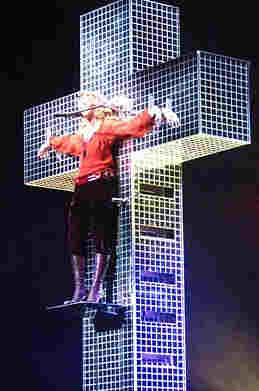
Months ago Kanye West consented to have a crown of thorns placed on his head, his picture taken, and the picture of the "suffering Kanye" put on the cover of Rolling Stone. Now, it's Madonna's turn to "sacrifice herself" for the sins of the people, or for something who-knows-what.

Yesterday, in Los Angeles, Madonna she put on a crown of thorns and suspended herself from a giant mirrored cross and then sang "Live to Tell." Video screens showed images of third-world poverty and reeled off grim statistics.

So what does "Live to Tell" have to do with poverty, suffering, and Jesus? Nothing, so far as I can see.

In the song Madonna says she has "a secret to tell." And, she hopes to "live to tell" it. She has a "secret" that "burns" inside of her. "I know where beauty lives. I've seen it once, I know the warm she gives. The light that you could never see, It shines inside, you can't take that from me." So, what's this secret? The only secret Madonna has (which actually everyone knows about) is her newfound embracing of a quasi-Jewish-heretical version of Kabbalah. It's about the red string she wears on her wrist to protect her from the influences of the Evil Eye (the unfriendly stares and unkind glances we sometimes get from people around us). Her song "Ray of Light," which she also sang, is her Kabbalah worship song.

I don't believe that people looking at you with a strange stare give off negative energy that somehow hurts you. Nor do I believe that wearing a red string protects you from anything. And the cross of Jesus has nothing whatsoever to do with Madonna's exotic mixture of weird mysticism, sex, and self-aggrandizement, except that these are the very kind of things that the Real Jesus suffered and died for. Madonna is more like one of the criminals who hung on a cross next to Jesus, the one who hurled insults at Jesus. She's still searching...

Wednesday, May 17, 2006

The Somnambulistic Banality of The DaVinci Code & the Emergence of a New Anti-Gnostic Movement

Many years ago, in the 1980s, I was invited to a pre-screening of the controversial movie about Jesus by Martin Scorcese called “The Last Temptation of Christ.” Prior to going to the showing I read Nikos Kazantzakis’s novel upon which the movie was based. In my research I found out that Kazantzakis was interpreting Jesus through the eyes of Freud and the panentheistic philosopher Henri Bergson. The result was a ridiculous portrait of Jesus, who appears as a man who hasn’t a clue as to why he exists and his great triumph is resisting having sex with Mary Magdalene.

My fears about people seeing this movie and getting the wrong impression were relieved as I sat through one of the most boring movies I have ever watched. It was all I could do to stay awake during it. My greatest fear became, not that others would watch it, but that I would be found snoring loudly at the pre-screening.

The early reviews of “The DaVinci Code” remind me of my “Last Temptation” experience. Apparently DVC is so long and boring that this is what it will be remembered for, or forgotten for. “DaVinci” got dissed, even “jeering laughter,” at the Cannes Film Festival. From the website Rotten Tomatoes (which is the place to go to access all the main movie critics) the quotes that are coming in about DVC include: “an oppressively talky film that isn’t exactly dull, but comes as close to it as one could imagine with such provocative material”; “a lifeless adaptation”; “an overblown so-so suspense flick”; “an unwieldy, bloated melodrama”; “overblown and dare I say occasionally boring”; and so on.

It remains to be seen if audiences will be at all interested in Gnosticism after seeing “DaVinci.” Perhaps a new movement of anti-Gnostic thinking will emerge as a reaction to DVC’s somnambulistic banality?

Monday, May 15, 2006

King of the Hill - Hank Looks for a New Church


Check it out here.

Antony Flew at Biola University?!


When I was an undergraduate philosophy major one of the things I had to read was the atheist Antony Flew’s famous article against the existence of God entitled “Theology and Falsification.” In the year 2000 infidels.org reprinted an anniversary edition of Flew’s essay here.

The essay begins with Flew’s infamous “parable of the gardener.” It reads: “Once upon a time two explorers came upon a clearing in the jungle. In the clearing were growing many flowers and many weeds. One explorer says, "some gardener must tend this plot." The other disagrees, "There is no gardener." So they pitch their tents and set a watch. No gardener is ever seen. "But perhaps he is an invisible gardener." So they, set up a barbed-wire fence. They electrify it. They patrol with bloodhounds. (For they remember how H.G. Wells's The Invisible Man could be both smelt and touched though he could not he seen.) But no shrieks ever suggest that some intruder has received a shock. No movements of the wire ever betray an invisible climber. The bloodhounds never give cry. Yet still the Believer is not convinced. "But there is a gardener, invisible, intangible, insensible to electric shocks, a gardener who has no scent and makes no sound, a gardener who comes secretly to look after the garden which he loves." At last the Sceptic despairs, "But what remains of your original assertion? Just how does what you call an invisible, intangible, eternally elusive gardener differ from an imaginary gardener or even from no gardener at all?"

Flew then goes on to interpret this parable for us. He concludes: “When the Sceptic in the parable asked the Believer, "just how does what you call an invisible, intangible, eternally elusive gardener differ from an imaginary gardener or even from no gardener at all?" he was suggesting that the Believer's earlier statement had been so eroded by qualification that it was no longer an assertion at all.” In other words, the assertion that there is a Gardener (i.e., God) is not an assertion (or a statement) at all. Which means: it is not a logical proposition with any truth value because it could never be falsified.

With this essay and other writings Flew became, arguably, the most famous atheist of the 20th century. And atheists gladly claimed Flew as one of their champions.

But something happened a few years ago, and Flew changed his mind about atheism. In 2004 he relinquished his long-held atheism and claimed that the natural sciences supplied evidence for the existence of a designing intelligence. Flew said that he simply “had to go where the evidence leads.” Ironically, the atheist who said that the "garden" gave no evidence of there being a "Gardener" was led "by the evidence" to believe the universe gave evidence of design, hence the existence of a Designer.

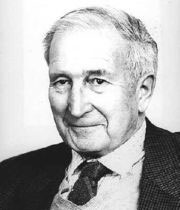
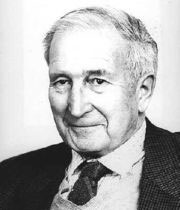
This past weekend Flew accepted the Phillip E. Johnson Award for Liberty and Truth on May 11 from Biola University, a Christian university in Southern California. The Biola website states that “when informed that he was this year’s award winner, he remarked, ‘In light of my work and publications in this area and the criticism I’ve received for changing my position, I appreciate receiving this award.’”

Having followed Flew’s work ever since first being exposed to him back in the 1970s, the thought of him accepting any kind of award at a Christian university just astounds me.