Friday, October 06, 2006

God Delusion #3 - Emerson


Dawkins begins GD ch. 2 with a quote from Ralph Waldo Emerson. Emerson says, "The religion of one age is the literary entertainment of the next."

Not really. (Emerson might have wished this were so...)

God Delusion #2 - Einstein was a atheist


Dawkins, in GD, co-opts Albert Einstein as an atheist. Dawkins writes: "Einstein sometimes invoked the name of God (and he is not the only atheistic scientist to do so)."

But Einstein was not an atheist. He was once asked, "Do you believe in the God of Spinoza?" Einstein responded: "I can't answer with a simple yes or no. I'm not an atheist and I don't think I can call myself a pantheist."

I believe Dawkins is correct when he says that Einstein did not believe God was a "personal" being. But it is an intellectual leap to then infer that Einstein was a "naturalist" just like Dawkins.

One must study most specifically what Einstein meant when he said he did not believe in a personal God. Part of what he means here is that he is against anthropomorphism. And, despite his protests, it seems accurate to associate his ideas about God with Spinoza's pantheism.

Einstein once said, "I believe in Spinoza's God who reveals himself in the orderly harmony of what exists, not in a God who concerns himself with fates and actions of human beings." Spinoza, strictly speaking, did not identify "God" with "Nature." Here see his distinction re. the two sides of Nature: Natura naturans and Natura naturata ("Nature naturing" and "Nature natured"). See also here.

Spinoza believed in God. And, it must be pointed out, his belief was in a nonanthropomorphic, thus in his mind radically Jewish, God. Einstein "believ[ed] in Spinoza's God." Thus Dawkins errs in conflating Einstein's views about God with his own naturalistic atheism.

But why does Dawkins even need Einstein in his atheistic camp? Why does he work so hard (but not hard enough) to call Einstein one of his own? The Stanford Encyclopedia of Philosophy, in its article "Pantheism," says: "With some exceptions, pantheism is non-theistic, but it is not atheistic. It is a form of non-theistic monotheism, or even non-personal theism." Since Dawkins refers to himself as an atheist, he is not a non-theistic monotheist, nor is he a non-personal theist. Einstein was.

God Delusion #1


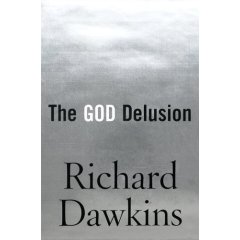
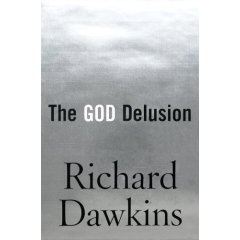
I began reading Richard Dawkins' new book The God Delusion. I'm going to - hopefully - post my thoughts about this book as I read through it.

I can't get past page 1. Dawkins writes: "I suspect - well, I am sure - that there are lots of people out there who have been brought up in some religion or other, are unhappy in it, don't believe it, or are worried about the evils that are done in its name; people who feel vague yearnings to leave their parents' religion and wish they could, but just don't realize that leaving is an option."

But how can Dawkins "be sure" of this? Does he have empirical evidence to support this? He gives none, so why should we accept his "sureness" of this?

He shares his "delight" when a British television advertisment showed the World Trade Center with the caption "Imagine a world without religion." Then, Dawkins writes: "Imagine, with John Lennon, a world with no religion." Does he mean a John Lennon-ish world? I hope not. Lennon's son Julian writes this of his father: "I didn't hate him but I was scared of him. I didn't know this man at all, and trying to rebuild a relationship that was never there made him as frighened of me as I was of him." Julian adds, "He wasn't a great father." Julian's step-father became his real father. Julian writes: "A lot of people don't like to hear that but on my behalf it's true." Julian saw his dad only 10 times before he was murdered.

As I skimmed through GD I saw a lot of the Dawkins' anger coming out in ad hominem abusives. Dawkins is a humorous, degrading guy. If this is atheism I know I don't want a world where Dawkins and John Lennon are the models.

For what the lives of some famous atheists were really about, see Paul Johnson's Intellectuals. Read, for example, of the perverted behavior of the great atheist Bertrand Russell.

For the record: I don't want to live in a world modeled by myself either. But I do believe this. I am a far, far better person because of my following of Jesus than I was before. And I know many, many Christians who exemplify things I value. Like parenting, for example (contra John Lennon).

Have evils been done in the name of religion? Sadly, of course. Have atheists done "evil" things? Uh-huh. And because the overwhelming majority of persons who now live and have ever lived are religious, and only a tiny group atheist, one would expect to find proportionately more evils perpetrated in the name of religion than in the name of atheism.

Dawkins refers to Lennon's "Imagine" as a "magnificent song." I, on the other hand, think it is filled with hypocrisy.

"Imagine all the people living life in peace.
...I hope some day you'll join us and the world will be as one."

Unfortunately for Lennon's own son Julian that "world" did not include him.
Thursday, October 05, 2006

Now Reading...


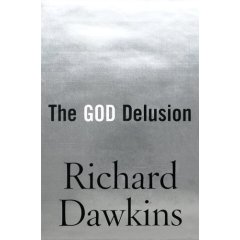
I just picked up Richard Dawkins' new book The God Delusion. For a video interview with Dawkins about this book see here.

For the recent Newsweek article called "The New Naysayers: In the Midst of Religious Revival, Three Scholars Argue that Atheism is Smarter," see here. It's mostly about the current "big 3" of atheism: Richard Dawkins, Sam Harris, and Daniel Dennett.

My intent is to make various comments on my take on the Dawkins book and post them here.

Tuesday, October 03, 2006

The Science and Logic of Personhood

There is a very good article on the logic of personhood as beginning at conception at nationalreviewonline. It's written by Patrick Lee of Franciscan University of Steubenville and Robert P. George of Princeton.

Consider this excerpt: "In defending embryonic human life, we have pointed out that every human adult was once an embryo, just as he or she was once an adolescent, and befofre that a child, and before that an infant, and before that a fetus. This is not a religious claim or a piece of metaphysical speculation. It is a human fact. The complete human organism - the whole living member of the species Homo sapiens - that is, for example, you the reader, is the same human individual that at an earlier point in his or her life was an adolescent, a child, an infant, a fetus, am embryo."

"Human embryos do not differ in kind from (other) human beings; rather, they differ from other human beings merely in respect of their stage of development."

Thus, there is no "point in time" (such as the moment of "viability") where suddenly the fetus "becomes a person."

The argument against abortion then runs logically like this:

1. The fetilized egg is a person.
2. Every person has a right to life.
3. Therefore the fertilized egg has a right to life.

Monday, September 25, 2006

Thank You to My Church

September 21, 2006

Dear Redeemer Family:

Last Sunday afternoon Linda reminded me that there was a baby shower at the church that we needed to go to. I had been taking a nap and, a bit groggy, got dressed and proceeded to the church.

When we pulled in the parking lot there were a lot of cars there. I said, “Wow, this is going to be a big shower!” Linda said, “There’s a big family here today.” Entering the church building, I went to the Fellowship Hall and saw tables and chairs set up and ready to go. But no people. Linda said, “Probably they are in the sanctuary doing some spiritual things.” OK.

Nobody in the lobby, either. Linda and I walked to the double doors. Wayne Harmon and Larry Poore thrust them open, and YOU were there standing and clapping… and looking… at me. I asked Linda, “What is this?” She took me down the center aisle, sat me in a chair right in front, next to her, her dad Del, my sons Josh and Dan, and Dan’s fiancĂ© Allie. I was a deer in the headlights. I had entered Rod Serling’s “Twilight Zone.” I was Jim Carrey, stunned to find myself not in real life but on “The Truman Show.” Instead of being at a baby shower, I sat while ALL OF YOU watched slides of me as a baby, which is definitely NOT the kind of thing Scandinavian men like me flock to.

Now, 5 days later, I am feeling a bit emotional as I write this. How can I express my gratefulness FOR YOU? With all of my heart… THANK YOU for the entire evening, for the gifts, and for your presence there. I am a blessed man to have YOU as family. I thank God that He has given you to me. I thank God for His grace and mercy. It is now mediated, from Him, through you, to me.

Linda, Dan, Josh, Del, even our dog So-Fee, feel so blessed. So now I want to bless YOU.

I bless YOU to be a people who greatly advance the Kingdom of God
I bless YOU to be a righteous army that pushes back the kingdom of darkness
I bless YOU as healers to the sick
I bless YOU as deliverers of the oppressed
I bless YOU as raisers of the dead
I bless YOU as witnesses and proclaimers of the Real Jesus

Love,

Pastor John Piippo

Saturday, September 16, 2006

Ben Witherington Against the "Prosperity Gospel"


Ben Witherington is one of our great New Testament scholars. Here is his response to the Time Magazine article on the "prosperity gospel."

This post includes Witherington's TOP TEN REASONS WHY GOD DOESN'T WANT YOU WEALTHY. I would qualify this a bit. I think God could give a Real Follower of Jesus ten cars, for example, if those ten cars were needed to advance the Kingdom of God, heal the sick, deliver the sppressed, raise the dead, and proclaim the Good News of Jesus. But then one would simply be a steward of the resources God entrusts you with.

Tuesday, September 12, 2006

Time Magazine on the "Prosperity Gospel"

The Time magazine that arrived today has the cover story "Does God Want You To be Rich?" The correct answer is: Wrong question. God wants "you" to advance His Kingdom on the earth, push back the kingdom of darkness, heal the sick, deliver the oppressed, raise the dead, and proclaim the Good News of the Kingdom to others. If more money will allow you to do that, then God will provide. But for the Real Jesus it's all about the Kingdom; nothing more, nothing less.

The Time story begins with George Adams, who attends Joel Osteen's church. Adams believes that with God's assistance he will buy his "dream house." The article reads: ""Twenty-five acres," he says. "And three bedrooms. We're going to have a schoolhouse (his children are home schooled). We want horses and ponies for the boys, so a horse barn. And a pond. And maybe some cattle." "I'm dreaming big--because all of heaven is dreaming big," Adams continues. "Jesus died for our sins. That was the best gift God could give us," he says. "But we have something else. Because I want to follow Jesus and do what he ordained, God wants to support us. It's Joel Osteen's ministry that told me. Why would an awesome and mighty God want anything less for his children?""

How sad. What a tiny vision this is. And, it is unbiblical. God wants to advance His Kingdom, not the kingdom of George Adams or any of us.

We read that, "In a TIME poll, 17% of Christians surveyed said they considered themselves part of such a movement, while a full 61% believed that God wants people to be prosperous. And 31%--a far higher percentage than there are Pentecostals in America--agreed that if you give your money to God, God will bless you with more money." Again, how sad. And, for followers of jesus, how disturbing. American Christians have lost touch with the Real Jesus. I agree that there are phenomenal blessings that come from being a Real Follower of Jesus. There's also possible martyrdom, which is said to be a great blessing as well ("Blessed are those who are persecuted for righteousness' sake"). And if material blessing was so cool in God's eyes, then why did the Son of Man have no roof over his head while foxes at least have holes to live in?Just read Matthew, Mark, Luke and john. Read the actual words of Jesus about money. And, as you do, realize He is speaking to people who only have one-room homes and only have one cloak to wear, maybe two. The thought that Jesus would say such things to we in America is then stunning.

"The [Prosperity Gospel] movement's renaissance has infuriated a number of prominent pastors, theologians and commentators. Fellow megapastor Rick Warren, whose book The Purpose Driven Life has outsold Osteen's by a ratio of 7 to 1, finds the very basis of Prosperity laughable. "This idea that God wants everybody to be wealthy?", he snorts. "There is a word for that: baloney. It's creating a false idol. You don't measure your self-worth by your net worth. I can show you millions of faithful followers of Christ who live in poverty. Why isn't everyone in the church a millionaire?""

I agree with Ben Witherington, who says that "we need to renounce the false gospel of wealth and health--it is a disease of our American culture; it is not a solution or answer to life's problems."

Sunday, September 10, 2006

Dallas Willard & the Real Jesus


Dallas Willard is one of today’s great communicators of the Real Jesus and Real Christianity. Willard has for some time been a Prof. of Philosophy at USC. Years ago, after reading Richard Foster’s A Celebration of Discipline, I read Willard’s The Spirit of the Disciplines – a great, deep book on spiritual transformation.

Christianitytoday.com today has two feature articles on Willard. One is a very interesting bio, and the other, by Cornelius Plantinga, is about spiritual transformation.

Here, e.g., is a juicy Willard quote from the bio article: "There is knowledge of God and the spiritual nature of man, as well as other types of reality (e.g. moral obligations) that are not reducible to the world dealt with by the so-called 'natural sciences.' The idea that knowledge—and, of course, reality—is limited to that world is the single most destructive idea on the stage of life today." Willard is a great scholar of German phenomenologist Edmund Husserl. Like Husserl, "Willard believes that we can have direct experiences with the world that transcend cultural and linguistic barriers." Willard’s work, among other things, escorts us into the presence of God which transcednds such barriers and who is able to renovate our hearts.

Dallas Willard is an extremely valuable resource for all who are interested in the Real Jesus.

Tuesday, August 22, 2006

Fasting as Spiritual Warfare: Part 2 - Some Practical Suggestions

The first time I ever fasted was after reading Richard Foster’s book A Celebration of Discipline. Were I to list the top 10 books outside of the Bible that have influenced me, Foster’s book would be on that list. After reading his chapter on “Fasting,” I felt motivated to begin to practice it.

Here are some more practical thoughts I have about fasting.

Accompany a fast where you have no food with water and fruit juices.

If you have not practiced fasting before, then try a one-day fast. Go without food for 24 hours.
Drink only water, and perhaps add fruit juices.

Allow God to lead you in regard to the spiritual focus of your fast. For example, you may choose to fast and pray for a specific person in your life. During your fast, when you feel hungry, let that sensation of hunger be your reminder to pray for that person. In praying for that person, pray the 6 “Prayer Hooks” of the Lord’s Prayer.

For example:

1) “I pray that ______ would hallow Your name, Lord.”
2) “I pray that the Kingdom would come in _____’s life.”
3) “I pray that Your will would be done in _____’s life.”
4) “I pray that ______ would receive daily bread.”
5) “I pray that ______ would understand how Your Cross brings forgiveness for _____’s debts, and that ______ would extend that forgiveness to any who have sinned against _______.”
6) I pray, God, that You would protect _______ from the evil one, and not let _______ fall into the evil one’s traps.”

You may choose to fast for breakthrough and victory in some area of your life that is not pleasing to God. This will likely include prayers of brokenness before God. And prayers of breakthrough by the power of God.

NOTE: If you have a medical condition that does not allow you to fast from food, then read this article by Richard Foster called “Fasting: Twentieth Century Style” to see other areas to fast from.

If you want to study more about fasting, in addition to Foster’s book, I recommend:
- Bill Bright, The Transforming Power of Prayer and Fasting: Personal Account of Spiritual Renewal
- Bill Bright, 7 Basic Steps to Successful Prayer and Fasting
- Bill Bright, The Coming Revival: America's Call to Fast, Pray, and Seek God's Face (I read this several years ago, and was blessed by Bright's own fasting experiences and God-encounters. Bright was the founder of Campus Crusade for Christ.)
- Elmer Towns, Fasting for Spiritual Breakthrough (I read this book years ago. A very good resource, describing 10 biblical fasts. Get it used for $1.99 at amazon.com!)