Saturday, March 31, 2018

Help Lee Davis Get a New Roof on His House


My friend Lee Davis called and shared that he needs his roof fixed, and needs some funding to do this.

Some of you know the story of how Linda and I became friends with Lee.

Lee has created a GoFundMe page. If God leads you to donate, thank you!

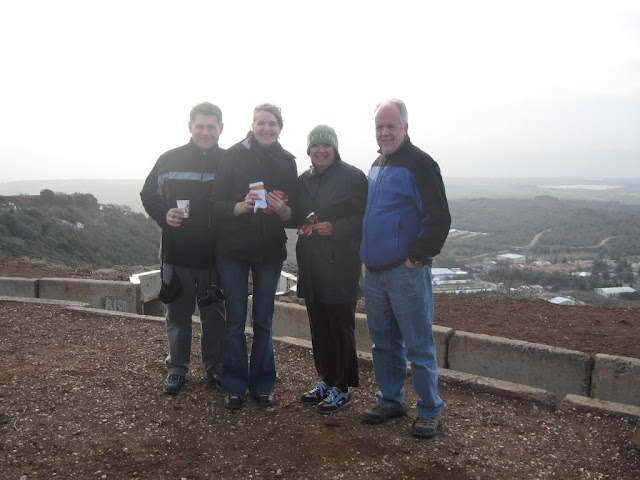
Here's a photo of myself, Lee, and John Standifer.

Blessings!

Image may contain: one or more people and people standing

Tuesday, March 27, 2018

ONE-HOUR SEMINARY TONIGHT - Why I Believe Jesus Was Raised From the Dead - 9 PM EST


Why do I believe the resurrection of Christ happened, in history?

Tonight on One-Hour Seminary I will answer this.

Facebook Live.

9 - 10 PM EST.

Thirty minutes of live teaching, followed by thirty minutes of live Q&A.

***
My two books are:

Praying: Reflections on 40 Years of Solitary Conversations with God(May 2016)

Leading the Presence-Driven Church (January 2018).

I am currently writing:

How God Changes the Human Heart

Technology and Spiritual Formation

Monday, March 26, 2018

The Presence-Driven Church Is Not Something You Shop For

Image may contain: drink and plant
Glass of water, at Olive Garden

When Jesus said, "I will build my church," this did not mean a church that existed for the sake of meeting people's needs. Rather, the church would be a temple that God inhabits. Jesus's followers would gather to meet with God. This distinction is important, since Consumer Churches have formed which have the people in mind more than they have God in heart.

The basic question of the Church is not, "What do the people want?" In the early, Upper Room Church, newcomers were not asked if they enjoyed the service. In Real Church people meet the One they need. As this happens, deep wounds are healed, and deep needs are met. The distinction is between consumer needs and existential needs. The difference is between shopping and worshiping, purchasing and being-bought.

When Christ found and rescued me forty-eight years ago, I found what I needed, but not in some consumer sense. I was not shopping for a religion. I had been met by God! The longing and emptiness in my heart discovered its fulfillment. This longing was like the "great sadness" in The Shack. Roger Olson writes:

"I believe there are such amazing truths in The Shack that God might use it to take away our Great Sadness. That's its purpose. The author surely wrote it with the hope that through it God would heal wounds of distrust and bring some readers back to himself." (Olson. Finding God in the Shack: Seeking Truth in a Story of Evil and Redemption, Kindle Locations 101-102)

This forms what is referred to as "the existential argument for believing in God. In its simplest form, it says that we are justified in believing in God solely because doing so satisfies certain emotional and spiritual needs." (Clifford Williams. Existential Reasons for Belief in God: A Defense of Desires and Emotions for Faith, Kindle Locations 87-88)

I am a follower of Jesus because: 

1) I believe it makes sense, or is true, and 

2) it meets existential needs. 

The second says, Christ has occupied the Pascal-type abyss in my soul. This is not something you shop for. It is Someone who has captured your entire being.

***
My two books are:

Praying: Reflections on 40 Years of Solitary Conversations with God(May 2016)

Leading the Presence-Driven Church (January 2018).

Saturday, March 24, 2018

Money Can't Buy You Life Satisfaction

Image result for john piippo happy
Store, in Ann Arbor
Berkeley sociologist Amitai Etzioni's Happiness Is the Wrong Metric: A Liberal Communitarian Response to Populism, is available FREE for Kindle.

I'm reading it this afternoon. 

Early in the book Etzioni cites massive sociological date supoorting the idea that increased income adds nothing to life satisfaction, beyond a point.

Here are some quotes.

There is a "rising disconnect between income and happiness."

"The preponderance of the social scientific literature suggests that once income reaches a certain threshold, additional income creates little additional satisfaction." 

"One’s socioeconomic status has a meager effect on one’s “sense of well-being” and no significant effect on one’s life satisfaction."

"Jonathan Freedman discovered that levels of reported happiness do not vary greatly among the members of different economic classes, with the exception of the very poor, who tend to be less happy than others."


"A 2010 study by Daniel Kahneman and Angus Deaton identified the point after which there is less correlation between additional income and additional happiness: $75,000 (Kahneman and Deaton 2010). The study found that while a positive relationship existed between income and life evaluation,3 higher income did not improve emotional well-being4 (See Kahneman and Deaton 2010). Hence, whereas life evaluation rises steadily with increases in income, emotional well-being does not progress once an annual income of $75,000 is reached."

The preponderance of the evidence suggests that income above a certain level does not buy much additional happiness."

Individual happiness seems to be determined by one’s income relative to others, rather than one’s absolute income. One interpretation of this claim is the familiar concept of “keeping up with the Joneses”—an expression that captures the use of goods in a status competition among members of the community. Goods are used as visible markers of one’s standing in this never-ending race. This explains why an increase in a nation’s nation’s collective wealth often fails to increase reported happiness. If practically everyone has three televisions and two cars, owning three televisions and two cars may buy little pride relative to others. Moreover, even very wealthy people can always find someone who earns more than they do. The same factor also seems to explain why people in small towns are happier than those in big cities."

Friday, March 23, 2018

PURSUIT YOUTH CONFERENCE AT REDEEMER

Picture


Our Pursuit Conference coming up for Thursday March 29th through Saturday March 31st for any 6th-12th grader. 

For our conference we will have a few people coming to share with our students. This includes and is not limited to:

Debbie Church will be sharing with us on Friday Night March 30th 
on how God leaves no one behind. He goes after His lost kids. When He looks at the world He sees the wounds and longings. Do we see what He sees? Where is our heart matching His heart both for those of the church and those of the world?
Debbie will also be doing a workshop on Saturday afternoon which she is calling "10 Hebrew words everyone should know." We cannot wait to have Debbie with us!

Patrick Taylor will be closing out our conference on Saturday Night March 31st. 
Patrick is the Young Life Leader for Monroe High School. His heart and passion to see students engaged in a life with Christ is contagious. He will be sharing with us how we are called to treat others and represent Jesus in everything we do and say. We are excited to have Patrick with us this year!

If you would like more information and even to register your student for our conference please check Redeemer's website!

Thursday, March 22, 2018

Real Historians Consider a Supernatural Hypothesis

Shelby Mustang at our Ford dealership (just looking!)


This afternoon, in personal preparation for Easter week, plus my One-Hour Seminary presentation on Jesus' resurrection (3/27/18, 9 PM EST, Facebook Live), I am reading two books by N. T. Wright. 

They are Wright's massive The Resurrection of the Son of God, and The Day the Revolution Began: Reconsidering the Meaning of Jesus's Crucifixion

Today, in Revolution, I read what may be the best presentation of "crucifixion" available.

And in Resurrection, Wright's chapters on ancient views of death and the afterlife are excellent.

In reading Resurrection I laughed, just five minutes ago. (I don't laugh a lot, in spite of being one of the happiest persons alive.) 

As Wright presents a historical case for the bodily resurrection of Jesus, we know some scholars are incapable of reasoning historically since they - by fiat, and by worldview - automatically rule out non-scientific, supernatural explanations. 

My funny moment came when Wright cites New Testament scholar Michael Goulder. (I read this book, edited by Goulder, in 1979.) If you are a professional theologian, as I am, get ready to be happy.

"Goulder is a good example of this tendency [to auto-reject the supernatural]. ‘We should’, he writes, ‘always prefer the natural hypothesis [as opposed to the supernatural one], or we shall fall into superstition.’ The natural/supernatural distinction itself, and the near-equation of ‘supernatural’ with ‘superstition’, are scarecrows that Enlightenment thought has erected in its fields to frighten away anyone following the historical argument where it leads. It is high time the birds learned to take no notice." (Wright, N. T.. Resurrection Son of God, Kindle Locations 32434-32437)

I'll explain more this coming Tuesday.


***

My first two books are...

Praying: Reflection on 40 Years of Solitary Conversations with God (May 2016)

Leading the Presence-Driven Church (January 2018)

I am now writing...

Technology and Spiritual Formation

How God Changes the Human Heart: A Phenomenology of Spiritual Transformation


God-Centered Worship Devolved Into Human-Centered Happiness (The Presence-Driven Church)

Through a glass brick

New Testament scholar Gordon Fee called it the "presence motif." It runs like a river from Genesis through Revelation. It's in the garden of Eden, the throne and crystal sea of Revelation, the "for his name's sake" of Psalm 23, and the "hallowed be Your name" of the Lord's Prayer. It's why "better is one day in Your courts than a thousand elsewhere." It's reflected in the diminutiveness of humanity before God, in "what is man that you are mindful of him?"

The central figure in Scripture, about whom all things find their meaning, before whom all creation bows before, is God. Not us. It's all about God's presence, with his people.

The history of the Church reveals a battle to retain the presence motif, and sometimes failing. Church becomes a matter of us, not God. We see this in the original garden, in the golden calf, in the Entertainment Church, in the Corinthians' misuse of spiritual gifts, in the overturned tables in the Temple courtyard, in the nature of temptation, and in Jesus's "you cannot serve both God and Money."

The choices are - Who do you belong to? What do you exist for? Will it be a life of seeking self-pleasure and "happiness," or a life seeking the presence of God?

Years ago, in seminary, I took a class on Karl Barth. We had to read portions of his Church Dogmatics (multi-volume, 6,000,000 words). Barth's magnum opus was a protest against the Church of Self. John Jefferson Davis writes:

'Karl Barth's massive theological project in his Church Dogmatics can be seen as one long tremendous protest against the man-centered orientation of liberal Protestant theology from Schleiermacher down to the present: "man, namely his piety ... had become its object of study and its theme. Around this it revolved and seemed to revolve without release . . . here man was made great at the cost of God-the divine God who is something other than man, who sovereignly confronts him, who immovably and unchangeably stands over against him as the Lord, Creator, and Redeemer." (John Jefferson Davis. Worship and the Reality of God: An Evangelical Theology of Real Presence, Kindle Locations 2480-2486).

Barth called for "a new Copernican revolution - a return to "God as primary Subject" in the worship and life of evangelical churches." (Ib.)

Barth protested against the Church's "turn to the human subject." Were Barth alive today, he would write 6,000,000 more words in protest of churches that exist to please people, rather than to please God. (Seen in expressions such as, "I liked/didn't like the worship"; "This church does/does not meet my needs." "What can we do to attract people?")

***
I write more extensively about the Presence Motif in chapter three of Leading the Presence-Driven Church

Tuesday, March 20, 2018

The Light Penetrated the Darkness


I was waiting at Friendly Ford for my son Josh's car to get new tires.

I was sitting in a waiting area, facing a glass brick wall. The wall looked something like this.

Image result for glass brick wall

The glass bricks were colorless, distorting what was on the other side.

I wondered what it would be like to take a photo, up close, looking through the glass.

I captured four of the bricks and, to my surprise, this was the photo.


I liked the lower left block. When I got home I isolated and enlarged it. Here it is.


Looking at it, this came to me. There's an angel in the upper left corner, emanating white light, penetrating darkness, transforming all it touches.


The light shines in the darkness, 
and the darkness has not overcome it.

John 1:5

Book Bargain of the Day

N. T. Wright's The Day the Revolution Began: Reconsidering the Meaning of Jesus's Crucifixion, is only $1.99 for your Kindle.

Editorial Reviews

Review

“With this work, N.T. Wright topples the simplistic, personalized view of the cross and the bloodthirsty God that once wrecked my own faith. Instead, we find the cross illuminated by a God that invites us to bring goodness into this world instead of trying to escape it.” (Mike McHargue, author of Finding God in the Waves and host of The Liturgists Podcast and Ask Science Mike)

“The question ‘Why did Jesus have to die?’ has haunted the human race for two thousand years. Wright locates the crucifixion in the sweep of Israel’s story (and ours) with power, depth, and freshness of thought.” (John Ortberg, senior pastor of Menlo Church and author of All The Places To Go)

“Many have wondered where N.T. Wright stood in the atonement debate. He applies his story of Israel and the church to the cross, setting it into a historical and narrative matrix that sheds light on the heart of the gospel that comes from the heart of God’s love.” (Scot McKnight, author of The King Jesus Gospel)

“Wright’s unwavering faith in the resurrection is quite evident as he defends the Easter narratives on historical and theological grounds.” (America Magazine)

“From the day Christ was crucified his followers have sought to understand the meaning of the cross. Wright has written one of the most important books on this subject ever written. Something deeper, more revolutionary, happened on the cross. This book will help you discover the meaning of the cross.” (Adam Hamilton, author of Making Sense of the Bible)

“Relevant Recommends: Wright invites us to explore the crucifixion within the broader story of what God is doing in creation” (Relevant)

“N. T. Wright’s The Challenge of Jesus revolutionized my theology. As I read The Day the Revolution Began, I kept thinking that it will similarly revolutionize the understanding of a new generation of readers. It is lucid, engaging, thorough, compelling, and profoundly important.” (Brian D. McLaren, author of We Make the Road By Walking)

“In his new book, Wright explains that Jesus’ death does more than just get us into heaven.” (Christianity Today)

“Wright’s bracing and thought-provoking exegesis should inform and encourage everyone concerned with Christianity’s continuing vitality.” (Booklist (Starred Review))

“Offers a comprehensive interpretation of Jesus’s sacrifice and its significance for the Christian Faith” (Publishers Weekly)

“A thought-provoking book…both simple and world-shaking. Highly recommended.” (Library Journal (Starred Review))

“Wonderfully rich and provocative . . . this book could be entitled Your Cross Is Too Small. Our individualistic views of the atonement and, for that matter, the gospel, don’t begin to do justice to the full implications of the New Testament understanding of the implications of Jesus’s death and resurrection.” (The Covenant Companion)

From the Back Cover

When Jesus of Nazareth died the horrible death of crucifixion at the hands of the Roman army, nobody thought him a hero. His movement was over. Nothing had changed. This was the sort of thing that Rome did best. Caesar was on his throne. Death, as usual, had the last word.
Except that in this case it didn’t. As Jesus’s followers looked back on that day, they came up with the shocking, scandalous, nonsensical claim that his death had launched a revolution. That by 6:00 p.m. on that dark Friday the world was a different place. They believed that with this event the one true God had suddenly and dramatically put into operation his plan for the rescue of the world. They saw it as the day the revolution began.”
Leading Bible scholar, Anglican bishop, and bestselling author N. T. Wright argues that the church has lost touch with the revolutionary nature of the cross. Most Christians have been taught a reduced message that the death of Jesus was all about “God saving me from my ‘sin’ so that I could ‘go to heaven.’” According to Wright, this version misconstrues why Jesus had to die, the nature of our sins, and what our mission is in the world today.
In his paradigm-shifting book Surprised by Hope, Wright showed that the Bible’s message is not that heaven is where we go in the future; rather, the Bible sees the primary movement as heaven coming down to earth, redeeming the world, beginning now. In this companion book, Wright shows how Christianity’s central story tells how this revolution began on a Friday afternoon two thousand years ago and continues now through the church’s work today. Wright seeks to wake up the church to its own story, to invite us to join in Jesus’s work of redeeming the world—to join his revolution.


Friday, March 16, 2018

Time Alone with God Is More Important Than Busyness


Image result for john piippo time with God
Josh, Beth, Linda, and myself in northern Israel

Spending time alone with God is more important than what you do. What you do becomes more important as a consequence of spending time with God. 

If this is not in the right spiritual order, you will become irrelevant, in terms of the desires of God. You will do things, maybe many things, self-directed. You will become your own god, a god that has no time for God. Pity the poor people whom you recruit for your own doings.

Even Jesus spent time alone with the Father. If we don't, what is that about? Unbelief? Deism?

Eugene Peterson writes:

"The alternative to acting like gods who have no need of God is to become contemplative pastors. If we do not develop a contemplative life adequate to our vocation, the very work we do and our very best intentions, insidiously pride-fueled as they inevitably become, destroy us and all with whom and for whom we work.
Contemplation comprises the huge realities of worship and prayer without which we become performance-driven and program-obsessed pastors." (Peterson, Under the Unpredictable Plant: An Exploration in Vocational Holiness, p. 114)


***


I am now writing 

How God Changes the Human Heart 


Technology and Spiritual Formation

Thursday, March 15, 2018

Normal Church Is Continuationist, Not Cessationist

Linda gave me these two gifts, which are on my home office window.

I have preached and taught against a false theology called "cessationism," and for the ongoing, needed, operative reality of all the gifts of the Spirit mentioned in 1 Corinthians. If a church has no spiritual gifts in operation (including healing, tongues, etc.), that is weird. Normal Church experiences all the gifts Paul mentions in 1 Corinthians. 

There is not one sentence in the New Testament that says, "One day, in a few hundred years, when the Bible is compiled, the spiritual sign gifts (tongues, healing, etc.) will no longer be needed."

I have never been a "cessationist." I am a "continuationist"; i.e., one who believes that all the gifts of the Spirit have continued (thankfully!).

When I got rescued out of drugs and alcohol abuse at twenty-one, I picked up a Bible and began to read. I was familiar with a few stories, but had never read the Bible for myself. My initial, cold reading of the Bible did not cause me to think anything leaning towards cessationism. To the contrary, it opened me up to a God and a life where there were miracles, signs, and wonders. Like the theologian Karl Barth (in a way), I was opened up to "the strange world of the New Testament" (as against the "normal," desacralizing, disenchanting reductionist world of the "Enlightenment.")

I read about miracles, spiritual warfare against satan and demons, spiritual gifts given by God to build up the people (the church), and a Spirit-empowered Church that was not a building but a people movement. No one, on a first reading of the Bible, would ever conclude cessationism. They might wonder why they don't see miracles and spiritual gifts in operation, but that would be another thing.

Later, when I became an academic theologian, and taught at various theological seminaries, I read, as a matter of historical interest, about cessationism. If you want to learn about this I recommend Are Miraculous Gifts for Today? Four Views. In this book we find a scholarly, readable, and loving dialogue between continuationists and cessationists.  


Historically, cessationism has roots in The Westminster Confession of 1693. While that document has things to commend it, it contains at least one moment that is misleading, because false to the biblical texts. It reads: "Therefore the Holy Scripture is most necessary, God's former ways of revealing his will to his people having ceased."

Really? Says who? What's that about? Old Testament scholar Jack Deere writes,

“The Reformers argued that the primary purpose of New Testament miracles was to validate the apostles as trustworthy authors of Holy Scripture. Then…   after the apostles had written the New Testament, miracles would have fulfilled their purpose and would no longer be needed, for because now the church would have the Bible.” 

That is false. Regarding the Westminster Confession, I am with John Wesley, who wrote:  I do not recollect any scripture wherein we are taught that miracles were to be confined within the limits either of the apostolic … or any period of time.”

And, in his journal, Wesley added that the reason miraculous gifts were seen so little was "not only that faith and holiness were almost lost, but that dry, formal, orthodox men began to ridicule whatever gifts they had not themselves.” 

We often ridicule what we fear. I have met people over the years who fear the spiritual gift of healing because it is out of their control. There can be abuses! But of course. And so what? The following is a non-sequitur:

1. The gift of healing is sometimes abused.
2. Therefore, we will not allow the gift of healing in our church.

I think it is an abuse not to pray for the sick and expect God to heal.
Last Sunday, I asked people who were sick and wanted prayer to raise their hands. Then, many of us prayed for them. Not just me, since all God's people are invited to pray for the sick. As we saw some people healed I reminded everyone that, as this happens, it is God doing it, not us. Like when Peter said to the people, after seeing someone healed:

Why do you stare at us as if by our own power or godliness we had made this man walk? … By faith in the name of Jesus, this man whom you see and know was made strong. (Acts ch. 3)

I think some Christians (maybe just a few) look at someone like me and a church like ours and think we are weird. We are strange. But I believe the kind of thing that happened to Peter in Acts chapter 3 was not at the time strange, but normal, beautiful, and compelling. 

Normal Church is about God, his love and his power, and what happens when God enters the room. At that point you can throw a lot of your Western rationalistic categories out the window (BTW, I've been a professor of Logic at our local community college for the past seventeen years).

I always had this thing in me that thought it was weird to read the story of Jesus - his healings, encounters with demons, raising the dead - and then, in churches, seeing not only none of this stuff happening, but not even talked about. In spite of the biblical fact that this gets at the very heart of Jesus' teachings!

I thought it was weird to sing songs about shouting to the Lord, and no one - ever - shouts to the Lord. 

I thought it was strange to sing about lifting hands to the Lord, and seeing no one, ever, raise their hands.

I thought it was strange to read the apostle Paul say God’s kingdom was not a matter of talk, but of power, and then attend church services where it was all talk and no power.

I thought it was weird to read about ALL the gifts of the Spirit, like tongues and interpretation of tongues,  and never hear this stuff.
I thought it was weird to read about Jesus casting out demons, and to read Paul say our battle is not flesh and blood but against Satan and demons, and then see churches where a lot of flesh and blood was being spilled while there was never engagement in spiritual warfare. My sense was that such talk was simply too weird, and too embarrassing, for the Christians in those churches. And yet, according to the apostle Paul, the answer to all their church problems was to battle spiritually against demons, principalities, and powers.

I thought it was weird to read all the verses and stories in the four Gospels about Jesus healing people, and be in churches where they never prayed for people to be healed, and never expected anything to happen. (The convoluted theological theories that attempt to explain away the lack of the supernatural in the American Church is almost weirder to me than the lack itself. Like, e.g., cessationism.)
I thought it was weird to be in churches where the greatest miracle, for some, was to get out of church on time.

I have been in churches where we never, ever, laid hands on people. We never prayed for their physical and emotional healing. We did not have this great sense of expectation that God was going to do something. Like I read about in the Gospels, the book of Acts, and the letters of Paul.

This began to confuse me, because as a new follower of Jesus I was reading the Bible (I later found out Bible reading is not done by many people who say they are Christians). In the Bible I was reading, I saw Jesus - always - touching people and healing them. I also read about this in the early church, in the book of Acts.

What is seen by some as weird is actually normal, and what many consider normal church is weird.

Randy Clark, whom I find normal, while some find him weird, says: “Many believers today understand and practice the ministry of healing in the Church, but many more do not, and significant resistance still exists.” (Clark, Authority to Heal: Restoring the Lost In heritance of God's Healing Power)

Let me remind you of what Jesus did.

Matt 4:23 - Jesus went throughout Galilee, teaching in their synagogues, proclaiming the good news of the kingdom, and healing every disease and sickness among the people.

Matt 12:15 - Aware of this, Jesus withdrew from that place. A large crowd followed him, and he healed all who were ill.

Let me remind you of what Jesus commanded his followers to do.

Matt 10:7 - As you go, proclaim this message: ‘The kingdom of heaven has come near.’ Heal the sick, raise the dead, cleanse those who have leprosy, drive out demons. Freely you have received; freely give.

Finally, let me remind of what Jesus said his followers would do.

John 14:12 - Very truly I tell you, whoever believes in me will do the works I have been doing, and they will do even greater things than these, because I am going to the Father.

What Jesus did.

What Jesus tells you and I to do.

What Jesus says we will do.


That is Normal Church. If this happened, churches would not need to A&E (Advertise & Entertain).


Tuesday, March 13, 2018

Tonight, 9 PM - How Does Social Media Affect Formation Into Christlikeness?


In tonight's One-Hour Seminary I will respond to the question, "How does social media affect formation into Christlikeness?"

Tuesday, March 13, 9-10 PM, Facebook Live.

I will share ideas I intend to include in a book I'm now writing, Technology and Spiritual Formation. (The title may change.)

My focus tonight will be on social media, and its effect on spiritual formation.

A CHALLENGE: Try fasting today from social media (I did yesterday).  

Some of the social media studies I'm using include:

Irresistible: The Rise of Addictive Technology and the Business of Keeping Us Hooked, by Adam Alter

iGen: Why Today's Super-Connected Kids Are Growing Up Less Rebellious, More Tolerant, Less Happy, and Completely Unprepared for Adulthood, by Jean Twenge

Watch this 5-minute video of Twenge on CBS Morning Show.


Reclaiming Conversation: The Power of Talk In a Digital Age, by Sherry Turkle

Distracted: The Erosion of Attention and the Coming Dark Age, by Maggie Jackson

Alone Together: Why We Expect More From Technology and Less From Each Other, by Sherry Turkle

The Happiness Industry: How the Government and Big Business Sold Us Well-Being, by William Davies

The Glass Cage: How Our Computers Are Changing Us, by Nicholas Carr

The Shallows: What the Internet Is Doing to Our Brains, by Nicholas Carr

Our Final Invention: Artificial Intelligence and the End of ther Human Era, by James Barrat

It's Complicated: The Social Lives of Networked Teens, by Danah Boyd

The App Generation: How Today's Youth Navigate Identity, Intimacy, and Imagination In a Digital World, by Howard Gardner and Katie Davis

The Digital Divide: Arguments For and Against Facebook, Google, Texting, and the Age of Social Networking, by Mark Bauerlein

"6 Ways Social Media Affects Our Mental Health"

And finally, a classic...   which I am now reading...

The Technological Society, by Jacques Ellul

"Lay Your Cellphones Down and Worship Him"


This past fall Pope Francis was disturbed to see many looking at their cell phones in the middle of a worship service in St Peter's Square in Rome. The Pope told the people of the impossibility of "worshiping" while using mobile devices. (See CNN article.)

I agree. You can't stare at your phone and engage in pure-spirit worship. You cannot simultaneously worship God in spirit and in truth, and worship your phone.

Inspired by the boldness of the Pope, I wrote this song. Since I'm speaking on Social Media's Effect on Spirit Formation tonight on Facebook Live (9 PM), I thought this was the time to unveil it. (I am not expecting churches around the world to adopt it!)


LAY YOUR CELLPHONES DOWN AND WORSHIP HIM
- John Piippo
CHORUS
E B2 E
Lay your cell phones down and worship Him
E B2 E
Lay your cares aside, just be with Him
C
#m A2 E
Let the One who holds you be your heart’s pure cry
E B2 E It’s for only Jesus that I live and die
VERSE 1
E
Blessed are the pure in heart
E
Blessed are the focused
A2 E
Blessed are the minds who fix on You
E
Blessed are the single minded
E E
They don’t need to be reminded
A E
That it’s not for me, but all for You
BRIDGE
C
#m A2 E
It’s the pure in heart who shall see God
C
#m A2 E
The poor in spirit get the Kingdom
A2 B2 E/G# A2
Those who hunger and thirst for righteousness
F
#m B2
Shall be filled, shall be filled

Understanding Sexual Identity

Image result for john piippo identity
Green Lake, Wisconsin
Our staff at Redeemer Church is reading together Mark Yarhouse's Understanding Sexual Identity: A Resource for Youth Ministry

We've all got a copy.

We'll bring the book to our staff meeting tomorrow and begin the discussion!